

Are Boutique Clothing Prices Justified? A Breakdown
Table of Contents
- Why Boutique Clothing Prices Are Higher Than Mass Retail
- Understanding Average Markup on Boutique Clothing
- The Hidden Cost of Small-Batch Production
- Boutique vs. Fast Fashion Quality: What You're Actually Paying For
- How to Determine Clothing Retail Price and Evaluate Value
- The Psychology of Boutique Experience and Brand Positioning
- Conclusion
Last Updated: August 13, 2026
Why Boutique Clothing Prices Are Higher Than Mass Retail
When you walk into a boutique and see a dress priced 2-3 times higher than at a department store, the difference isn't arbitrary. The core issue is scale: mass retailers like Zara and H&M produce thousands of identical pieces in single runs, while boutiques curate smaller quantities, sometimes just dozens of each style.
Operating costs per item are dramatically higher in boutique retail. When you spread overhead expenses, rent, staff, utilities, inventory systems, across 500 units instead of 50,000, each piece carries a larger portion of those costs. A boutique might have three to five employees; a mass retailer has hundreds. Those salaries and benefits get built into pricing differently depending on volume.
Boutiques often prioritize sourcing quality materials from smaller manufacturers who charge more per unit because they lack the economies of scale that massive factories operate at. The markup percentage on boutique clothing reflects these realities: while mass retailers operate on 2-3x cost, boutiques frequently need 3-5x to cover their operating model. This is math, not inflated profit margins.
Understanding Average Markup on Boutique Clothing
The average markup on boutique clothing typically ranges from 200% to 400% of wholesale cost, meaning a piece costing the boutique $20 might retail for $60-$100. This sounds substantial until you understand what that margin actually covers.
The confusion starts when comparing markup percentages without comparing actual dollar profit. A boutique with a 350% markup might sell 50 units monthly, while a mass retailer with a 200% markup sells 1,000 units monthly. The boutique's higher markup percentage is necessary just to stay operational.
The retail markup also reflects the cost of curation itself. Boutique owners spend considerable time selecting inventory, traveling to trade shows, reviewing samples, and testing quality. This expertise is embedded in pricing. Seasonal inventory management creates additional pressure: boutiques can't always predict what will sell, and unsold inventory becomes dead capital. Higher markups absorb the cost of pieces that don't sell and need to be discounted.
The Hidden Cost of Small-Batch Production
Small-batch production is significantly more expensive per unit than mass production. When a manufacturer produces 500 units instead of 5,000, each step, cutting, sewing, quality control, packaging, becomes proportionally more labor-intensive with no automation advantage.
Setup costs amplify this issue. Whether a factory produces 500 or 5,000 units, they still need to set up machinery and run test batches. Those fixed setup costs spread across fewer items in small-batch production, raising per-unit cost substantially.
Material waste also plays a role. Mass production optimizes fabric cutting to minimize waste. Smaller production runs often can't achieve the same efficiency, so fabric waste, which is expensive, increases per-unit cost. Quality control becomes more intensive in small-batch production because there's less statistical confidence in the process, requiring higher inspection labor.
Lead times also affect pricing. Small-batch production often requires longer lead times because factories schedule these orders around larger jobs. Longer lead times mean boutiques must forecast further in advance, increasing inventory risk and the markup needed to absorb potential markdowns.
Boutique vs. Fast Fashion Quality: What You're Actually Paying For
The quality difference between boutique clothing and fast fashion is real. Understanding what you're paying for requires looking beyond the price tag to material composition, construction methods, and longevity.
Material Quality and Longevity
Fast fashion prioritizes cost minimization, often using polyester blends chosen primarily for cheapness. After five washes, color fades noticeably; after 15, pilling becomes visible; after 30, the garment looks worn.
Boutique clothing, particularly pieces featuring bamboo and modal blends, uses materials selected for durability and performance. Bamboo-modal fabric maintains its color through dozens of wash cycles and resists pilling better than cheap polyester blends. This difference in material longevity directly impacts cost per wear: a $25 fast-fashion shirt worn 10 times costs $2.50 per wear, while a $75 boutique shirt worn 50 times costs $1.50 per wear.
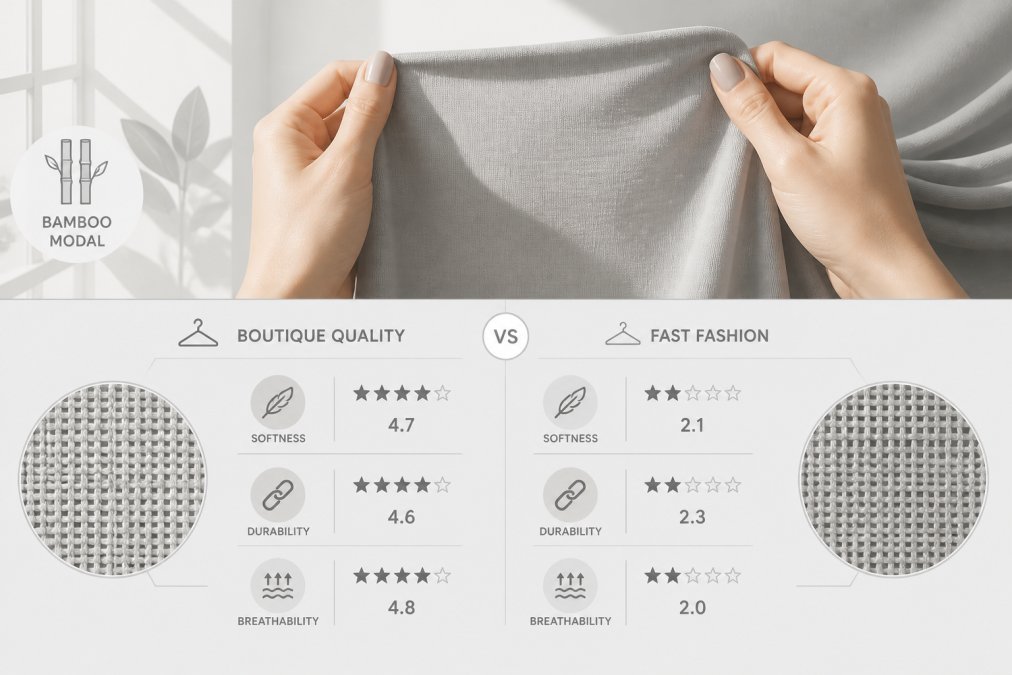
Material sourcing also matters. Boutiques often source fabrics with supply chain transparency, knowing where cotton comes from and how it was processed. This traceability adds cost but adds assurance.
Craftsmanship and Attention to Detail
Construction differences show up in details most people don't consciously notice but definitely feel. Seams in fast fashion are often serged close to minimize waste; boutique pieces frequently use French seams or flat-felled seams that are more durable. Button attachment in fast fashion uses minimal stitching; boutique pieces use reinforced attachment that survives dozens more wash cycles. Hems in fast fashion are sometimes glued; in boutique pieces, they're properly stitched.
Fit precision also reflects craftsmanship differences. Fast fashion typically uses one or two fit models and grades sizes mathematically. Boutique producers often fit multiple sizes on actual bodies, resulting in better fit consistency and fewer returns.
How to Determine Clothing Retail Price and Evaluate Value
Understanding how retail prices are determined helps you evaluate whether boutique clothing prices make sense for your situation.
Start by identifying the wholesale cost, what the retailer paid to acquire the item. For boutique items, wholesale cost typically represents 20-35% of retail price. Next, factor in operating costs. A boutique with monthly overhead of $8,000-$15,000 that sells 300 items monthly has $27-$50 in overhead per item.
Calculate cost per wear by dividing price by realistic wear cycles. If you wear a piece 40 times before it deteriorates, divide the price by 40. This metric matters more than raw price.
Consider material composition and construction quality. Check fiber content and seam construction. Evaluate the value proposition specific to your life: if you need professional pieces that transition to weekend wear, boutique investment pieces make sense. Research the boutique's return and quality guarantee policies, these demonstrate confidence in their products. Look at brand positioning and curation; a boutique that clearly articulates why they chose each piece is providing value beyond the physical item.
The Psychology of Boutique Experience and Brand Positioning
Boutique clothing prices reflect more than production costs and overhead. They also reflect the psychological and experiential value that boutiques provide, which mass retailers cannot replicate.
When you shop at a boutique, you're buying into a curated experience. The owner has already filtered options for you, saving time and decision-making energy. Brand positioning creates emotional attachment that influences perceived value. A boutique positioning itself as "sustainable, high-quality pieces for the modern professional" sells an identity, not just clothing.
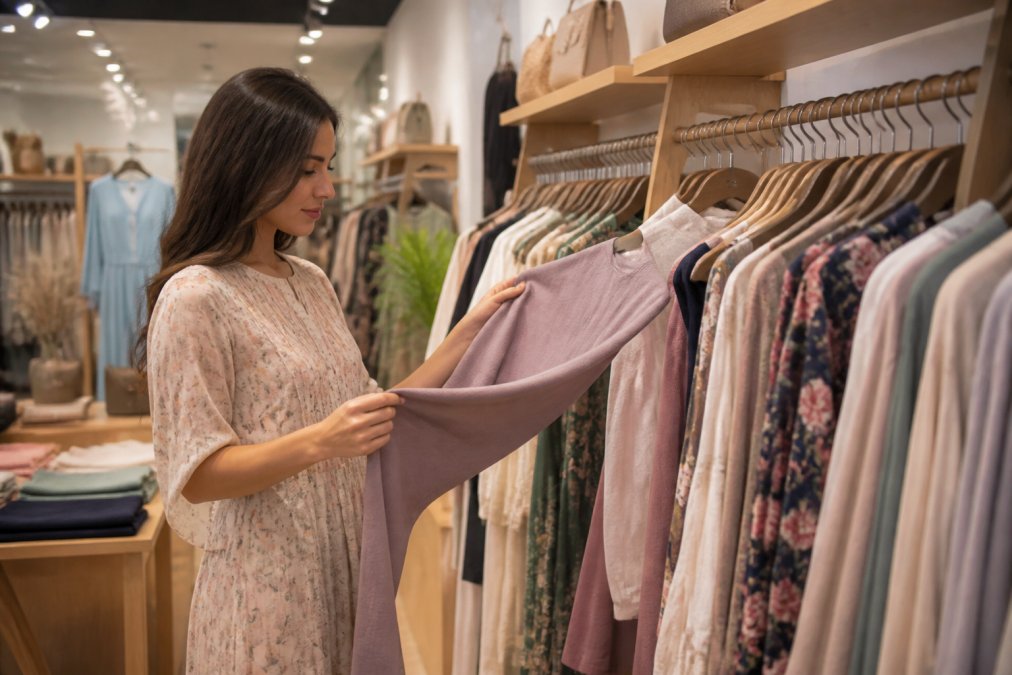
The scarcity principle affects boutique pricing psychology. When a boutique carries only 20 pieces of a particular style, knowing they're gone when sold creates urgency. Personalization and relationship-building add value too: a boutique owner who remembers your preferences and suggests tailored pieces provides a service mass retailers can't match.
The boutique experience includes implicit quality assurance. When a boutique owner puts their name and reputation behind every piece, they're taking on risk and saying "I believe in this quality enough to stake my business on it." This implicit guarantee is worth something compared to mass retailers where individual quality control is minimal.
Boutique clothing prices aren't arbitrary. They reflect real differences in production economics, material quality, construction standards, and the intangible value of curation and community. When evaluating whether those prices make sense, consider your actual cost per wear, your lifestyle needs, and whether the quality and experience align with your values.
At D'LA Boutique, our pricing reflects our commitment to curated, high-quality pieces made from premium materials like bamboo and modal blends. We invest in proper fit, construction quality, and thoughtful curation because we believe you deserve clothing that lasts and makes you feel confident. When you shop with us, you're investing in pieces that work harder, last longer, and feel better than fast-fashion alternatives. Explore our collection and experience the difference quality makes.
Frequently Asked Questions
What is the average markup on boutique clothing?
Boutique retailers typically apply a markup of 2.5x to 4x the wholesale cost, which translates to a gross margin of 60-75%. This is higher than mass retailers but necessary to cover overhead expenses like rent, staffing, and inventory management. The exact markup depends on the boutique's operating costs, sourcing strategy, and positioning within the market.
Why are boutique clothing prices higher than fast fashion brands?
Boutique prices reflect several factors: smaller production runs increase per-unit costs, higher-quality materials like bamboo and modal cost more than synthetic blends, ethical labor practices and supply chain transparency add expense, and independent retailers have higher overhead expenses relative to their sales volume. Additionally, boutiques invest in curated inventory and customer experience rather than competing on volume.
How do I know if boutique clothing is worth the higher price?
Evaluate cost per wear by considering durability, versatility, and longevity. Check fabric content and care instructions, read customer reviews about how pieces hold up after washing, and assess whether items transition across seasons and occasions. High-quality materials and craftsmanship typically justify higher price points when the pieces remain wearable for years rather than months.
What's the difference in quality between boutique and mass-produced clothing?
Boutique clothing often features superior material quality, tighter stitching, and better finishing details. Mass-produced fast fashion prioritizes speed and volume, resulting in thinner fabrics, inconsistent seams, and shorter lifespans. Boutique pieces are designed for longevity and versatility, while fast fashion emphasizes trend cycles and disposability.
This article was written using GrandRanker