

Best Sustainable Fashion Boutiques Online in 2026
Table of Contents
- Sustainable Fashion Boutique Comparison Table
- D'LA Boutique: Comfort Meets Contemporary Style
- ourCommonplace: Multi-Brand Ethical Marketplace
- Made Trade: Supporting Small Sustainable Makers
- EarthHero: One-Stop Zero-Waste Shopping
- How to Build a Sustainable Wardrobe That Actually Works
- Sustainable Fashion Certifications Explained
- What Makes a Sustainable Fashion Boutique Worth Your Money
Last Updated: August 8, 2026
Sustainable Fashion Boutique Comparison Table
Finding the right sustainable fashion boutique online means balancing style, ethics, and budget. The marketplace has fragmented into two distinct models: curated multi-brand platforms that vet vendors against strict sustainability criteria, and single-brand boutiques that control their entire supply chain.
| Boutique/Platform | Best For | Key Differentiator | Vetting Approach |
|---|---|---|---|
| D'LA Boutique | Modern professionals seeking comfort + style | Bamboo and modal blends; plus-size collection | In-house curation; focus on fabric quality |
| ourCommonplace | Conscious consumers across fashion, beauty, home | Six-standard vetting (woman-owned, sustainable, ethical, BIPOC, cruelty-free, toxic-free) | Third-party brand auditing with transparent icons |
| Made Trade | Small business supporters seeking ethical production | 130+ small makers and artisan collectives | Equity, sustainability, and transparency focus |
| EarthHero | One-stop zero-waste living | Extensive product range beyond fashion | Environmental impact vetting per product |
| Reformation | Trendy shoppers wanting transparent sustainability | Fashion-forward designs with impact reporting | Direct production control; environmental metrics |
Your choice depends on what matters most: supporting small makers, finding specific fabric types, or shopping across multiple categories.
D'LA Boutique: Comfort Meets Contemporary Style
D'LA Boutique solves a real problem most sustainable boutiques ignore: the need for professional, comfortable pieces without sacrificing ethics. The collection centers on bamboo and modal fabric blends, materials that breathe, move with your body, and hold up through repeated washing.
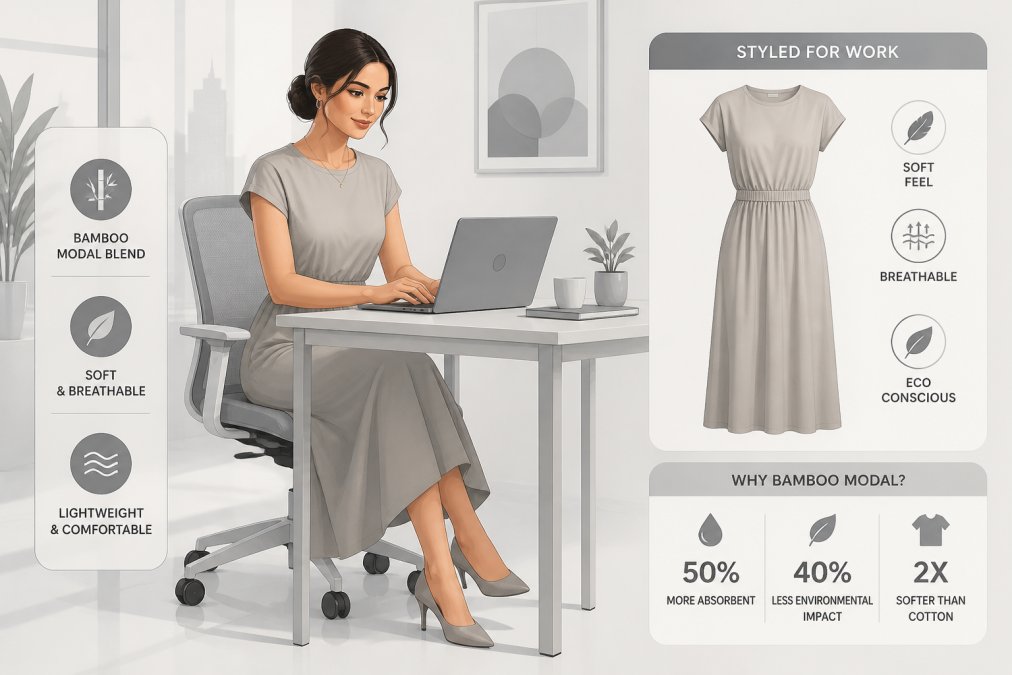
The boutique's strength lies in intentional curation. Rather than flooding the site with hundreds of options, D'LA Boutique has selected pieces that work together, dresses that layer under blazers, rompers with longer inseams for taller frames, tops that pair across multiple bottoms. This restraint is rare in online shopping.
The dedicated plus-size collection addresses fit consistency across sizes, signaling that extended sizing isn't an afterthought. That approach costs more than fast-fashion alternatives, but the math changes when you calculate cost-per-wear over a multi-year wardrobe lifecycle.
ourCommonplace: Multi-Brand Ethical Marketplace
ourCommonplace functions as a filter for conscious consumers overwhelmed by greenwashing. The platform vets brands against six specific standards: woman-owned, sustainable, toxic-free, ethical, BIPOC-owned, and cruelty-free. Each brand is marked with icons corresponding to its verified values, making it possible to shop by your specific priorities without reading marketing copy.
This transparency-first approach differentiates it from generic online marketplaces. The platform's strength is breadth: you'll find fashion alongside clean beauty and artisanal home goods, all filtered through the same ethical standards. The filtering system lets you narrow by your values first, then explore what's available.
Made Trade: Supporting Small Sustainable Makers
Made Trade positions itself explicitly as a platform for small businesses, artisans, and locally-owned makers. The portfolio includes over 130 different brands, each selected against standards of equity, sustainability, and supply chain transparency.
The distinction is intentional: Made Trade isn't trying to be a one-stop shop, it's a platform that says "we support small makers" and builds the entire experience around that mission. Because you're buying directly from makers rather than consolidated inventory, some items have limited stock. The trade-off is that you're supporting businesses with genuine equity and transparency stakes, not just corporate sustainability initiatives.
Pricing tends higher than mass-market alternatives, but that reflects actual production costs when you're paying artisans fairly and using ethical manufacturing.
EarthHero: One-Stop Zero-Waste Shopping
EarthHero curates products against a single criterion: environmental impact. Every item, whether clothing, personal care, home essentials, or tech accessories, has been vetted for how it affects the planet.
The value here is scope. If you're shifting your entire lifestyle toward lower environmental impact, EarthHero functions as a true one-stop shop. The platform includes a dedicated zero-waste section that highlights practical swaps and reusable alternatives to single-use products.
The trade-off is that breadth can create decision paralysis. The platform works best when you have a specific product category in mind.
How to Build a Sustainable Wardrobe That Actually Works
Building a sustainable wardrobe isn't about replacing your entire closet at once. It's about making intentional swaps that compound over time.
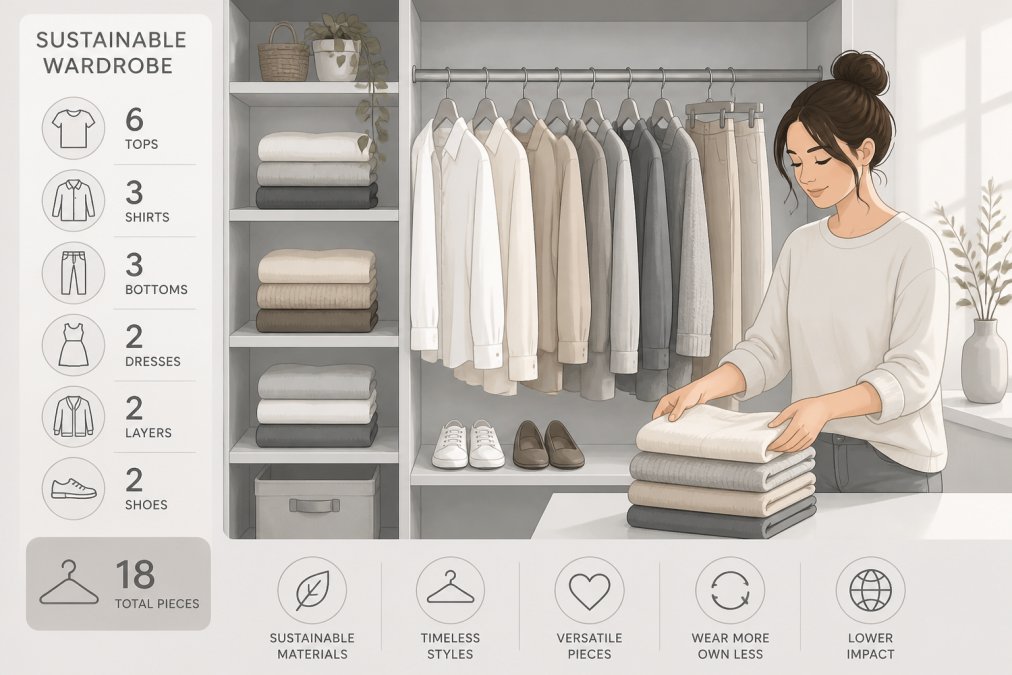
Start with a wardrobe audit. Pull everything out and ask: What do I actually wear? What sits untouched? Most people wear 20% of their closet 80% of the time. Identify that 20% and understand why those pieces work.
Define your color palette. Sustainable wardrobes work because pieces combine across outfits. Choose a neutral base (black, white, beige, gray, navy), then add 2-3 accent colors that complement your skin tone. Every new piece should work with at least three items you already own.
Invest in basics that last. Quality basics, well-fitting jeans, white and black tees, neutral blazers, form the foundation of any sustainable wardrobe. Bamboo and modal blends excel here because they maintain shape through dozens of washes while feeling comfortable enough for daily wear.
Buy fewer, better pieces. Rather than shopping for volume, buy pieces you genuinely love. A piece you wear 50 times costs significantly less per wear than a trend item you wear five times.
Plan for seasonality. Invest in layering pieces and versatile silhouettes that work across seasons. A linen dress works in summer; layer it with a long-sleeve shirt and cardigan in fall.
Embrace repair and care. Learn to hand-wash delicate fabrics, use cold water for colors, and air-dry whenever possible. Following care instructions can extend a piece's lifespan by years.
Sustainable Fashion Certifications Explained
Understanding what sustainability certifications actually mean helps you distinguish between genuine practices and marketing language.
Fair Trade Certification verifies that workers throughout the supply chain received fair wages and worked in safe conditions. This certification tracks the entire chain, not just the final manufacturer.
Organic Cotton Certification confirms that cotton was grown without synthetic pesticides or fertilizers. Conventional cotton uses roughly 16% of the world's pesticides while occupying only 2.5% of cultivated land. The certification requires annual audits of farms and processing facilities.
TENCEL Lyocell Certification indicates that fabric was produced using a closed-loop process where solvents are recycled rather than released. TENCEL's certification means the manufacturer captures and reuses 99% of solvents, making it one of the lower-impact cellulosic fibers available.
B Corp Certification evaluates companies against standards for environmental impact, worker treatment, and community benefit. A B Corp-certified brand has undergone third-party assessment of its practices across all operations.
GOTS (Global Organic Textile Standard) combines organic fiber verification with social and environmental criteria. It audits working conditions, chemical use in processing, and environmental management, making it stricter than many alternatives.
What Makes a Sustainable Fashion Boutique Worth Your Money
The price gap between sustainable fashion boutiques and fast-fashion retailers is real. Understanding what you're paying for helps you decide whether the premium is worth it.
You're paying for material quality. Bamboo and modal fabrics used by quality boutiques are fundamentally different from cheap polyester. They breathe better, last longer through washing, and feel better against skin. A bamboo modal dress worn twice weekly for three years costs roughly $0.07 per wear.
You're paying for production ethics. When boutiques source from fair trade manufacturers or small makers, workers receive living wages and work in safe conditions. This costs more than outsourcing to factories with minimal labor standards.
You're paying for supply chain transparency. Sustainable boutiques track their supply chains because they're accountable for their claims. That transparency requires investment in auditing, documentation, and supplier relationships.
You're paying for curation. A sustainable boutique has vetted every piece for fit, durability, washability, and how pieces work together. This curation reduces decision paralysis and increases the likelihood that you'll actually wear what you buy.
You're paying for longevity. Pieces designed for durability, with reinforced seams, quality hardware, and fabric composition optimized for repeated washing, cost more to produce but last years longer than fast-fashion alternatives.
Sustainable fashion boutiques are worth your money if you value durability, ethics, or environmental impact enough to adjust your consumption patterns. If you're buying fewer pieces that you actually wear, the math works.
Building a sustainable wardrobe means finding boutiques that align with your specific values. D'LA Boutique excels for professionals seeking comfortable, durable pieces in extended sizing with transparent sourcing. The curated selection and focus on bamboo and modal blends make it ideal if you want pieces that work across your wardrobe. Subscribe to our emails and discover how quality basics can transform your approach to getting dressed.
Frequently Asked Questions
What certifications should I look for when shopping at a sustainable fashion boutique?
Look for third-party certifications like Fair Trade Certified, GOTS (Global Organic Textile Standard), and B Corp certification. These verify that a sustainable fashion boutique meets strict standards for organic materials, fair labor practices, and supply chain transparency. Brands displaying these badges have undergone independent audits, not just self-reporting. Check the boutique's website for certification details and what each one means for the products you're buying.
Are sustainable fashion boutiques really more expensive than fast fashion?
Yes, typically. Sustainable fashion boutiques invest in ethical manufacturing, fair wages, and quality materials like organic cotton and TENCEL Lyocell, which cost more upfront. However, these pieces last longer, reducing cost-per-wear over time. A $150 dress worn 100 times costs $1.50 per wear, while a $30 fast-fashion piece worn 10 times costs $3 per wear. You're paying for durability, not just trend-chasing.
How can I tell if an online sustainable fashion boutique is actually eco-friendly or just greenwashing?
Check for supply chain transparency: Does the boutique disclose where items are made and who made them? Look for specific material information (organic cotton, recycled fibers, low-impact dyes) rather than vague claims like 'eco-friendly.' Verify third-party certifications, read customer reviews on independent sites, and see if the boutique publishes environmental impact reports. Genuine sustainable fashion boutiques provide detailed sourcing information and don't hide their practices behind marketing language.
What's the difference between a sustainable fashion boutique and a regular online clothing shop?
A sustainable fashion boutique curates brands and pieces based on ethical manufacturing, environmental impact, and material quality. They vet suppliers, prioritize fair trade and organic materials, and often feature smaller makers or regenerative agriculture practices. Regular online shops focus on volume and trends. Sustainable boutiques offer fewer items but with transparency about where clothes come from, who made them, and what they're made of, helping you make intentional purchases aligned with your values.
This article was written using GrandRanker