

Comfortable Chic Boutique Clothing Styles for 2026
Table of Contents
- What Makes Comfortable Chic Boutique Clothing Different
- Essential Wardrobe Staples for Everyday Comfort
- How to Build a Capsule Wardrobe with Quality Pieces
- Elevated Casual Outfits for Work and Weekend
- Choosing the Right Fabrics for Comfort and Durability
- Sustainable Fashion Choices Without Compromise
- Accessorizing Your Look for Maximum Versatility
- Body-Type Specific Styling for the Perfect Fit
Last Updated: August 7, 2026
What Makes Comfortable Chic Boutique Clothing Different
Comfortable chic boutique clothing represents a deliberate shift away from the false choice between looking polished and feeling good. This isn't loungewear masquerading as style, nor is it fashion that punishes your body for eight hours. The category exists because mainstream retail failed to deliver on a simple promise: clothes that work hard enough to wear to the office but soft enough that you'd choose them on a Saturday.
At D'LA Boutique, we've noticed this tension firsthand. Customers arrive frustrated, they've tried corporate armor that feels restrictive and comfort brands that look like pajamas. What they actually want is a third path: pieces that deliver genuine comfort without sacrificing the visual polish that makes you feel capable and intentional.
The difference comes down to three things: fabric choice, construction quality, and silhouette design. Boutique brands invest in materials like bamboo and modal blends that breathe and move with your body. They cut garments with ease built into the pattern, oversized blazers that don't require sizing up, textured knits that drape instead of cling, tailored fits that account for real human movement. The result is clothing that actually improves your day instead of adding to your stress.
Essential Wardrobe Staples for Everyday Comfort
Building a wardrobe around comfortable chic means starting with pieces that do real work. These aren't trend-driven items; they're the foundation that everything else hangs on.
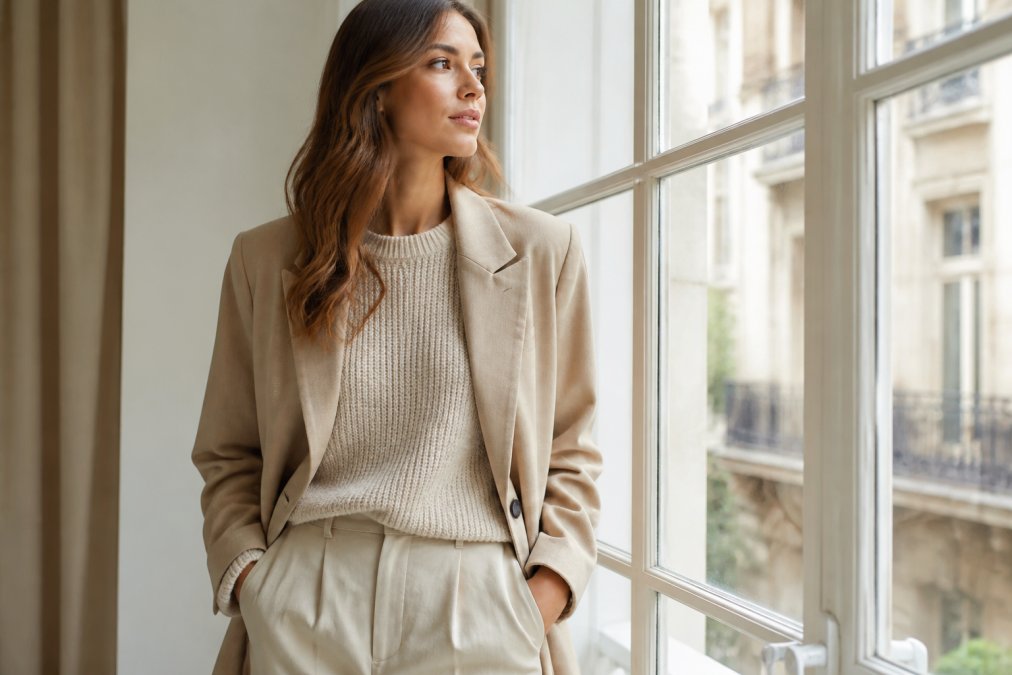
Tailored Blazers and Oversized Layers
A blazer that actually fits is rarer than it should be. The sweet spot is a tailored blazer cut with enough ease that you can move freely, shoulders that sit right, sleeves that end at your wrist, a length that hits mid-hip. Oversized layering pieces work differently, they're meant to drape, to create volume without weight, to let you control how much structure you want on any given day.
These pieces solve multiple problems simultaneously. A quality blazer transitions from boardroom to dinner without changing. An oversized sweater or button-up becomes the bridge between seasons, the thing you throw on when the office is too cold or when you need to add visual interest to a simple base. The key is choosing cuts that flatter your specific frame, which is why boutique brands' size variety and cut options matter, you're more likely to find something that actually works for your proportions.
Textured Knits and Soft Pastels
Texture does visual work that solid colors can't. A knit with subtle ribbing, cable detail, or weave pattern creates dimension without requiring bold colors or prints. Textured pieces hide minor imperfections, don't show wrinkles as easily, and photograph better in real lighting.
Soft pastels, muted sage, warm cream, and gentle gray-blue form the backbone of a sophisticated neutral palette. They're not as stark as pure white or black, which means they feel approachable while still reading as intentional. They also layer beautifully, a soft pink sweater under a cream blazer feels coordinated without being matchy.
The comfort factor is genuine. Textured knits in natural fibers like bamboo blends regulate temperature better than smooth synthetics. Soft pastels also reduce eye strain compared to high-contrast color combinations, which matters if you're looking at yourself in meetings or video calls all day.
How to Build a Capsule Wardrobe with Quality Pieces
A capsule wardrobe isn't about owning fewer clothes, it's about owning clothes that actually work together, eliminating decision fatigue and the "I have nothing to wear" paradox.
Start with Neutral Foundations
Neutrals are the infrastructure. A true neutral palette typically includes three to four base colors: warm white or cream, warm gray, cool gray or taupe, and one deeper neutral like charcoal or navy.
Every piece you add should coordinate with at least three other pieces already in it. If you start with six neutral pieces that all work together, you've created a foundation that accepts new additions easily. A new blouse, sweater, or jacket immediately has multiple outfit combinations available. Invest in quality basics in these neutrals, a well-made cream sweater in a bamboo blend will outlast three cheap versions and feel better every time you wear it.
Add Versatile Pieces That Layer
Layering is how capsule wardrobes expand without exploding. A simple tank can be worn alone, under a blazer, under a sweater, or under a cardigan. Each combination reads completely different. The pieces that work hardest are the ones that serve multiple functions: a long cardigan that works as a light jacket, a structured button-up that bridges casual and professional, a fitted tee that anchors outfits or disappears under layers.
Texture variation matters too. If all your pieces are smooth fabrics, the wardrobe feels flat. If everything is heavily textured, it reads as busy. Mix smooth and textured pieces so they enhance each other visually and functionally.
Invest in Sustainable Fabrics
Sustainable fabrics tend to be made by companies that care about construction quality because they care about environmental impact. Bamboo and modal blends specifically offer practical advantages: they're naturally temperature-regulating, softer than many conventional fabrics, hold color better, and are easier to care for. The cost-per-wear calculation changes when a piece lasts longer and requires less maintenance.
Elevated Casual Outfits for Work and Weekend
The real test of a wardrobe is whether pieces actually transition between contexts.
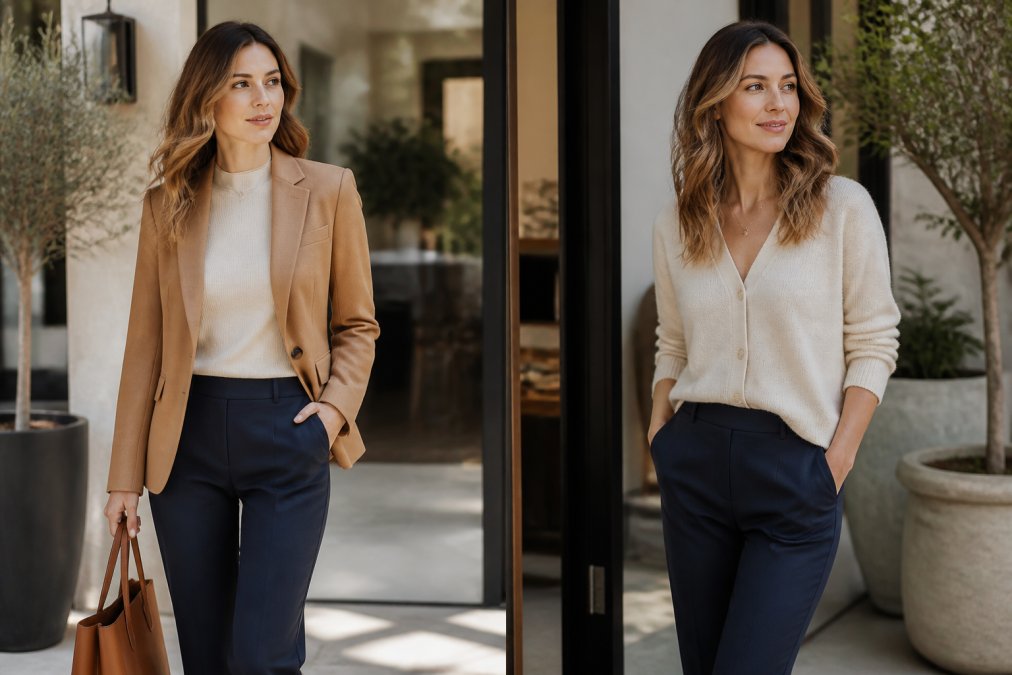
Work-to-Weekend Transitions
A structured blazer over a simple knit reads professional. Remove the blazer, add a cardigan, and the same base becomes weekend casual. Swap trousers for jeans, keep the sweater and cardigan, and you've got coffee-date appropriate. The pieces stay the same; the context shifts through small swaps.
This works because the base pieces are designed to work in both contexts. A well-fitted sweater in a neutral color reads polished enough for work but comfortable enough for weekend wear. A tailored pair of trousers in a quality fabric works with heels and a blazer on Tuesday and with sneakers and an oversized sweater on Saturday. You're not buying separate wardrobes; you're buying pieces that earn their closet space by working in multiple ways.
Styling Tips for Everyday Chic
Chic doesn't require complexity. The most polished looks are often the simplest ones: a good sweater, good trousers, good shoes, minimal accessories. Start with proportion, if you're wearing an oversized sweater, balance it with a fitted bottom. If you're in fitted trousers, add an oversized layer on top.
Texture mixing is where everyday styling gets interesting. A smooth blazer over a textured knit creates depth. A structured sweater with fluid trousers creates balance. Accessories should enhance, not distract. A simple necklace, a quality watch, a structured bag, these signal that you've thought about your appearance without requiring constant attention.
Choosing the Right Fabrics for Comfort and Durability
Fabric choice is where the actual comfort happens.
Bamboo and Modal Blends
Bamboo fabric is made from bamboo pulp processed into viscose, creating a material that's remarkably soft and breathable. Modal uses a similar process applied to beech wood pulp. Both create fabrics that feel luxurious but perform practically.
The comfort advantages are immediate: these fabrics breathe better than cotton alone, are naturally temperature-regulating, and are soft enough that they don't irritate sensitive skin. They also hold dye better than many natural fibers, so colors stay vibrant longer.
Bamboo and modal pieces should be hand-washed or machine-washed on a delicate cycle in cool water. Air drying preserves the structure better than machine drying.
Fabric Care and Longevity
Quality fabrics usually come with care instructions that, if followed, actually extend the garment's life. Pilling, those little balls of fiber that form on fabric, is normal and doesn't indicate poor quality. A fabric shaver removes pills without damaging the underlying fabric. Storage matters too, keep clothes in a cool, dry closet with some air circulation to prevent mold, mildew, and fading.
Sustainable Fashion Choices Without Compromise
Sustainable practices often align with quality practices, which means sustainable pieces tend to last longer and feel better. Bamboo and modal blends are inherently more sustainable than conventional synthetics because they're plant-based and biodegradable. The manufacturing process for these fabrics is also cleaner than conventional textile production.
Sustainable pieces often cost more upfront because manufacturing standards are higher. But the durability math changes this. A sustainable sweater that lasts three years costs less per wear than a cheap sweater that lasts one year. The wardrobe simplification that comes from investing in fewer, better pieces also reduces consumption overall, creating a practical alignment: building a sustainable wardrobe also builds a more functional wardrobe.
Accessorizing Your Look for Maximum Versatility
Accessories are where a simple outfit becomes a complete look. The most versatile accessories work across contexts and with multiple outfits. A structured leather bag in a neutral color works with professional outfits, casual outfits, and everything in between. A simple necklace in gold or silver coordinates with every color in your wardrobe. A quality watch works with anything from a blazer to a sweater to a t-shirt.
Scarves offer practical versatility, they add visual interest, work across seasons, and can be styled multiple ways. Shoes are where proportion matters. If you're wearing an oversized sweater and relaxed trousers, a structured shoe creates balance. If you're in fitted pieces, a more relaxed shoe prevents the outfit from reading as too formal. Accessories should enhance the outfit you've built, not compete with it.
Body-Type Specific Styling for the Perfect Fit
Generic styling advice fails because bodies aren't generic. The real skill in comfortable chic styling is understanding how silhouette, proportion, and fit work with your specific body.
For petite frames, oversized pieces can overwhelm. The solution is to balance them, an oversized sweater works when paired with fitted bottoms and shoes that elongate the line. For taller frames, oversized pieces often work better because they have more room to drape without looking intentionally loose. For broader shoulders, the goal is balance rather than hiding. For curves, the goal is supporting the proportions rather than fighting them, a structured blazer that fits through the shoulders and chest, with enough ease through the waist and hip, works better than either oversized or fitted-but-tight.
The practical takeaway is that comfortable chic clothing works best when it actually fits your body. This is where boutique shopping has a real advantage over mass-market retail.
D'LA Boutique's dedicated plus-size collection and variety of cuts across size ranges reflect this principle. The goal isn't to make everyone fit into one silhouette, it's to offer enough options that everyone can find pieces that work with their body rather than against it.
Frequently Asked Questions
What fabrics should I look for in comfortable chic boutique clothing?
Look for breathable, high-quality materials like bamboo blends, modal, organic cotton, and linen. These fabrics offer superior comfort while maintaining a polished appearance. Bamboo and modal specifically provide a luxurious feel against the skin and drape beautifully, making them ideal for achieving that effortlessly stylish look without sacrificing comfort. Check care labels to ensure pieces are easy to maintain.
How do I build a capsule wardrobe with versatile pieces?
Start with neutral foundations in black, white, beige, and gray. Add 5-7 core pieces like a tailored blazer, quality jeans, neutral tops, and a simple dress. Choose items that layer well and work across seasons. Include one or two statement pieces in soft pastels or textures. Select pieces that transition from work to weekend, maximizing outfit combinations from fewer items. This approach reduces decision fatigue while keeping your wardrobe fresh and intentional.
How can I tell if boutique clothing is actually worth the price?
Evaluate cost-per-wear by considering how often you'll realistically wear each piece. Quality boutique clothing typically lasts 2-3 times longer than fast fashion due to better construction and materials. Check seams, hems, and fabric weight before purchasing. Look for sustainable sourcing transparency and ethical production practices. Calculate the true cost by dividing the price by expected wears over a year, a $100 piece worn 100 times costs $1 per wear, while a $30 fast-fashion item worn 10 times costs $3 per wear.
What's the difference between comfortable chic and casual loungewear?
Comfortable chic combines tailored silhouettes with soft, breathable fabrics, creating pieces that look polished enough for work or social occasions. Loungewear prioritizes maximum relaxation and typically features more relaxed fits and casual styling. Comfortable chic pieces use elevated basics, intentional layering, and refined cuts that flatter your body while maintaining ease of movement. This distinction means you can wear comfortable chic clothing to the office, dinner, or errands without looking underdressed.
Building a wardrobe around comfortable chic clothing means investing in pieces that work harder for you. You'll spend less time thinking about what to wear and more time feeling confident in what you're wearing. Start with quality basics in neutral colors, add pieces that layer and transition between contexts, and choose fabrics that actually feel good against your skin. This approach creates a wardrobe that serves you across your actual life, not just the version of your life you wish you had.
This article was written using GrandRanker