

Comfortable Stylish Alternatives to Jeans for Women
Table of Contents
- Why Women Are Ditching Jeans for Comfortable Alternatives
- Tailored Trousers and Wide-Leg Pants That Rival Denim
- Jumpsuits and Rompers: One-and-Done Alternatives to Jeans
- Skirts, Leggings, and Knit Sets for Elevated Casual Looks
- Fabric Care and Durability: Making Your Alternatives Last
- High Quality Boutique Clothing Brands: What to Look For
- Building a Capsule Wardrobe with Comfortable Stylish Alternatives
- Frequently Asked Questions
Last Updated: September 12, 2026
Why Women Are Ditching Jeans for Comfortable Alternatives
Denim fatigue is real, and it's reshaping how women build their wardrobes. Many women are now seeking comfortable stylish alternatives to jeans for women that deliver polish without the pinch. At D'LA Boutique, we hear the same complaint constantly: jeans look great for an hour, then feel like a cage by lunch. The fix isn't abandoning style, it's swapping rigid denim for fabrics and cuts that move with you.
Rigid cotton has almost no give, so it digs at the waist and restricts movement all day. Breathable fabrics like linen blends, modal, and airflow knits solve that problem while still holding a tailored silhouette. Below, we'll walk through the specific alternatives that work for offices, weekends, and everything between, plus how to style and care for each.
Tailored Trousers and Wide-Leg Pants That Rival Denim
Wide-leg and tailored trousers are the closest direct swap for jeans because they keep the structured pants feel you're used to while removing the stiffness. A guide to fabric drape and fit from CottonWorks explains why drape matters more than fiber content alone for how a garment hangs. Look for a high-waisted, straight-leg or wide-leg cut in a fabric with a bit of weight so it doesn't cling.
How to Style Wide Leg Trousers for Day and Night
A wide-leg trouser in a neutral tone carries you from a morning meeting to dinner with one change of footwear: flat loafers or clean sneakers by day, a heel or wedge by evening. Tuck in a fitted top to define the waist, since the wide-leg silhouette already adds volume below.
For a budget-to-investment approach, a single well-made pair in a dark neutral outperforms three cheap pairs that pill after a few washes.
Jumpsuits and Rompers: One-and-Done Alternatives to Jeans
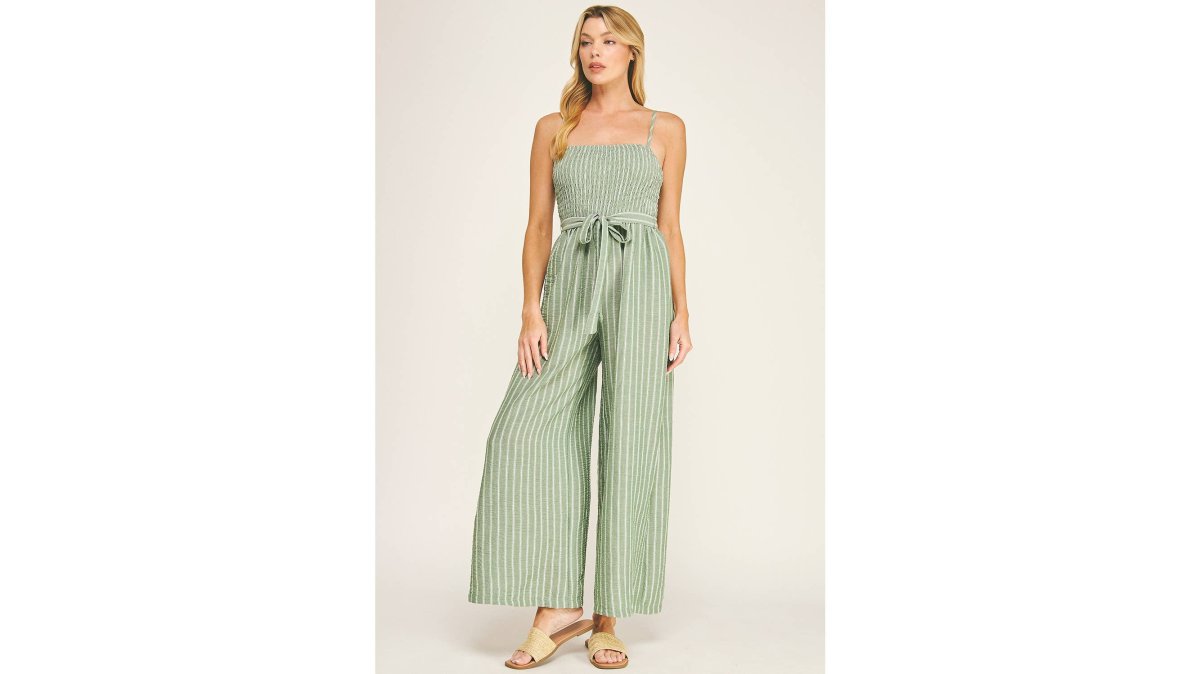
Jumpsuits and rompers solve the getting-dressed problem in one piece, which is why they've become a go-to alternative for women tired of coordinating separates. The Coastal Stripe Smocked Wide Leg Jumpsuit ($30.00) is a strong starting point: a fully smocked bodice gives a flexible, flattering fit, the self-tie waist belt defines the silhouette without digging in, and the vertical stripes and flowy wide-leg cut keep it comfortable for hours.

For plus-size shoppers, the Plus Size Airflow Dolman Sleeve Wide-Leg Jumpsuit ($41.88) uses lightweight, breathable Airflow fabric with a relaxed dolman sleeve and elastic waistband, so it creates shape without pressure. If you prefer shorts, the Plus Size Airflow Dolman Sleeve Romper ($36.88) delivers the same easy feel in a warm-weather cut.
Skirts, Leggings, and Knit Sets for Elevated Casual Looks
Skirts, leggings, and knit sets cover the elevated casual middle ground jeans can't quite reach, but the difference between polished and sloppy comes down to fabric weight, hem length, and how the piece sits on your shape. Here's the body-type breakdown and the fabric mechanics that matter.
Match the Silhouette to Your Shape
Pear shapes (weight through hips and thighs): A bias-cut midi skirt in a fluid fabric skims the hip instead of gripping it, and an A-line knit skirt adds structure without bulk. Avoid stiff pencil skirts in heavy ponte. For leggings, look for a wide, flat waistband that sits at the natural waist rather than cutting across the hip.
Apple shapes (weight through the midsection): High-rise knit sets with a long, straight top that skims past the waist work better than cropped versions. A maxi skirt with a defined but not tight waistband creates a vertical line. Split-hem leggings break up the leg line and read more like trousers than gym wear.
Hourglass shapes: Wrap skirts and knit midi dresses that follow the waist without cinching hard. A matching knit set in a ribbed fabric shows the waist naturally because ribbing stretches where the body curves.
Rectangle shapes: Pleated midi skirts and tiered maxi skirts add the volume the frame is missing. A belted knit set creates a waist that isn't there structurally.
Fabric Weight Is the Whole Game for Leggings
A legging only works as a jeans alternative when the fabric is thick enough to hold its shape. Hold it up to a light: if you can see your hand clearly through it, it will show every line when you move. Look for fabric that snaps back when you stretch and release, that recovery keeps the knee from bagging by afternoon. Split-hem and side-slit styles in a ponte or dense knit give you legging comfort with the visual line of a slim trouser.
Knit Sets: Why Matching Beats Coordinating
A matching top-and-pant knit set reads intentional even when you threw it on in two minutes, because the eye registers the matched color and texture as a deliberate choice. A thin, single-knit set pills and stretches out fast, while a ribbed or double-knit set holds its shape through a full day and multiple washes. For transitional weather, a short-sleeve knit top with a wide-leg knit pant layers under a long cardigan without adding bulk at the waist.
Footwear Pairing by Hem Length
The hem dictates the shoe. A mid-calf midi skirt needs a pointed flat, slim sneaker, or low heel, a chunky shoe cuts the leg line at the widest point. A maxi skirt can carry a platform or block heel because the length already creates the vertical line. Split-hem leggings work with almost anything. For knit sets, a clean loafer or minimal sneaker keeps the look elevated; a heavy boot drags it toward athleisure.
| Alternative | Best For | Fabric Note |
|---|---|---|
| Tailored wide-leg trousers | Office and evening | Weighted drape, holds a crease |
| Jumpsuits and rompers | One-and-done days | Smocked or elastic waist |
| Bias-cut or A-line midi skirt | Pear and hourglass shapes | Fluid drape, skims the hip |
| Pleated or tiered maxi skirt | Rectangle shapes | Adds volume, creates movement |
| Split-hem leggings | Errands and travel | Dense knit with good recovery |
| Ribbed or double-knit set | Elevated casual | Holds shape, resists pilling |
| Chinos | Casual workdays | Breathable cotton blend |
Seasonal Transitions
Spring and fall are where denim alternatives outperform jeans, because lighter fabrics layer better. In spring, a midi skirt with a tucked tee and light cardigan covers a 20-degree temperature swing. In fall, a knit set under a long coat gives warmth without denim's stiffness, and a maxi skirt with tall boots handles cold mornings and warm afternoons. Rule of thumb: choose the fabric weight for the warmest part of your day, then layer for the coldest.
Fabric Care and Durability: Making Your Alternatives Last
How you wash a garment determines whether it survives a season or five. Most non-denim alternatives fail early because of heat and agitation, not because the fabric was cheap. Turn pieces inside out, wash cold, and skip the dryer for anything with smocking, pleats, or a linen blend. The Striped Utility Style Shirt Dress ($53.00) is a linen blend, and linen responds badly to high heat, so air-drying keeps its shape and texture intact.
care guidance from the American Cleaning Institute recommends checking the care label before assuming any fabric is machine-safe, since blends vary widely.
High Quality Boutique Clothing Brands: What to Look For
Judging high quality boutique clothing brands comes down to fabric, construction, and honesty about fit, not price alone. But how much should you actually spend, and on which pieces? That budget-vs-investment decision is where a wardrobe either earns its keep or quietly wastes money.
The Cost-Per-Wear Framework
Cost per wear is the price of a garment divided by the number of times you realistically wear it. A $30 piece worn twice costs $15 per wear; an $85 piece worn forty times costs about $2 per wear. The cheaper item is the more expensive one, the single most useful filter for deciding whether a boutique price is justified.
Which Pieces to Invest In vs. Which to Buy Budget
Invest (higher cost per wear pays off):
- Tailored trousers and wide-leg pants. These take the most wear, get washed most often, and show cheap construction fastest. A well-made pair in a dark neutral earns its price within a season.
- A structured jumpsuit. Seams, zippers, and waist construction are where cheap versions fail. A good one lasts years.
- A knit set in a dense, ribbed fabric. Thin knits pill and stretch out; quality knits hold shape through dozens of washes.
Buy budget (low cost per wear, trend-driven, or high-wear-and-replace):
- Trend-forward prints and colors. If you'll wear it one season, don't pay investment prices.
- Rompers and casual warm-weather pieces. These get washed constantly and wear out from laundering, not construction failure.
- Layering tops. Basic tees and tanks under cardigans don't need premium fabric to do their job.
How to Judge a Boutique Before You Buy
Three checks that separate a real quality brand from a markup:
- Fabric content listed clearly. Bamboo and modal blends, linen blends, and quality knits are worth paying for; vague "premium fabric" claims are not.
- Construction details. Finished seams, reinforced stress points at the waist and shoulders, and consistent stitching signal a garment built to last. Look inside the garment, not just at the front.
- Real fit information. Measurements and model sizing help you predict how a piece will sit on your body before it arrives. A boutique that lists flat measurements (waist, hip, inseam) stands behind its fit.
This is where the Federal Trade Commission's guidance on textile labeling matters: sellers are required to disclose fiber content, so a brand that hides it is a red flag.
Fabric Care as a Durability Multiplier
How you wash a garment determines whether it survives a season or five. Most non-denim alternatives fail early because of heat and agitation, not because the fabric was cheap. Turn pieces inside out, wash cold, and skip the dryer for anything with smocking, pleats, or a linen blend. The Striped Utility Style Shirt Dress ($53.00) is a linen blend, and linen responds badly to high heat, so air-drying keeps its shape and texture intact.
care guidance from the American Cleaning Institute recommends checking the care label before assuming any fabric is machine-safe, since blends vary widely.
The Smocked Waist Flutter Dress ($85.10) is a good example of a higher price justified by construction and a specific design, not just a label, and at that price, the cost-per-wear math only works if you actually reach for it. That's the test every boutique purchase should pass.
Building a Capsule Wardrobe with Comfortable Stylish Alternatives
A capsule wardrobe built around comfortable stylish alternatives to jeans for women usually needs only six to eight pieces to cover every occasion. Each item should work with at least three others, so start with one tailored trouser, one jumpsuit, one skirt, one knit set, and two tops that pair with all of them.
The V-Neck Shoulder Padded Waist Smocked Front Zip Romper ($43.74) and the Sleeveless Pleated Detail Wide-Leg Floral Jumpsuit ($51.74) both pull double duty, moving from day-to-night with a footwear change. A capsule works because every piece earns its space, which is the opposite of denim fatigue, where you own five pairs and wear one.
Breaking the denim habit takes a little intention, but the payoff is a wardrobe that feels good from morning to night. D'LA Boutique curates exactly this kind of clothing, from wide-leg jumpsuits and rompers to dresses and versatile tops, all built around comfort and contemporary style. With bamboo and modal blends, a dedicated plus-size collection, and an easy online shopping experience with multiple payment methods, D'LA Boutique makes it simple to find your next favorite outfit. Subscribe to our emails and get started with D'LA Boutique to build a rotation you'll actually reach for every day.
Frequently Asked Questions
What are the best comfortable pants for women that aren't jeans?
Wide-leg trousers, tailored dress pants, and knit lounge pants are top choices. Look for breathable fabrics like modal, bamboo blends, or lightweight polyester. D'LA Boutique offers wide-leg jumpsuits and rompers starting at $30 that deliver the comfort of jeans with a more polished look. Prioritize stretch-fit waistbands and soft draping fabrics for all-day wear.
How do I style wide leg trousers for a chic, elevated look?
Pair wide-leg trousers with a fitted top or tucked-in blouse to balance the silhouette. Add a structured blazer for work or a cropped sweater for weekends. Choose heeled mules or clean sneakers depending on the occasion. For a day-to-night transition, swap a tote for a clutch and add statement jewelry. The key is keeping the waist defined while letting the legs flow.
Are wide-leg trousers a good replacement for jeans?
Yes, especially for work or smart-casual settings. Wide-leg trousers offer the same coverage and versatility as jeans but with a more polished look. They work with flats, heels, and boots. Choose a structured fabric for office wear and a softer drape for weekends. Many women find they reach for trousers more often once they experience the comfort difference.
What fabrics are most comfortable for casual women's pants?
Modal, bamboo blends, and lightweight polyester are excellent for breathability and softness. Linen blends work well for warm weather. Look for fabrics with a bit of stretch for ease of movement. D'LA Boutique uses airflow fabric in several jumpsuits and rompers, which is lightweight and breathable. Avoid stiff, non-breathable materials if comfort is your priority.
How can I tell if a boutique clothing brand is high quality?
Check the fabric content listed on the product page. Brands that specify materials like modal or bamboo blends tend to prioritize quality. Look for detailed sizing information and real customer photos. Read return policies to ensure you can try items risk-free. High-quality boutique clothing brands also provide care instructions, which signals they expect the garment to last.