

High Quality Boutique Clothing Brands Worth Your Money
Table of Contents
- What Defines a High Quality Boutique Clothing Brand
- How to Identify Quality Clothing Before You Buy
-
Top High Quality Boutique Clothing Brands Ranked for 2025
- 1. D'LA Boutique: Bamboo and Modal Blends for Everyday Versatility
- 2. Reformation: Transparent Supply Chain and Trend-Driven Design
- 3. Christy Dawn: Regenerative Cotton and Ethical Manufacturing
- 4. Buck Mason: USA-Made Wardrobe Essentials in Natural Fibers
- 5. Everlane: Radical Transparency Meets Capsule Wardrobe Staples
- 6. Pact: Fair Trade Certified Organic Cotton Basics
- 7. Kotn: Egyptian Cotton Quality at an Accessible Price Point
- 8. Anthropologie: Independent Labels and Unique Silhouettes
- Sustainable Boutique Clothing Brands and Ethical Supply Chain Transparency
- Body-Type Specific Recommendations and Size Inclusivity
- How to Build an Intentional Wardrobe with Boutique Pieces
- Shopping Tips for Online Boutiques: Avoiding Common Mistakes
- Conclusion
Last Updated: August 3, 2026
The market for high quality boutique clothing brands has never been more crowded, and that's exactly the problem. Most shoppers waste money on brands that look premium but fall apart after a season. At D'LA Boutique, we've spent years curating pieces built around materials like bamboo and modal blends that actually hold up. Below, we'll show you exactly how to evaluate fabric, construction, and supply chain transparency, then rank the brands worth your money in 2026.
Here's what most guides get wrong: they focus on aesthetics and ignore garment construction. A beautiful dress with loose stitching and a synthetic blend label is just expensive fast fashion. The real markers of quality live in the seams, the fiber content, and the manufacturing story behind the piece.
Quick Picks:
- Best Overall: D'LA Boutique - bamboo and modal blends with a dedicated plus-size collection
- Best for Sustainability: Christy Dawn - regenerative cotton with full supply chain traceability
- Best Budget-Conscious Basics: Pact - Fair Trade Certified organic cotton at accessible price points
- Best for Transparency: Everlane - radical pricing transparency and ethical factory partnerships
- Best for Premium Everyday Wear: Kotn - Egyptian cotton quality with B Corp certification
What Defines a High Quality Boutique Clothing Brand
A high quality boutique clothing brand prioritizes garment construction, curated selection, and ethical sourcing over volume and trend cycling.
Bespoke Aesthetic vs. Mass Production
Mass production optimizes for cost-per-unit. Boutique brands adjust proportions for each size range, seam placement shifts, hem lengths get recalculated. The garment actually fits the body wearing it rather than approximating a fit. That's why boutique pieces photograph better, wear more comfortably, and age more gracefully than mass-market counterparts.
Curated Collections vs. Wholesale Supplier Dumps
A curated collection reflects a coherent point of view: pieces that work together, fabrics that share a quality threshold, and a seasonal narrative that makes sense. The tell is versatility. A genuinely curated collection produces wardrobe essentials that mix across multiple outfits.
How to Identify Quality Clothing Before You Buy
Identifying quality clothing comes down to three factors: fabric composition, garment construction, and projected price-per-wear.
Fabric Composition Analysis: What the Label Actually Tells You
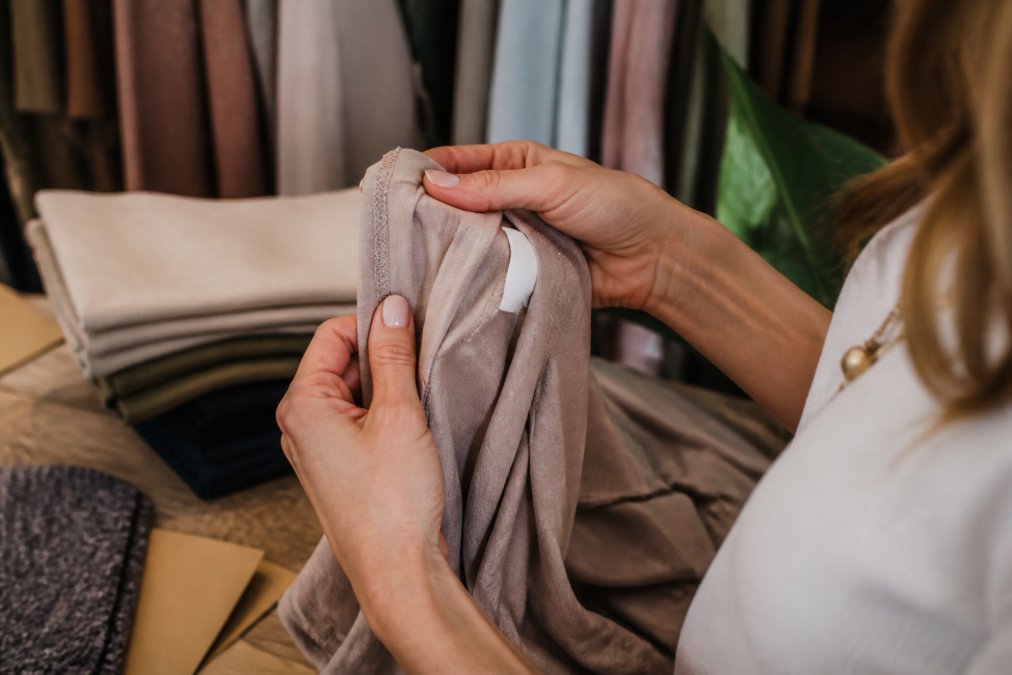
The fabric label is the single most honest thing about a garment. According to FTC textile fiber labeling requirements, all clothing sold in the United States must carry a label listing fiber content by percentage, country of manufacture, and care instructions.
What to look for:
- Natural fibers: Cotton, linen, wool, silk, and bamboo-derived fibers like modal and viscose breathe, drape naturally, and improve with washing.
- Synthetic blends: A small percentage of elastane or spandex in a natural fiber base improves fit retention. More than 30% synthetic in a "premium" piece is a red flag.
- Bamboo and modal specifically: These semi-synthetic fibers are softer than cotton, moisture-wicking, and significantly more durable than polyester blends at a similar price point.
Stitch Density, Seam Finishing, and Garment Construction
Turn the garment inside out. What you're looking for:
- Stitch density: More stitches per inch means stronger seams.
- Seam finishing: Quality garments have finished seam allowances, either serged, bound, or French-seamed. Raw edges fray within a few washes.
- Reinforcement at stress points: Pocket corners, button attachments, and strap joins should have bar tacks or reinforced stitching.
- Pattern matching: On prints and stripes, the pattern should align at the seams.
Longevity and Wear-Testing: The Price-Per-Wear Calculation
Price-per-wear is the most practical framework for evaluating clothing purchases. Divide the purchase price by the number of times you'll realistically wear the item. A $200 dress worn 80 times over three years has a price-per-wear of $2.50.
Top High Quality Boutique Clothing Brands Ranked for 2026
The following brands were evaluated on fabric quality, garment construction, supply chain transparency, size inclusivity, and price-per-wear value.
1. D'LA Boutique: Bamboo and Modal Blends for Everyday Versatility
D'LA Boutique earns the top spot for shoppers who want fashion-forward pieces without sacrificing comfort or fabric quality. The collection centers on bamboo and modal blends, which are softer than cotton, naturally moisture-wicking, and durable enough to hold their shape through repeated washing. The dedicated plus-size collection addresses a gap that many boutiques ignore, with sizing that accounts for different proportions rather than simply scaling up standard patterns.
Pros: Bamboo and modal blends offer genuine fabric quality advantages; dedicated plus-size collection with thoughtful sizing; full range from everyday essentials to statement pieces
Best for: Fashion-conscious women who want versatile staples that transition from work to weekend.
Visit D'LA Boutique's full collection to see current styles and pricing.
2. Reformation: Transparent Supply Chain and Trend-Driven Design
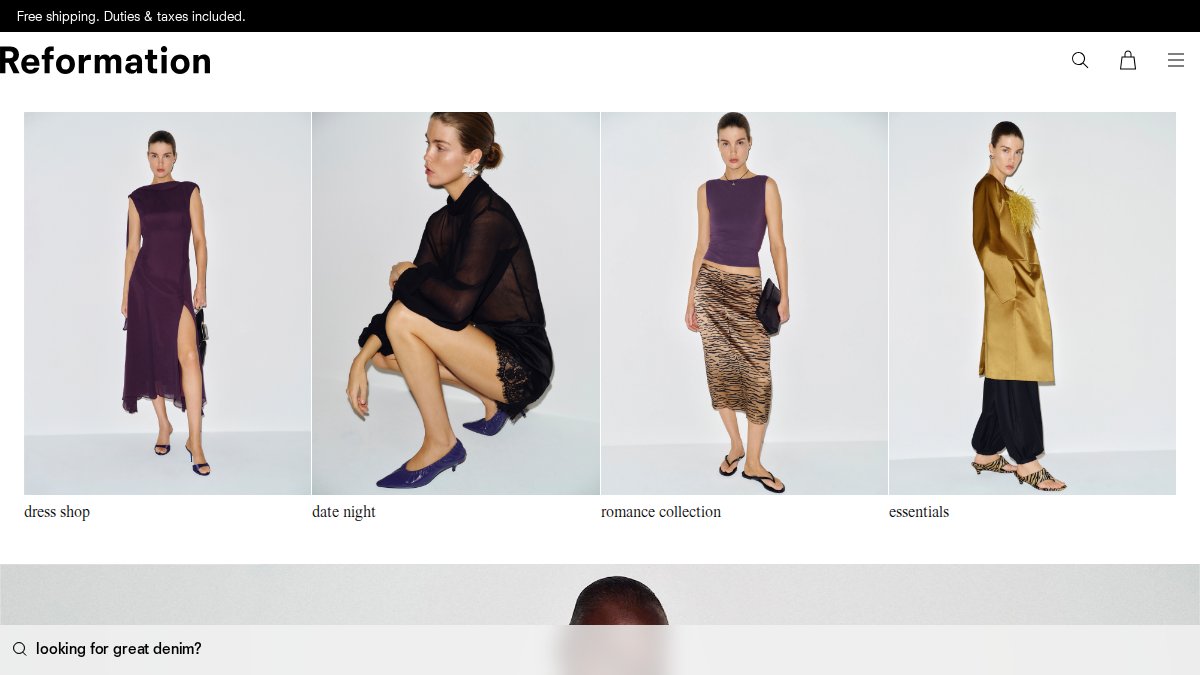
Reformation has built its reputation on trend-driven design and supply chain transparency. Every product page includes a "RefScale" showing the estimated carbon footprint, water usage, and waste generated by that specific garment. Materials include Tencel, recycled fabrics, and organic cotton. Sizing runs from XS to 3X for women, and denim from 23 to 31.
Pros: Genuine supply chain transparency; trend-forward designs; extended sizing Cons: Higher price point; dresses typically range from $98 to $298
Best for: Shoppers who want fashion-forward pieces and verifiable sustainability data.
3. Christy Dawn: Regenerative Cotton and Ethical Manufacturing
Christy Dawn operates at the premium end of the boutique market with a genuine commitment to regenerative agriculture. Their "Farm-to-Closet" collection traces materials from specific farms using regenerative cotton practices, with ethical production based in Los Angeles. Designs lean toward timeless, vintage-inspired silhouettes. Dresses typically range from $198 to $498.
Pros: Deep commitment to regenerative agriculture; high-quality craftsmanship; traceable supply chain Cons: Premium pricing; limited availability due to small-batch production
Best for: Shoppers who treat clothing as a long-term investment and want full supply chain traceability.
4. Buck Mason: USA-Made Wardrobe Essentials in Natural Fibers
Buck Mason offers wardrobe essentials built to last without a complicated sustainability narrative. Many garments are manufactured in the USA using Pima cotton and Japanese denim. T-shirts start at $45, denim from $145, sweaters from $95. The catalog is intentionally narrow: tees, denim, outerwear, and basics.
Pros: Excellent durability; timeless designs; American manufacturing Cons: Limited trendy options; higher price point for basics
Best for: Shoppers building a capsule wardrobe of long-lasting essentials.
5. Everlane: Radical Transparency Meets Capsule Wardrobe Staples
Everlane pioneered the "radical transparency" model, showing customers the true cost of production alongside the retail markup. T-shirts start at $28, denim from $88, sweaters from $60. Ethical factory partnerships are documented rather than implied. Sizing covers women from XXS to XXXL.
Pros: Transparent pricing model; ethical factories; versatile designs Cons: Sizing inconsistencies reported across some product lines
Best for: Shoppers who want minimalist capsule wardrobe pieces with verified ethical production.
6. Pact: Fair Trade Certified Organic Cotton Basics
Pact uses 100% organic cotton across its entire line and holds Fair Trade Certified status for its factory partners. Women's tees start at $25, making this the most accessible price point for certified organic basics. The designs are simple and functional rather than fashion-forward.
Pros: Strong organic and fair trade credentials; affordable pricing; wide product range Cons: Limited fashion-forward designs; styles lean basic
Best for: Eco-conscious shoppers who prioritize certifications and organic materials on a budget.
7. Kotn: Egyptian Cotton Quality at an Accessible Price Point
Kotn sources authentic Egyptian cotton and holds B Corp certification with a high impact score. T-shirts start at $35, loungewear from $50, dresses from $70. The Egyptian cotton delivers noticeably superior softness and durability compared to standard cotton basics. Kotn invests directly in the Egyptian farming communities where their cotton is sourced.
Pros: Exceptional Egyptian cotton quality; strong ethical mission; versatile everyday designs Cons: Primarily cotton-based; limited fabric variety
Best for: Shoppers who want premium cotton quality without paying luxury brand prices.
8. Anthropologie: Independent Labels and Unique Silhouettes
Anthropologie is a retailer rather than a single brand, curating independent and emerging designers under one roof. The bohemian, eclectic aesthetic is distinctive and consistently executed. Dresses range from $100 to $300+, tops from $60 to $150. Sizing includes petite and plus options. Quality varies by brand and product line.
Pros: Extensive unique selection; distinctive aesthetic; good size range Cons: Quality varies across labels; higher price point; styles may not suit minimalist wardrobes
Best for: Shoppers who want unique silhouettes and are willing to evaluate pieces individually.
Boutique Brand Comparison Table
| Brand | Starting Price | Key Material | Best For | Certification |
|---|---|---|---|---|
| D'LA Boutique | Visit site | Bamboo, modal | Versatile everyday wear | Curated quality |
| Reformation | $98 | Tencel, organic cotton | Trend-forward sustainability | RefScale transparency |
| Christy Dawn | $198 | Regenerative cotton | Investment pieces | Ethical LA production |
| Buck Mason | $45 | Pima cotton, Japanese denim | USA-made basics | American manufacturing |
| Everlane | $28 | Organic cotton | Minimalist capsule wardrobe | Transparent pricing |
| Pact | $25 | Organic cotton | Budget eco basics | Fair Trade Certified |
| Kotn | $35 | Egyptian cotton | Premium everyday basics | B Corp certified |
| Anthropologie | $60 | Varies by label | Unique statement pieces | Independent labels |
Sustainable Boutique Clothing Brands and Ethical Supply Chain Transparency
Sustainable boutique clothing brands are defined by more than organic materials. True sustainability requires transparency across the entire supply chain, from fiber sourcing through manufacturing to final delivery.
What Ethical Manufacturing Actually Looks Like
Ethical manufacturing means workers are paid fair wages, work in safe conditions, and have reasonable hours. It also means the manufacturing facility's environmental impact is monitored and reported. Brands worth trusting name their factories, publish audit results, or hold verified certifications. Vague language like "we care about our workers" is meaningless without supporting evidence.
Certifications Worth Trusting: B Corp, Fair Trade, and GOTS
Three certifications carry genuine weight in the sustainable fashion space:
- B Corp Certification: Requires companies to meet verified standards of social and environmental performance, accountability, and transparency. Kotn and Toad&Co both hold B Corp status.
- Fair Trade Certified: Specifically addresses labor conditions and fair wages for factory workers. Pact's entire line is Fair Trade Certified.
- GOTS (Global Organic Textile Standard): Covers organic fiber processing from harvest through final product, including chemical inputs and labor conditions throughout the supply chain. According to Global Organic Textile Standard certification requirements, GOTS certification requires both organic fiber content and compliance with social criteria at every stage of processing.
Body-Type Specific Recommendations and Size Inclusivity
Size inclusivity in boutique fashion is improving, but the quality of that inclusivity varies significantly. Extended sizing that simply scales up a standard pattern without adjusting proportions doesn't actually serve the customer well.
For women with a longer torso, the key fit issue is top length and waist placement. Reformation and Anthropologie both offer detailed fit notes on their product pages. For curvier body types, reading customer reviews that specifically mention body type and fit is more reliable than size charts alone.
D'LA Boutique's dedicated plus-size collection represents a genuine commitment to size inclusivity rather than a token extended range. For petite shoppers, Anthropologie's petite range and Everlane's detailed measurements per size are both useful.
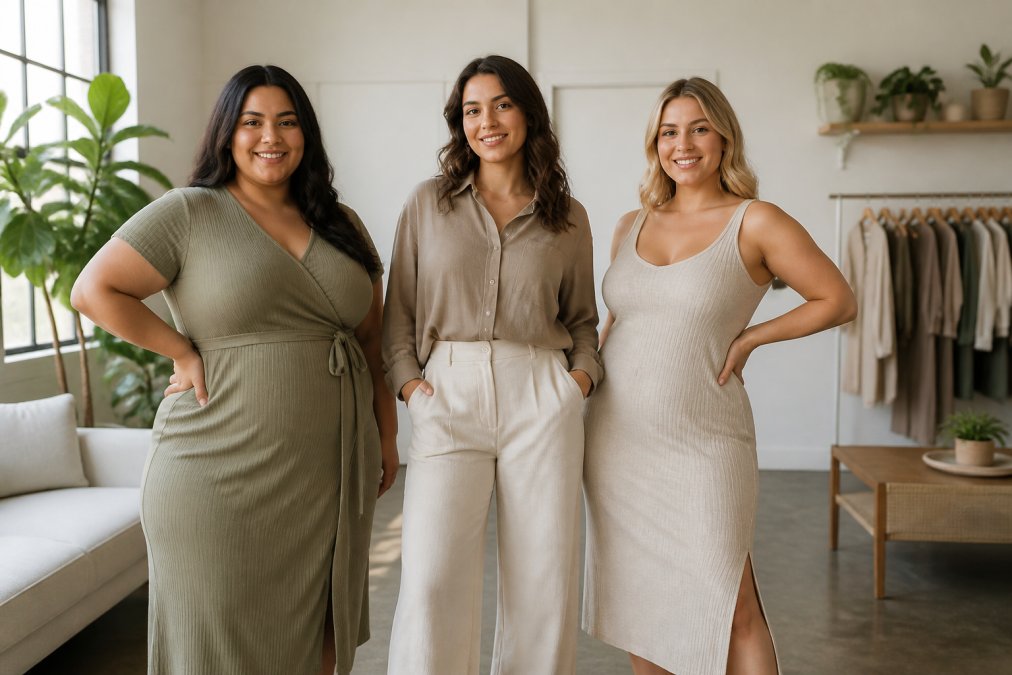
Before ordering from any boutique online, find at least three customer reviews from people who mention their height, weight, or specific fit concerns. Size charts tell you measurements; customer reviews tell you how the garment actually fits on a real body.
How to Build an Intentional Wardrobe with Boutique Pieces
An intentional wardrobe is a curated collection where every piece serves a clear purpose and works with at least three other items you own.
Versatile Staples vs. Trend-Driven Statement Pieces
The right balance is roughly 70% versatile staples and 30% trend-driven or statement pieces. Versatile staples are the workhorses: a well-fitted pair of dark jeans, a quality neutral top, a blazer that works for both professional and casual settings, and a dress that transitions from daytime to evening. These pieces should be in neutral colors and made from durable natural fibers.
Statement pieces are the 30% that express your aesthetic: a printed dress, a textured jacket, a color-blocked top. Spend more on staples because they get more wear. Statement pieces can be a lower investment because they're worn less frequently, but their construction still matters for longevity.
Shopping Tips for Online Boutiques: Avoiding Common Mistakes
Online boutique shopping rewards preparation and punishes impulse buying.
Check the return policy before you buy. A boutique that offers free returns on first orders or a generous return window signals confidence in their product. Read the fabric label information in the product description. Quality online boutiques list exact fiber percentages, not just "soft fabric" or "premium material." Look for real customer photos. Model shots tell you how a garment photographs. Customer photos tell you how it looks on real bodies in real lighting. Evaluate the size guide per item, not per brand. Construction quality and fit consistency vary even within a single brand's collection.
According to consumer guidance on online clothing purchases, shoppers should review return policies, shipping costs, and payment security before completing any online purchase.
Conclusion
Building a wardrobe around high quality boutique clothing brands requires evaluating fabric composition, inspecting construction details, and calculating price-per-wear rather than sticker price. The brands on this list have earned their place by delivering on these dimensions consistently.
D'LA Boutique is the right starting point for women who want that combination without choosing between comfort and style. The bamboo and modal blends deliver genuine fabric quality, the curated collection covers everything from everyday essentials to statement pieces, and the dedicated plus-size range means the sizing actually works across body types. Subscribe to D'LA Boutique's emails to get early access to new arrivals and seasonal collections before they sell out.
Frequently Asked Questions
How can you tell if a boutique clothing brand is high quality?
Check the fabric composition label first: natural fibers like organic cotton, bamboo, modal, and Egyptian cotton signal better textile quality than synthetic blends. Then examine the stitching. High-quality garments have tight, even stitch density with finished interior seams. Loose threads, puckered seams, or thin fabric that distorts when stretched are red flags. Garment construction details like reinforced stress points on pockets and zippers also separate durable boutique pieces from fast fashion alternatives.
Are boutique clothing brands actually worth the higher price compared to fast fashion?
The price-per-wear calculation usually favors boutique brands. A $120 dress you wear 40 times costs $3 per wear. A $30 fast fashion dress that loses its shape after five washes costs $6 per wear. High quality boutique clothing brands use fabric durability and better garment construction to extend a piece's useful life significantly. Bamboo and modal blends, for example, maintain softness and shape through repeated washing in ways that cheap polyester blends simply do not.
What are some sustainable boutique clothing brands available in the US?
Several sustainable boutique clothing brands serve the US market with strong ethical credentials. Reformation publishes environmental impact data per garment and uses Tencel and recycled fabrics. Christy Dawn sources regenerative cotton and manufactures in Los Angeles. Pact is Fair Trade Certified and uses 100% organic cotton. Kotn is a Certified B Corp using Egyptian cotton while investing in farming communities. Each brand approaches ethical manufacturing differently, so it's worth reviewing their supply chain transparency pages before purchasing.
Where do boutique owners typically source their clothing?
Independent boutique owners source from wholesale suppliers, trade shows like MAGIC in Las Vegas, and directly from small independent labels or domestic manufacturers. Higher-end boutiques often work with limited-run independent labels or place custom orders with ethical manufacturing partners. The sourcing method directly affects quality: boutiques buying from the same wholesale suppliers as mass retailers often carry similar garments at marked-up prices, while boutiques with direct manufacturer relationships can offer genuinely curated, exclusive pieces.
How do I find boutique clothing that fits well if I have a non-standard body type?
Look for boutiques that publish detailed size charts with actual garment measurements, not just S/M/L labels. Check whether the brand offers a dedicated plus-size collection with styles designed for those proportions rather than simply scaled-up standard cuts. Read customer reviews that include height and weight details. For online shopping, prioritize boutiques with clear return and exchange policies. Brands like Anthropologie and D'LA Boutique include plus-size options as part of their core collections rather than as an afterthought.
This article was written using GrandRanker