

How to Build a Capsule Wardrobe: A Step-by-Step Guide
Table of Contents
- How to Build a Capsule Wardrobe: The Framework Before You Shop
- Define Your Personal Style Before Buying a Single Piece
- How to Do a Wardrobe Audit and Declutter What You Own
- Choosing a Color Palette That Makes Everything Work Together
- Your Capsule Wardrobe Checklist: Staple Pieces That Actually Earn Their Place
- Capsule Wardrobe Examples for Different Lifestyles
- Building a Seasonal Capsule Wardrobe Without Starting Over Each Time
- How to Build a Capsule Wardrobe That Lasts: Care, Maintenance, and Digital Inventory
Last Updated: August 2, 2026
The average American woman owns 103 pieces of clothing but regularly wears fewer than 20 of them. A capsule wardrobe solves this gap by building a modular framework of versatile, high-quality pieces that work together interchangeably. This guide from D'LA Boutique breaks down the full process, from auditing what you own to choosing fabrics that hold up after dozens of washes, so you can stop buying more and start wearing better.
Here's what most guides get wrong: they hand you a generic list of 30 items and call it a capsule. A real capsule wardrobe is a modular framework built around your specific lifestyle, body, and color palette. Below, we'll show you exactly how to build yours from the ground up.
How to Build a Capsule Wardrobe: The Framework Before You Shop
A capsule wardrobe is a curated collection of versatile, high-quality clothing pieces that work together interchangeably to create multiple outfit combinations from a small number of items. The concept was popularized by Susie Faux in the 1970s and refined by Donna Karan's "Seven Easy Pieces" collection. Fewer, better pieces beat a closet full of things you never wear.
Before you buy a single item, establish a capsule framework with four pillars:
- Lifestyle mapping - What do you actually do each week? Work, errands, social events, workouts?
- Color palette - A set of 3-5 colors that mix without effort
- Capsule size - Most functional capsules run between 25 and 40 pieces, including shoes and outerwear
- Quality threshold - A minimum standard for fabric durability and construction
According to The Sustainability in Fashion guide by the Council of Fashion Designers of America, the slow fashion movement emphasizes buying fewer, more intentional pieces as a core strategy for both personal style and environmental impact.
Define Your Personal Style Before Buying a Single Piece
Your personal style is the filter through which every capsule decision gets made. Start by asking three questions:
- What do I feel most like myself in?
- What do I consistently reach for first?
- What do I own that I never wear, and why?
The answers reveal your actual style, not your aspirational one. If you consistently reach for soft knits but keep buying structured blazers because they look "professional," your capsule will never feel right.
Capsule Wardrobe for Professional vs. Casual Life
The biggest mistake is building one capsule for two completely different lives. A woman who works in a corporate office and spends weekends at farmers markets needs pieces that genuinely bridge both worlds.
The professional capsule leans on structured silhouettes, neutral tones, and polished fabrics. The casual capsule prioritizes ease: relaxed-fit tops, versatile denim, and layering pieces. The overlap is where the real value lives. A well-chosen modal-blend top reads polished under a blazer at work and relaxed tucked into jeans on Saturday.
| Lifestyle Zone | Core Pieces | Key Qualities | Outfit Goal |
|---|---|---|---|
| Professional | Tailored trousers, blazers, midi dresses | Structure, neutral tones | Polished, boardroom-ready |
| Casual | Relaxed tops, straight-leg jeans, knit layers | Comfort, versatility | Effortless, put-together |
| Overlap | Modal tops, wrap dresses, clean sneakers | Dual-purpose fabric | Works in both contexts |
| Evening | One statement dress, elevated flat or heel | Visual interest | Memorable without effort |
Body Type Customization: Fit Matters More Than Trends
Fit is the single variable that separates a capsule that looks expensive from one that looks like basics. A $200 dress that fits poorly will always look worse than a $60 dress cut for your proportions.
Key principles:
- Longer torso: Look for high-rise bottoms and tops with a defined waist seam.
- Petite frames: Cropped lengths and vertical details keep proportions balanced.
- Fuller bust: V-necks and wrap styles distribute visual weight evenly.
- Curvy hips: A-line and wrap skirts skim rather than cling.
Alterations are part of the investment. A tailor can transform a near-perfect piece into a perfect one for a fraction of the original cost.
How to Do a Wardrobe Audit and Declutter What You Own
Pull everything out. Every single item. Then go through each piece with one question: "Do I reach for this, or do I keep it because I feel guilty about what I spent?"
Guilt is not a good reason to keep clothing. The wardrobe edit process works in three passes:
- Keep: Fits well, worn regularly, works with multiple other pieces
- Donate or sell: Good condition, just not right for your life
- Discard: Worn out, pilling, stretched beyond repair
A common mistake is keeping "aspirational" pieces. If it doesn't fit your life right now, it doesn't belong in a functional capsule.
Choosing a Color Palette That Makes Everything Work Together
A color palette is the invisible architecture of a capsule wardrobe. Get it right, and every piece works with every other piece.
The most functional capsule palettes follow a simple structure: 2-3 neutral tones as the foundation, plus 1-2 accent colors in smaller doses. Neutral tones like ivory, camel, navy, charcoal, and warm gray do the heavy lifting. They mix without clashing and form the base of most outfit combinations.
Your accent colors should come from your existing wardrobe, specifically the pieces you already love. Before adding any new piece to your capsule, hold it against three items you already own. If it works with all three, it earns its place.
Your Capsule Wardrobe Checklist: Staple Pieces That Actually Earn Their Place
A capsule wardrobe checklist should reflect your actual life. Certain wardrobe essentials appear in nearly every functional capsule because of their versatility and cost-per-wear value.
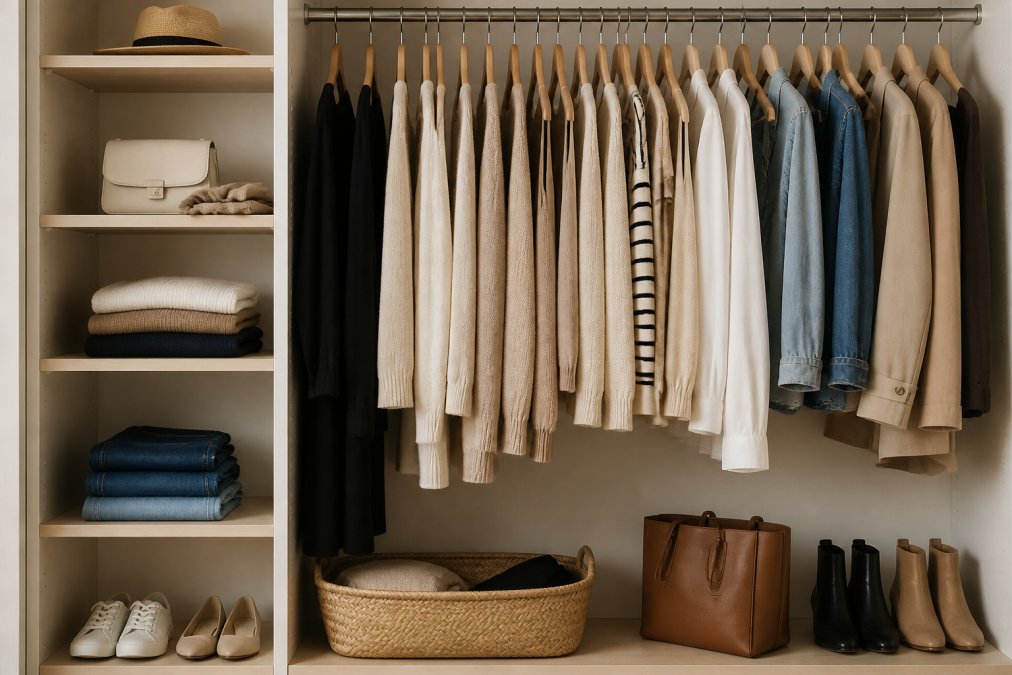
The core capsule checklist typically includes:
Tops (6-8 pieces):
- 2 fitted crew-neck or V-neck tees in neutral tones
- 1-2 relaxed button-down shirts (white or chambray)
- 1-2 elevated knit tops or modal-blend tops
- 1 lightweight turtleneck or mock-neck
Bottoms (4-5 pieces):
- 1 pair of straight-leg or slim jeans in a dark wash
- 1 pair of tailored trousers in a neutral tone
- 1 midi skirt in a solid or subtle print
Dresses and Rompers (2-3 pieces):
- 1 wrap dress or shirt dress that works dressed up or down
- 1 casual sundress or romper for warm months
- 1 elevated midi or maxi dress for evening
Outerwear (2-3 pieces):
- 1 structured blazer
- 1 transitional jacket (denim, moto, or utility)
- 1 coat appropriate for your climate
Footwear (3-4 pairs):
- Clean white or neutral sneakers
- Ankle boots or low-heeled booties
- Sandals or flats for warm weather
- One elevated heel or dressy flat
This lands around 30-35 pieces, the sweet spot for most women between minimalism and practicality.
Quality Over Quantity: What to Look for in Investment Pieces
Investment pieces justify their cost through cost-per-wear. A well-made top worn 80 times costs a fraction per wear of a cheap one worn five times before it pills and stretches.
When evaluating quality, focus on:
- Fabric composition: Natural fibers and quality blends like bamboo and modal hold their shape and breathe better than synthetic-heavy fabrics. Bamboo fabric resists odor and softens with washing rather than degrading.
- Seam construction: Flat-fell seams and French seams indicate garment quality. Raw, serged seams that fray after a few washes are a red flag.
- Finishing details: Check buttonholes, zippers, and hems for quality construction.
- Timeless design: Avoid trend-specific details in your core capsule.
D'LA Boutique's focus on bamboo and modal blends directly addresses durability. These materials maintain their softness, shape, and color through repeated washing, which is exactly what you need from a capsule staple.
Capsule Wardrobe Examples for Different Lifestyles
The right capsule wardrobe for a creative freelancer looks nothing like the right one for a corporate attorney or a stay-at-home parent.
The Corporate Professional: Leans heavily on structured pieces in navy, charcoal, and camel. Blazers, tailored trousers, silk-touch blouses, and a polished midi dress form the core. A bamboo-blend top under a blazer gives the polish of a dress shirt with the breathability of a casual tee.
The Creative or Casual Professional: More room for personality. Dark jeans, relaxed blazers, interesting tops, and one or two statement dresses cover most situations.
The Busy Mom or Multi-Role Woman: Prioritizes ease of movement, machine-washable fabrics, and pieces that transition from school drop-off to a lunch meeting. Modal-blend tops, straight-leg pants, and a wrap dress are the workhorses here.
As documented in the EPA's guide to sustainable textile choices and clothing longevity, choosing durable, washable natural fiber blends reduces both replacement frequency and textile waste.
Mixing and Matching Outfits to Maximize Combinations
Ten tops and five bottoms produce 50 outfit combinations before you factor in layering. The key to maximizing outfit combinations is the "rule of three": every piece in your capsule should work with at least three other pieces.
Layering is where capsule wardrobes earn their keep. A fitted turtleneck under a blazer reads completely differently than that same turtleneck under an oversized denim jacket. Same piece, two distinct looks.
Building a Seasonal Capsule Wardrobe Without Starting Over Each Time
The goal is not to build four separate capsules per year. Instead, think of your capsule as a year-round core with a small seasonal layer added on top.
Your year-round core includes pieces that work across temperatures with layering: jeans, tailored trousers, your best tops, and your blazer. These don't rotate out.
The seasonal layer is a small addition, typically 5-8 pieces:
- Spring/Summer: Add 2-3 lightweight dresses, a linen or bamboo-blend top, and sandals
- Fall/Winter: Add a coat, 1-2 heavier knits, and ankle boots if not already in your core
Store off-season pieces in labeled bins or vacuum bags to keep your active closet genuinely curated.
How to Build a Capsule Wardrobe That Lasts: Care, Maintenance, and Digital Inventory
Building the capsule is only half the work. The other half is keeping it in good condition long enough to actually benefit from the investment.
Sustainable Care to Extend Fabric Life
The single most damaging thing you can do to quality clothing is wash it too frequently at too high a temperature. Most garments need far less washing than people assume.
Practical care habits that extend fabric life:
- Wash less, air more: Hang worn pieces to air out between wears. Bamboo and modal fabrics resist odor naturally.
- Cold water, always: Hot water breaks down fibers and causes shrinkage.
- Inside out, mesh bag: Washing garments inside out reduces surface friction.
- Skip the dryer when possible: Heat is the enemy of fabric longevity.
- Proper storage: Fold knits rather than hanging them to prevent stretching.
According to the American Cleaning Institute's fabric care guidelines, following garment care labels precisely is the most effective way to extend clothing longevity.
Digital Inventory Management for Your Curated Closet
A digital inventory turns your capsule from a vague concept into a functional system. Photograph every piece against a neutral background, then organize the images by category. Several apps exist specifically for this, including Stylebook and Whering, but even a simple Google Photos album works.
What a digital wardrobe inventory lets you do:
- Track cost-per-wear: Note when you wear each piece. After six months, the data tells you which items are earning their place.
- Plan outfits in advance: Scroll through your inventory instead of standing in front of your closet making decisions under pressure.
- Identify true gaps: Before any shopping trip, check your inventory. You may realize you don't need another top.
- Document condition: Note when pieces start showing wear so you can plan replacements.
A digital inventory creates accountability. When you can see exactly what you own, impulse purchases become much harder to justify.
Building a capsule wardrobe takes real upfront effort, but the payoff is a closet you can trust every single morning. D'LA Boutique's collection is built around exactly that: curated women's apparel in bamboo and modal blends, designed to move between professional and casual contexts without losing their shape or softness. From versatile tops and tailored dresses to a dedicated plus-size collection, the pieces are chosen to anchor a real capsule. Subscribe to D'LA Boutique emails to stay current on new arrivals and build your capsule with pieces that actually earn their place.
Frequently Asked Questions
What is a capsule wardrobe and how does it work?
A capsule wardrobe is a small, curated collection of versatile clothing items that work together across multiple outfits. The idea is to replace a cluttered closet full of rarely worn pieces with a focused set of staple pieces built around a consistent color palette. Each item earns its place because it pairs with at least three or four others, giving you more outfit combinations from fewer clothes.
How many items should be in a capsule wardrobe?
Most capsule wardrobe frameworks suggest somewhere between 25 and 50 pieces, including tops, bottoms, outerwear, shoes, and accessories. The right number depends on your lifestyle. A woman splitting time between a corporate office and weekends out will need a slightly larger capsule than someone with a single dress code. Start smaller than you think you need and add only when a genuine gap appears.
What are the first steps to building a capsule wardrobe?
Start with a wardrobe audit before buying anything. Pull everything out, try each item on, and sort into keep, donate, and discard piles. From what remains, identify gaps. Then define your personal style and daily life requirements, choose a neutral color palette, and build your capsule checklist around those decisions. Shopping comes last, not first.
How do I choose a color palette for my capsule wardrobe?
Pick two or three neutral base colors such as white, black, navy, camel, or gray, then add one or two accent colors you genuinely wear. Every piece you buy should work with at least two of your base colors. This approach makes mixing and matching almost automatic and prevents the common mistake of owning pieces that only work with one specific outfit.
How do I create a capsule wardrobe for different seasons?
A seasonal capsule wardrobe works best when you keep a permanent core of year-round pieces and rotate a smaller set of season-specific items in and out. Store off-season clothing properly to protect fabric quality. Lightweight layering pieces like cardigans and lightweight jackets often bridge multiple seasons, which reduces how much you need to swap out each time the weather shifts.
Can a capsule wardrobe include colors and patterns?
Yes. A capsule wardrobe is a system, not a strict all-neutral rule. Patterns and colors work well when they are tied to your established palette. A striped top in your base colors, or a floral dress that picks up your accent color, still fits the modular system. The test is simple: if the piece pairs with at least three other items in your collection, it earns its spot.
How do fabrics like bamboo and modal fit into a capsule wardrobe?
Fabric durability is central to the capsule wardrobe philosophy. Bamboo and modal blends are valued because they resist pilling, hold their shape after repeated washing, and feel comfortable across long wear days. For a capsule built on cost-per-wear thinking, choosing pieces made from these materials means each item stays looking good longer, which is exactly what slow fashion and quality-over-quantity principles require.
This article was written using GrandRanker