

How to Check Boutique Clothing Quality
Table of Contents
- How to Check Boutique Clothing Quality: A Step-by-Step Inspection
- Step 1: Examine Seams and Stitching
- Step 2: Evaluate Fabric Composition and Weight
- Step 3: Assess Hardware, Fasteners, and Finishing Details
- Step 4: Test Drape, Cut, and Hand Feel
- Signs of Well-Made Clothing: What to Look For
- How to Identify Quality Fabrics and Sustainable Materials
- Evaluating High Quality Boutique Clothing Brands
Last Updated: August 18, 2026
How to Check Boutique Clothing Quality: A Step-by-Step Inspection
Shopping boutique clothing online means you can't hold the fabric, feel the weight, or try something on before committing. A systematic inspection process protects your investment and ensures you're getting quality pieces, not trendy items that fall apart after three washes.
The difference between a garment that lasts five years and one that lasts five months comes down to details most shoppers never examine: seam construction, fabric fiber content, hardware durability, and finishing techniques. This guide walks you through the specific inspection points that reveal true boutique clothing quality.
Step 1: Examine Seams and Stitching
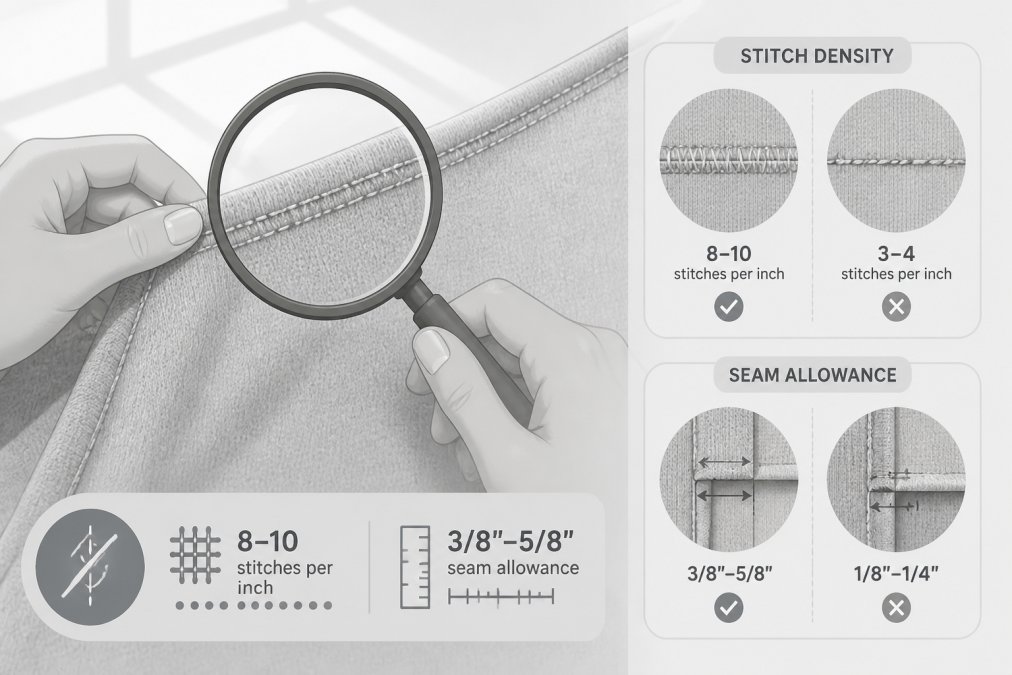
The seams tell you everything about how a garment was made. Start by looking at stitch density, quality garments typically have 12-16 stitches per inch on visible seams. Tight, consistent stitching means the seam won't unravel under stress.
Next, check the seam allowance, the fabric between the seam line and raw edge. Adequate seam allowance (typically 5/8 inch or more) gives you room for alterations. Narrow seam allowances suggest the brand prioritized cost over durability.
Look for serged edges on internal seams, a machine finish that prevents fraying. French seams (where the seam is enclosed within itself) are even better; they're common in high-quality dresses and blouses because they eliminate raw edges entirely.
Check for puckering or pulling along seams, which indicates tension problems during construction. Straight, flat seams that lie smoothly are what you want. Finally, inspect where seams meet. At intersections like armholes or waistbands, seams should align perfectly. Misaligned seams signal quality control issues.
Step 2: Evaluate Fabric Composition and Weight
The fiber content determines how a garment will perform over time. Read the care label carefully, it tells you what you're actually getting.
Natural fibers like cotton, linen, and wool have different durability profiles than synthetics. High-quality boutique pieces often blend natural fibers with small amounts of synthetic fiber (typically 5-15% elastane or polyester) to improve stretch, wrinkle resistance, or shape retention.
Bamboo and modal blends, increasingly common in contemporary boutique clothing, offer softness comparable to silk with better durability. These semi-synthetic fibers hold color well and resist pilling better than pure cotton.
Fabric weight matters significantly for longevity. Lightweight fabrics (under 4 ounces per square yard) are prone to tearing. Medium-weight fabrics (4-6 ounces) are ideal for everyday pieces. Check the fabric's opacity by holding it up to light. A well-made dress should require minimal undergarments; if you can see through the fabric easily, the manufacturer cut corners.
Look for consistent color throughout the fabric. Uneven dyeing suggests rushed production. Test colorfastness by examining whether dyes have bled or transferred during production. Any visible staining indicates dye quality problems.
Step 3: Assess Hardware, Fasteners, and Finishing Details
Zippers, buttons, snaps, and hooks are where many garments fail. Examine zippers closely, quality zippers have smooth, aligned teeth with no gaps. The slider should move effortlessly without catching. Metal zippers (typically brass or nickel-plated) outlast plastic zippers significantly. Branded zippers like YKK or Riri are industry standards; generic unmarked zippers are a red flag.
Buttons should be securely attached with multiple thread passes. Quality construction includes a thread shank (space between button and fabric) that prevents stress on the threads. Buttons should feel substantial, not flimsy.
Check buttonholes for reinforcement. Quality buttonholes are finished with thread binding or machine stitching that prevents fraying. Snap fasteners and hooks should be sewn securely with reinforcement stitching.
Look at hem finishing. Hems should be even in width and stitched with consistent tension. Hand-stitched or blind-stitched hems (where stitches are invisible from the outside) indicate higher quality. Examine any elastic components, quality elastic maintains its shape and is sewn securely with multiple rows of stitching.
Step 4: Test Drape, Cut, and Hand Feel
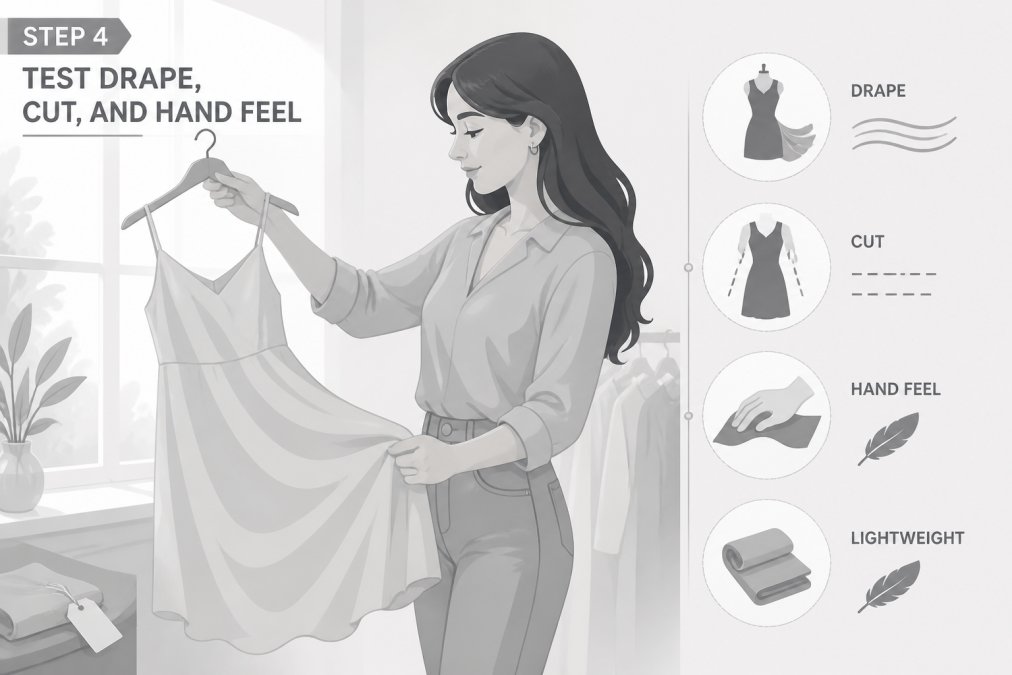
How a garment moves on your body reveals a lot about its construction quality. Quality fabrics drape smoothly without clinging awkwardly or standing away from the body. A well-cut garment follows your body's contours without pulling at seams.
The hand feel matters for wearability. Quality fabrics feel soft and smooth without being limp. Run your hand across the fabric in both directions. Pilling (small balls of fiber that form on the surface) indicates low-quality fiber or inadequate fabric processing. New garments should have zero visible pills.
Check the grainline (the direction of the weave). Quality garments are cut with the grainline aligned properly, ensuring the piece hangs straight. Assess the fit consistency, seams should be straight and parallel. Armholes should sit properly without pulling or gaping. Necklines should lie flat.
Feel the interfacing, the stabilizing fabric used inside collars, cuffs, and waistbands. Quality interfacing feels substantial but not stiff. Poor interfacing collapses or wrinkles after washing, ruining the structure of these details.
Signs of Well-Made Clothing: What to Look For
Even, consistent stitching throughout the garment is non-negotiable. Straight seams, properly aligned intersections, and tight stitch density all point to careful manufacturing.
Symmetry matters. Pattern matching on seams shows the brand invested time in layout and cutting. Check collar points, pocket placement, and hemlines, these should be even on both sides.
Quality linings in dresses, jackets, and structured pieces prevent the garment from clinging to your body and protect interior seams from wear. A quality lining is smooth, substantial, and securely attached.
Finished hems and edges throughout the garment indicate attention to detail. The weight and substance of the garment matter, quality pieces feel substantial in your hands, not heavy, but solid. Look for evidence of quality control: straight seams, proper pressing, and clean finishing suggest someone inspected the garment before it shipped.
How to Identify Quality Fabrics and Sustainable Materials
Understanding fabric quality requires knowing what to look for in fiber content and processing.
Natural fibers, cotton, linen, wool, silk, have inherent durability advantages but require proper care. High-quality natural fibers are often labeled "premium" or "luxury" grades. These are thicker, stronger fibers that resist pilling and wear better than standard grades.
Bamboo and modal fabrics are increasingly marketed as sustainable alternatives to synthetic blends. They're softer than cotton, drape beautifully, and resist wrinkles better. However, they're less durable than cotton in terms of tensile strength. Quality bamboo and modal blends combine these fibers with cotton or other natural fibers to balance softness with durability.
Synthetic fibers like polyester and nylon are durable and resistant to wrinkles, but they don't breathe as well as natural fibers. Quality synthetics are used strategically in blends (5-15%) to improve performance rather than as the primary fiber.
Linen is exceptionally durable but wrinkles significantly unless blended with other fibers. High-quality linen garments often include 5-10% elastane or polyester to reduce wrinkles and improve stretch.
Check whether the fabric has been treated with any finishes. Water-resistant or stain-resistant finishes add functionality but can affect softness and breathability. These treatments eventually wash out.
Sustainable materials increasingly appear in boutique clothing. Look for certifications like GOTS (Global Organic Textile Standard) for organic cotton, or FSC certification for wood-based fibers. These certifications indicate responsible sourcing, though they don't guarantee superior durability. A sustainable garment that falls apart after three washes isn't actually sustainable.
Evaluating High Quality Boutique Clothing Brands
Research the brand's sourcing and production practices. Brands transparent about where garments are made and what materials they use typically stand behind their quality. Vague sourcing information suggests the brand prioritizes cost over consistency.
Look at customer reviews with a critical eye. Focus on reviews mentioning durability, fit consistency, and how garments hold up after multiple washes. Be skeptical of overwhelmingly positive reviews, real customers always mention some issues.
Check whether the brand offers detailed product information. High-quality brands provide fiber content breakdowns, care instructions, and notes about construction details. Minimal product information suggests the brand doesn't want scrutiny.
Examine the brand's return and quality guarantee policies. Brands confident in their quality typically offer generous return windows and clear quality guarantees. Restrictive return policies suggest the brand knows problems exist.
D'LA Boutique exemplifies quality-focused boutique retail. The brand's emphasis on materials like bamboo and modal blends, combined with a curated collection designed for durability rather than trend-chasing, reflects a commitment to longevity. The plus-size collection availability indicates thoughtful design across all body types rather than one-size-fits-most construction.
Compare pricing against construction quality. Boutique pieces cost more than fast fashion, but that premium should reflect superior materials and construction, not just branding. Excessive markup without corresponding quality improvements is a red flag.
Ask the boutique directly about construction and durability. Brands confident in their quality welcome these questions. Evasive answers suggest the brand hasn't prioritized these details.
Checking boutique clothing quality isn't complicated, but it does require intentional attention to details most shoppers overlook. By systematically examining seams, evaluating fabric composition, assessing hardware durability, and testing how garments drape and feel, you can confidently identify pieces worth investing in.
The goal isn't perfection, even quality garments have minor variations. The goal is identifying consistent evidence of careful construction, material selection, and quality control. When you find a boutique that delivers on these fronts, you've found a reliable source for clothing that actually lasts.
Start your quality evaluation with D'LA Boutique's curated collection, where thoughtful material selection, attention to construction details, and inclusive sizing reflect a genuine commitment to garment longevity.
Frequently Asked Questions
How can I tell if boutique clothing quality will hold up after washing?
Check the fiber content on the care label, natural fibers like cotton, linen, and modal blended with quality synthetics resist pilling and colorfastness issues. Examine seam construction: French seams and serged edges prevent fraying. Look for reinforced stress points like buttonholes and hem finishing. Before purchasing, ask the boutique about their quality control standards and whether they offer wash-care guidance. High quality boutique clothing brands typically provide detailed care instructions and fiber composition transparency.
What are the signs of well-made clothing I should look for?
Well-made clothing shows consistent pattern matching across seams, tight stitch density (12-15 stitches per inch), secure hardware with reinforced fasteners, and quality lining or interfacing. The fabric should have appropriate weight for its intended use and drape naturally without bunching. Hems should be finished neatly, and seam allowances should be adequate. Check that zippers glide smoothly and buttons are sewn with thread shanks underneath. These construction details indicate a garment designed for longevity rather than fast fashion.
Is a higher price tag always a sign of better clothing quality?
Not necessarily. Price reflects brand positioning, marketing, and location as much as quality. However, boutique clothing typically costs more because it features better fabric composition, superior garment construction, and smaller production runs with stricter quality control. The difference between a boutique piece and fast fashion lies in durability and tailoring potential. Calculate cost-per-wear: a $120 dress worn 50 times costs $2.40 per wear, while a $30 fast-fashion dress worn 5 times costs $6 per wear. Quality fabrics and construction mean your investment lasts longer.
How do I evaluate fabric quality when shopping online?
Request detailed fiber content percentages and fabric weight (measured in grams per square meter). Ask if the boutique provides close-up photos showing fabric texture and weave structure. Look for mentions of natural fibers like bamboo, modal, or organic cotton over synthetic blends. Check customer reviews specifically mentioning durability after multiple washes and whether the fabric pills or loses color. Reputable boutiques provide wash-care instructions upfront. For high quality boutique clothing brands, transparency about sourcing and fabric treatment (like pre-shrinking) is a strong quality indicator.
This article was written using GrandRanker