

How to Wash Bamboo Clothing: Complete Care Guide
Table of Contents
- Why Bamboo Clothing Requires Special Care
- Preparing Your Bamboo Garments Before Washing
- How to Wash Bamboo Clothing Step by Step
- Best Detergent for Bamboo Fabric
- Does Bamboo Clothing Shrink and How to Prevent It
- How to Dry Bamboo Clothes Without Damage
- Removing Stains from Bamboo Clothing
- Storage and Long-Term Care for Bamboo Garments
Why Bamboo Clothing Requires Special Care
Bamboo fabrics demand different care than cotton or synthetics. The fibers that make bamboo viscose and bamboo lyocell soft and moisture-wicking are more delicate when wet, prone to stretching and fiber breakdown without proper handling.
Bamboo fabric loses structural integrity when exposed to harsh chemicals, high heat, or aggressive mechanical action. The cellulose fibers weaken when saturated, so traditional laundry methods that work for cotton can permanently damage bamboo garments. Cold water washing, gentle cycles, and air drying aren't just recommendations, they're essential to maintaining shape and preventing pilling.
This guide covers everything you need to know about caring for bamboo clothing so your pieces last years instead of months. Our curated collection features high-quality bamboo and modal blends designed for modern women who value both comfort and durability, and proper care is essential to protecting that investment.
Preparing Your Bamboo Garments Before Washing
Before washing, a few preparation steps minimize friction, protect seams, and prevent color bleeding.
Check all pockets, zippers, and closures. Turn the garment inside out, this is one of the most effective damage-prevention techniques for delicate fabrics. Washing inside out reduces pilling, fading, and surface friction damage.
For items with zippers, buttons, or embellishments, use a mesh laundry bag. This protective barrier prevents snagging while allowing water and detergent to penetrate the fabric.
Check for existing stains and treat them before washing. Pre-treat with a gentle, enzyme-free stain remover. Enzyme-based cleaners weaken bamboo fibers, so avoid them entirely. Apply mild detergent directly to the stain, let it sit for 10-15 minutes, then proceed to washing.
Separate by color. New bamboo garments may release dye in the first wash or two, especially darker shades. Washing dark and light colors separately prevents permanent staining of lighter pieces.
How to Wash Bamboo Clothing Step by Step
The washing process is straightforward once you understand the principles: use cold water, minimal agitation, and a detergent formulated for delicate fabrics.
Machine Washing on Gentle Cycle
Machine washing is acceptable for bamboo clothing with the right settings.
Step 1: Select cold water Cold water wash is non-negotiable. Hot water accelerates fiber degradation and increases shrinkage risk. Cold water preserves the fabric's natural properties while cleaning effectively.
Step 2: Use the gentle or delicate cycle The gentle cycle runs at lower spin speed and shorter duration than standard cycles, protecting bamboo fibers from stretching and breaking.
Step 3: Load the machine properly Don't overstuff. Fill the drum about three-quarters full at most to allow each piece space to move freely without excessive agitation.
Step 4: Add the right detergent Use mild detergent specifically formulated for delicate fabrics or lingerie. Avoid standard laundry detergents, which contain enzymes and harsh surfactants that break down bamboo fibers. The detergent should be gentle, phosphate-free, and free of bleach or optical brighteners.
Step 5: Skip the fabric softener Fabric softener coats fibers and reduces moisture-wicking properties. It also builds up over time, making fabric stiff and reducing breathability.
Step 6: Run the cycle Start the gentle cycle with cold water. The wash duration should be 20-30 minutes maximum.
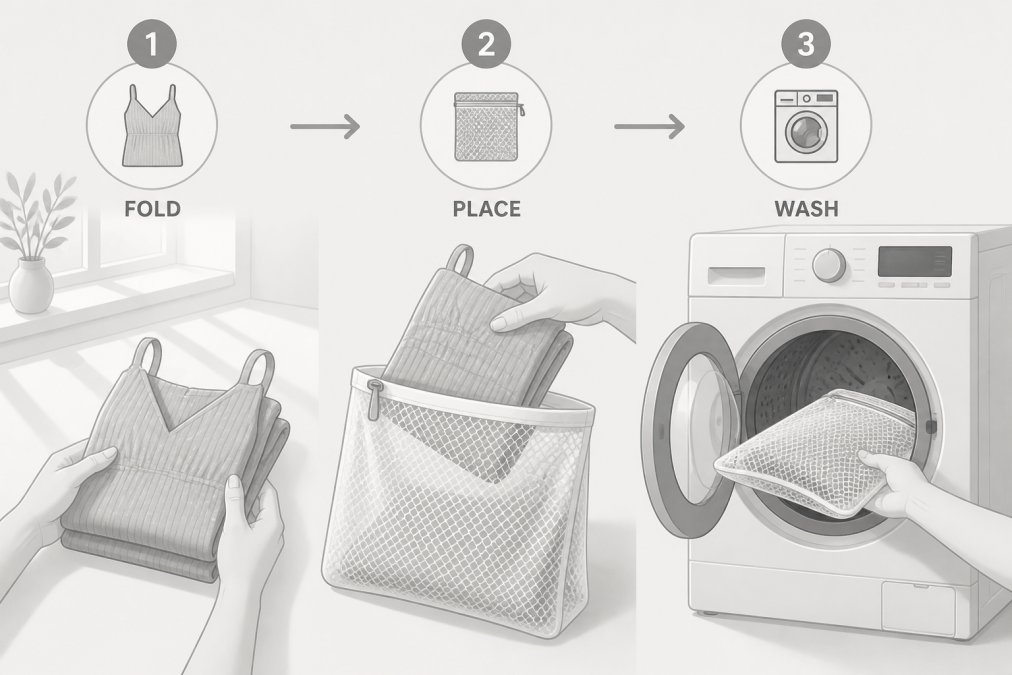
Hand Washing for Maximum Protection
Hand washing is the safest method for delicate bamboo pieces, new garments, or items with embellishments.
Fill a sink with cold water and add a small amount of mild detergent. Submerge the garment and gently agitate the water with your hands for 2-3 minutes. Don't scrub, wring, or twist the fabric. Let the garment soak for 10-15 minutes, then gently agitate again for another minute.
Rinse thoroughly with cold water using multiple rinses to remove all detergent residue. Never wring or twist bamboo fabric to remove water. Instead, gently squeeze the water out by pressing the garment against the basin, or roll it loosely in a clean towel to absorb excess moisture.
Best Detergent for Bamboo Fabric
The detergent you choose directly impacts how long your bamboo clothing lasts.
Look for detergents labeled as gentle, delicate, or wool-specific. These formulations use mild surfactants that clean without breaking down delicate fibers. Avoid any detergent containing enzymes, bleach, or optical brighteners. Enzyme-based cleaners break down the cellulose structure of bamboo fabric.
Wool wash detergents work well for bamboo because both fabrics require similar care principles. They're pH-neutral and free of harsh chemicals. Avoid standard laundry detergents marketed for general use, they contain surfactants and enzymes too harsh for bamboo's fiber structure.
Hard water can complicate detergent performance. If you have hard water, consider using a water softener or adding white vinegar to the rinse cycle. Use about one-quarter cup per rinse cycle to remove mineral deposits that dull fabric and reduce softness.
Does Bamboo Clothing Shrink and How to Prevent It
Bamboo clothing can shrink if you don't follow proper care guidelines. The good news: shrinkage is entirely preventable.
Bamboo viscose and bamboo lyocell shrink primarily due to heat exposure and aggressive washing. Hot water causes fibers to contract, and high-temperature drying compounds the problem. Even one wash in warm water can cause noticeable shrinkage.
The prevention strategy is simple: cold water throughout the entire process. Never use warm or hot water, even for the rinse cycle. Low-heat or air drying is equally important. If you must use a dryer, use the lowest heat setting for just 10-15 minutes to remove excess moisture, then remove immediately and lay flat or hang to finish air drying.
New bamboo garments may shrink slightly in the first wash even with proper care, typically 2-3% if you follow cold water and air-dry methods. Some bamboo pieces are pre-shrunk by the manufacturer. Check the care label to see if yours has been treated.
How to Dry Bamboo Clothes Without Damage
Drying method is as critical as washing method.
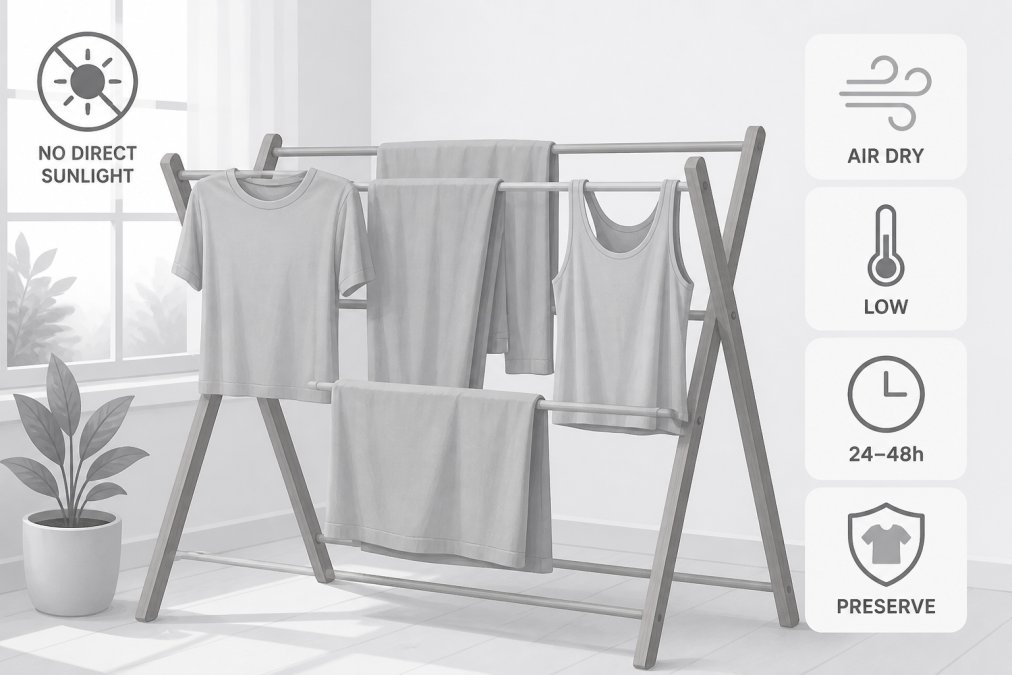
Air drying is the gold standard for bamboo clothing. Lay the garment flat on a clean, dry surface away from direct sunlight. A drying rack, clean towel, or mesh flat-drying surface works well. Flat drying prevents the weight of water from stretching fibers. The garment may take 12-24 hours to dry completely.
If you don't have space for flat drying, hang the garment on a padded hanger in a well-ventilated area. Use padded or wooden hangers, never wire hangers. Hang from the shoulders, not the hem, to minimize stretching. Keep away from direct sunlight, which fades colors over time.
Never use a standard tumble dryer for bamboo clothing. High heat damages fibers, causes shrinkage, and creates permanent wrinkles. Avoid hanging bamboo pieces while dripping wet, the weight of water-saturated fabric will stretch the garment out of shape.
In humid climates, increase air circulation by opening windows or using a fan. Ensure the garment isn't in a damp environment where mold or mildew could develop.
Removing Stains from Bamboo Clothing
Stains on bamboo fabric require immediate attention. The longer a stain sits, the harder it becomes to remove without damaging fibers.
Blot fresh stains immediately, don't rub. Use a clean, white cloth to blot up excess liquid. Work from the outside edges of the stain toward the center to prevent spreading.
For liquid stains, rinse with cold water immediately. Hold the garment under cold running water, letting water flow through the fabric from the back side. This pushes the stain out rather than deeper in.
Create a gentle stain treatment by mixing cold water with a small amount of mild detergent. Apply to the stain and let it sit for 10-15 minutes. Gently work the solution into the fabric using your fingers or a soft brush, never scrub aggressively. Rinse thoroughly with cold water.
For stubborn stains, white vinegar can help. Mix equal parts white vinegar and cold water, apply to the stain, and let it sit for 15-20 minutes. Rinse thoroughly afterward.
Avoid chlorine bleach entirely. It permanently damages bamboo fabric and can cause yellowing or weakening of fibers. Never apply heat to a stained garment, as this can permanently set the stain. If home treatment doesn't work after two attempts, take the garment to a dry cleaner experienced with delicate fabrics.
Storage and Long-Term Care for Bamboo Garments
How you store bamboo clothing between wears affects its longevity.
Fold bamboo pieces rather than hanging them long-term. Hanging causes stretching over time, particularly in the shoulders and neckline. Store in a cool, dry place away from direct sunlight. A closet or drawer with consistent temperature and humidity is ideal.
Use cedar blocks or lavender sachets for natural moth prevention. Avoid synthetic mothballs, which contain harsh chemicals that damage bamboo fibers and leave odors.
Don't store bamboo clothing in plastic bags or airtight containers for extended periods. These trap moisture and prevent air circulation, creating environments where mildew can develop. Use breathable storage bags or open shelving instead.
Refresh bamboo garments between wears without washing. A light mist of water and air drying removes odors and refreshes the fabric. This extends the time between washes and reduces wear on fibers.
Inspect stored garments periodically for pilling or damage. Use a fabric shaver or gentle lint roller to remove pills without damaging the underlying fabric. Repair small issues immediately, a loose seam or small hole gets worse with each wear and wash.
| Care Method | Frequency | Impact |
|---|---|---|
| Cold water washing | Every 2-3 wears | Preserves fiber strength and color |
| Gentle cycle | Every wash | Prevents stretching and pilling |
| Air drying | Every wash | Eliminates shrinkage and heat damage |
| Stain treatment | Immediately | Prevents permanent stains |
| Storage in cool, dry place | Always | Extends garment lifespan |
| Periodic inspection | Monthly | Catches damage early |
The difference between bamboo clothing that lasts years and pieces that deteriorate in months comes down to care consistency. Cold water, gentle cycles, air drying, and proper storage are straightforward practices that protect your investment in quality pieces.
At D'LA Boutique, we design our bamboo and modal blend collection for women who value durability alongside style. Following these care guidelines ensures your pieces maintain their softness, shape, and color wash after wash. Start with the first wash and maintain these practices throughout the garment's life.
Frequently Asked Questions
Can you machine wash bamboo clothing?
Yes, you can machine wash bamboo clothing on a gentle cycle with cold water. Use a mesh laundry bag to protect delicate fibers and reduce agitation. Select a mild, enzyme-based detergent and avoid bleach or fabric softener. Machine washing is safe when you follow these precautions, though hand washing offers maximum protection for your garments.
Does bamboo clothing shrink when washed?
Bamboo clothing can shrink if exposed to hot water or high heat during drying. To prevent shrinkage, always wash in cold water and air dry your garments. Bamboo viscose and lyocell fabrics are sensitive to heat, which weakens fiber strength. Proper water temperature and low-heat drying methods preserve garment longevity and maintain your original fit.
How do you remove stains from bamboo clothing?
Treat stains immediately by blotting (not rubbing) with a damp cloth. For fresh stains, rinse with cold water. For set-in stains, apply a mild enzyme-based cleaner directly to the affected area and let sit for 15-30 minutes before washing on a gentle cycle. Avoid bleach or harsh chemicals, which damage bamboo fabric. Always test any stain treatment on an inconspicuous area first.
Should you use fabric softener on bamboo clothes?
No, avoid fabric softener on bamboo clothing. Fabric softener coats fibers and reduces breathability, which undermines the moisture-wicking benefits of bamboo. It can also leave residue that attracts dirt and diminishes fabric integrity over time. Instead, gentle washing techniques and proper air drying naturally maintain softness without chemical additives.
This article was written using GrandRanker