

What Is the 3-3-3 Rule for Clothes? Capsule Wardrobe Guide
Table of Contents
- What Is the 3-3-3 Rule for Clothes?
- 3-3-3 Rule vs. Project 333 Rules: What's the Difference?
- How to Choose Your 9 Items
- How to Style a 9-Piece Wardrobe for Work and Weekends
- Capsule Wardrobe Essentials That Make the Rule Easier
- Common Mistakes to Avoid With the 3-3-3 Rule
- Frequently Asked Questions
Last Updated: September 28, 2026
What Is the 3-3-3 Rule for Clothes?
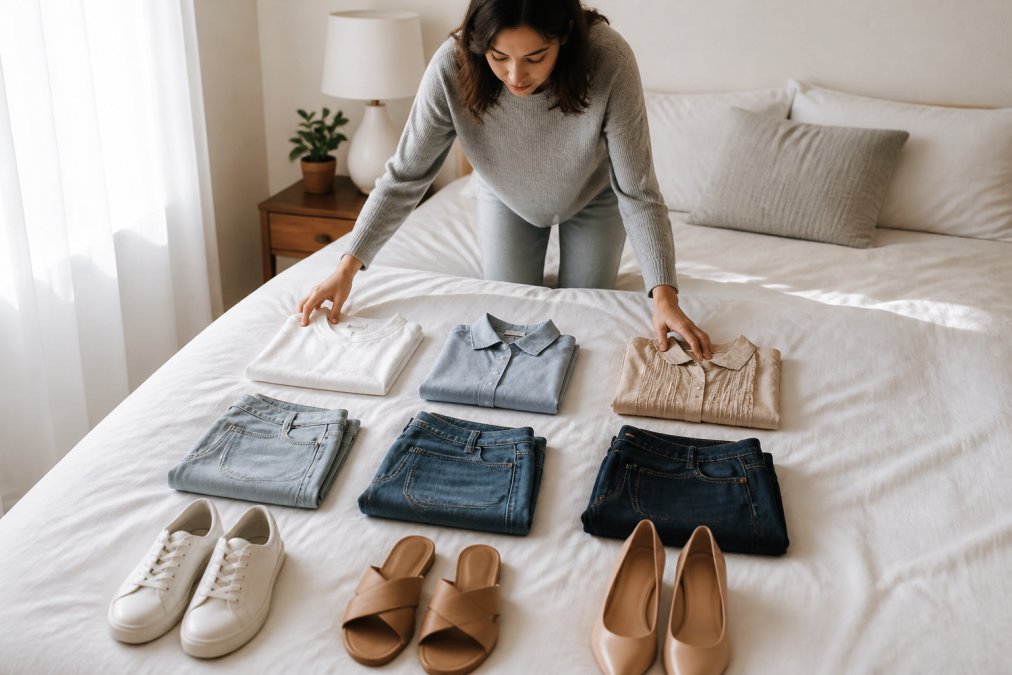
The 3-3-3 rule for clothes is a minimalist styling framework that builds a small, flexible wardrobe from nine key pieces: three tops, three bottoms, and three pairs of shoes. Those nine items create 27 outfit combinations, which is enough variety for most weeks without a closet full of clothes you never wear.
This guide from D'LA Boutique breaks down how the rule works, how it differs from other capsule wardrobe challenges, and how to make it fit your real life in 2026.
Here's the part most people miss: the 3-3-3 rule isn't about owning fewer clothes forever. It's a styling exercise. You learn which pieces you actually reach for, then rebuild your closet around those.
A common mistake is treating nine items as a permanent wardrobe. That's not the point. The point is to test what works before you spend money on more.
Below, we'll show you exactly how to pick your nine pieces, style them for work and weekends, and avoid the traps that make most people quit after two weeks.
How the 3-3-3 Rule Works: 3 Tops, 3 Bottoms, 3 Shoes
The math is simple. Three tops times three bottoms gives you nine outfit combinations. Add three pairs of shoes, and each of those nine outfits gets three different looks. That's 27 total combinations from nine items.
The rule works because it forces choices. You can't hide behind a packed closet. Every piece has to earn its spot.
Most people find the first week awkward. By the second week, the decision fatigue disappears. You stop staring at a full closet and just get dressed.
3-3-3 Rule vs. Project 333 Rules: What's the Difference?
These two rules get mixed up constantly, and the confusion costs people time. They are not the same challenge.
The 3-3-3 rule is a styling exercise. You pick nine items and build outfits from them, usually for a short period like a week or a month. It's a test run.
Project 333 rules are a longer commitment. You wear only 33 items for three months, including clothes, accessories, jewelry, and outerwear. Shoes count. Everything counts except underwear, sleepwear, and workout gear.
| Feature | 3-3-3 Rule | Project 333 |
|---|---|---|
| Item count | 9 items | 33 items |
| Duration | 1 week to 1 month | 3 months |
| Includes accessories | No | Yes |
| Main goal | Learn what you wear | Long-term closet reset |
| Difficulty | Beginner | Intermediate |
So which one should you try first? Start with the 3-3-3 rule. It's a smaller commitment, and it teaches you the habits you need before you attempt a full three-month capsule.
How to Choose Your 9 Items
Picking the right nine pieces decides whether this works or falls apart. The goal is versatility, not variety.
Start With a Wardrobe Audit
A wardrobe audit means pulling everything out and sorting it into three piles: love, maybe, and never wear. Be honest with the "maybe" pile. If you haven't worn it in a year, it belongs in the never pile.
This step takes about an hour. Most people find they wear roughly a fifth of what they own. That's the whole reason the 3-3-3 rule exists.
A common mistake is skipping the audit and guessing. You'll pick wrong. The audit shows you what you actually reach for.
Pick Pieces That Mix and Match
Every piece you choose should work with at least two of the others. If a top only matches one bottom, it's out.
Here's a simple test:
Mid Rise Stretchy Straight Leg Jean →
- Lay all nine items on your bed
- Try to build five outfits without repeating a top
- If you can't, swap out the weakest piece
Neutral colors make this easier. A white, black, and striped top will pair with almost any bottom. Loud prints limit your options fast.
How to Style a 9-Piece Wardrobe for Work and Weekends
The same nine pieces can cover a Monday meeting and a Saturday brunch. The trick is layering and accessories, not extra clothes. But the real unlock is mapping your combinations before you wear them, so you're never standing in front of the closet at 7 a.m. guessing.
Build a 3x3 Outfit Grid
Most articles tell you nine items make 27 outfits and stop there. That number is useless until you can see it. Here's how to turn it into something you actually use.
Draw a simple grid. Label the columns with your three bottoms (call them B1, B2, B3) and the rows with your three tops (T1, T2, T3). Each cell is one outfit. That's your nine core combinations.
Work vs. Weekend: Same Nine, Different Dial
For work, pair a structured top with your cleanest bottoms and closed-toe shoes. Add a blazer from outside your nine if your office runs formal. The 3-3-3 rule doesn't ban layers. It just limits your core pieces.
Three quick swaps that change everything:
- Swap heels for sneakers
- Add a belt or scarf
- Roll your sleeves or tuck your top
A Workweek You Can Actually Wear
Here's one way to run the grid across five days without repeating a full look:
- Monday: T1 + B1 + S1 (structured, meeting-ready)
- Tuesday: T2 + B1 + S2 (same bottom, new top and shoe)
- Wednesday: T1 + B2 + S3 (swap the bottom, keep the top)
- Thursday: T3 + B2 + S1 (fresh top, familiar shoe)
- Friday: T2 + B3 + S2 (casual bottom, relaxed shoe)
Travel: The 3-3-3 Rule as a Packing List
This is where the rule earns its keep. Nine items fit in a carry-on with room to spare, and 27 combinations cover a week-long trip. Pack your three tops, three bottoms, and three shoes, then add underwear, sleepwear, and one layer for cold planes. Because every piece already works with the others, you never open a suitcase and find nothing that matches.
Capsule Wardrobe Essentials That Make the Rule Easier
Some pieces make the 3-3-3 rule almost automatic. Build around these and the nine-item limit stops feeling tight.
Shop Your Closet First
Pull everything out and look for the essentials you already have. A plain white tee you've worn fifty times beats a new one you bought because a blog told you to. The goal is to identify which of your existing pieces already do the heavy lifting, then build your nine around them.
The Short List of True Essentials
You don't need a 50-item capsule. For the 3-3-3 rule, you need enough neutral, mixable pieces to fill three tops, three bottoms, and three shoes. That's it.
- Tops: one plain neutral (white, black, or gray), one striped or subtly patterned, one that fits your climate and season
- Bottoms: one pair of jeans, one pair of tailored or straight-leg pants, one skirt or second pant depending on your style
- Shoes: one casual (sneakers), one closed-toe neutral (loafers or flats), one that matches your dressiest need
Denim That Does the Heavy Lifting
Jeans are the backbone of most nine-piece wardrobes. They work for work, weekends, and everything between. If you already own a pair that fits well and you reach for constantly, that pair is your B1.
Common Mistakes to Avoid With the 3-3-3 Rule
If you want to go deeper on wardrobe planning habits, the Project 333 official challenge guidelines explain how the longer version works.
Frequently Asked Questions
What is the 3-3-3 rule in women's clothing?
The 3-3-3 rule is a styling framework that limits you to three tops, three bottoms, and three pairs of shoes for a set period, usually a week or a month. That's nine items total, which can create up to 27 different outfit combinations. The goal is to simplify getting dressed while testing how well your wardrobe pieces actually mix and match. It's a short-term challenge, not a permanent closet purge.
What is the difference between the 3-3-3 rule and Project 333?
The 3-3-3 rule uses 9 items for a short challenge, while Project 333 rules cap you at 33 items for three months. Project 333 includes clothing, accessories, jewelry, outerwear, and shoes, though wedding rings and underwear typically don't count. The 3-3-3 rule is a low-commitment starting point; Project 333 is a longer seasonal commitment. Many people try 3-3-3 first, then graduate to Project 333 once they see how much they actually wear.
How many outfits can you make with the 3-3-3 method?
In theory, three tops, three bottoms, and three shoes create 27 outfit combinations (3 x 3 x 3). In practice, you'll likely wear 12 to 15 of those regularly, since some pairings work better than others. The real number depends on how neutral your color palette is and whether your tops layer well. Sticking to two or three core colors makes far more of those combinations wearable.
Can the 3-3-3 rule work for a seasonal capsule wardrobe?
Yes, and it's one of the easiest ways to test a seasonal transition before committing to a full capsule. Build your nine pieces around the current season, then swap in layers as temperatures shift. For example, a light denim straight-leg jean works in spring and fall, while a high-waisted wide leg pairs well with heavier knits in winter. Rotate your nine items quarterly to keep the wardrobe current.