

5 Best Natural Fabric Alternatives to Polyester
Table of Contents
- Quick Comparison: Natural Fabric Alternatives at a Glance
- 1. Bamboo: Is Bamboo Fabric Good for Summer?
- 2. Modal: Benefits of Modal Fabric for Everyday Wear
- 3. Tencel Lyocell: Sustainable Performance and Microplastic Shedding
- 4. Organic Cotton: Durability and Cost-Per-Wear
- 5. Hemp and Linen: Breathability and End-of-Life Disposal
- How to Care for Natural Fibers
- Conclusion: Making the Switch
- Frequently Asked Questions
Last Updated: September 17, 2026
Quick Comparison: Natural Fabric Alternatives at a Glance
Polyester still dominates closets, but the search for natural fabric alternatives has never been louder. This guide from D'LA Boutique breaks down five options that breathe better, feel softer, and hold up over time. Below, you'll find a side-by-side look at what each fabric does best, plus honest trade-offs most roundups skip. The goal is simple: help you pick a fabric that fits your life, not just your aesthetic.
What are natural fabric alternatives? They are plant- or animal-based textiles, including bamboo, modal, Tencel lyocell, organic cotton, hemp, and linen, that replace synthetic fibers like polyester in everyday clothing.

| Fabric | Best For | Breathability | Care Level | Standout Trait |
|---|---|---|---|---|
| Bamboo | Hot weather | High | Easy | Cool to the touch |
| Modal | Daily wear | Medium-High | Easy | Silky drape |
| Tencel Lyocell | Performance wear | High | Moderate | Low shedding |
| Organic Cotton | Durability | Medium | Easy | Cost-per-wear winner |
| Hemp & Linen | Summer, heat | Very High | Moderate | Biodegradable |
1. Bamboo: Is Bamboo Fabric Good for Summer?
Yes. Bamboo fabric is one of the best summer choices because it wicks moisture and stays cool against skin. That "cool to the touch" feel isn't marketing talk; it's the fiber's natural structure at work. For anyone who overheats in polyester blends, bamboo is the easiest swap to make first.
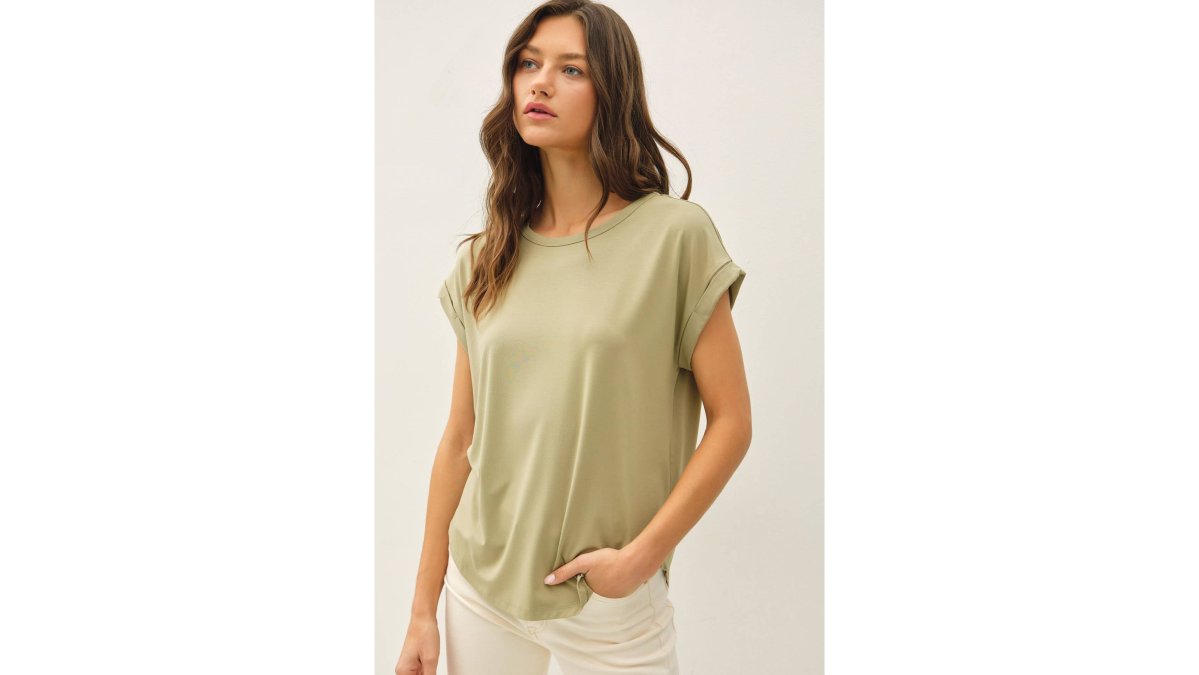
A common mistake is assuming all bamboo is the same. Viscose bamboo and bamboo-modal blends behave differently. Modal adds softness and drape, which is why blends like the NEW COLOR-BAMBOO/MODAL ROUND NECK DOLMAN CAP SLEEVE T-SHIRT : SAGE ($29.00) feel cooler and lighter than standard cotton tees. The relaxed fit and high-low hem make it an easy pick for humid afternoons.

2. Modal: Benefits of Modal Fabric for Everyday Wear
Modal's biggest benefit is comfort that lasts through a full workday. It resists shrinking and fading better than basic cotton, drapes softly, and stays smooth after repeated washes. For anyone building a capsule wardrobe, modal is the quiet workhorse.
3. Tencel Lyocell: Sustainable Performance and Microplastic Shedding
Tencel lyocell is a wood-pulp fiber made in a closed-loop process that recaptures the vast majority of the solvent used to dissolve the pulp. The raw material comes from certified, responsibly managed forests, and the solvent, amine oxide, is recovered and reused rather than released. That closed loop is the core reason lyocell ranks far lower on environmental impact than polyester, which is petrochemical-derived and never fully breaks down.

- Fiber length and twist: Short-staple yarns with loose twist shed more than long-staple, tightly spun yarns. Filament synthetics can shed heavily because the individual filaments are fine and break easily.
- Mechanical agitation: Top-loading agitator washers are harder on fabric than front-loading drums. Delicate cycles reduce friction.
- Water volume and load size: A full drum with adequate water cushions fibers against each other. An overloaded or underloaded machine increases abrasion.
- Temperature: Hot water swells and stresses fibers more than cold. Cold-water washing is the single easiest lever.
- Age of the garment: New synthetic garments tend to shed more in their first several washes as loose surface fibers release.
Practical steps that reduce particle release:
- Wash synthetics less often, spot-clean and air out between wears.
- Use cold water and a gentle or delicate cycle.
- Run fuller loads so garments rub against each other less.
- Line dry instead of tumble drying, which is a major source of fiber fragmentation.
- Use a fine-mesh wash bag or an aftermarket lint filter designed to capture microfibers, and empty it into the trash, not the drain.
- When a synthetic piece reaches end of life, look for a textile take-back program rather than putting it in the trash.
4. Organic Cotton: Durability and Cost-Per-Wear
Organic cotton wins on cost-per-wear, not sticker price, but that claim only holds up if you actually run the numbers. Most fabric roundups stop at "organic cotton is better for the planet" and never show the math. Here is the math.
- Longer staple length. Better-managed organic fields tend to produce longer cotton fibers, and longer staples spin into stronger yarns that resist pilling and thinning.
- Less chemical processing. Conventional cotton is often treated with softeners, resins, and finishes that can degrade over repeated washing. Organic cotton is more likely to be finished minimally, so the fabric keeps its structure instead of breaking down at the finish layer.
- Heavier fabric weights. Brands that commit to organic cotton frequently build garments at a slightly heavier weight because the fiber cost is already higher, and heavier cotton simply wears longer.
How to actually calculate cost-per-wear.
Run it on two realistic scenarios:
- Organic cotton twill jacket, $60, worn twice a week (about 8 wears per month) for 24 months: 8 × 24 = 192 wears. $60 ÷ 192 = roughly $0.31 per wear.
- Fast-fashion cotton-blend jacket, $20, worn twice a week for 3 months before pilling and seam failure: 8 × 3 = 24 wears. $20 ÷ 24 = roughly $0.83 per wear.
What to look for on the label.
- "100% organic cotton" or a recognized organic certification mark.
- A stated fabric weight in ounces per square yard (oz/yd²), heavier generally means more durable, though it also means warmer.
- Reinforced stress points: bar-tacked pockets, double-stitched seams, and sturdy buttons. Fiber quality cannot save a garment with bad construction.
USDA Organic Cotton Production Information
5. Hemp and Linen: Breathability and End-of-Life Disposal
Hemp and linen lead on breathability and end-of-life disposal. Both come from fast-growing plants, both are biodegradable, and both get softer with age. Linen comes from the flax plant, while hemp needs less water to grow, which is why both show up in sustainable fashion conversations.
How to Care for Natural Fibers
Caring for natural fibers is simpler than most people expect, but the details matter. Follow the care label, wash cold, and avoid high heat. These three habits extend the life of bamboo, modal, lyocell, organic cotton, hemp, and linen alike.
- Wash cold on a gentle cycle to protect fiber structure
- Skip fabric softener, which coats natural fibers and reduces breathability
- Air dry or tumble low; high heat causes shrinkage and pilling
- Store folded, not hung, for knits to prevent stretching
- Treat stains quickly with cold water before they set
FTC Care Labeling Rule for Textile Products
Conclusion: Making the Switch
Swapping polyester for natural fabric alternatives takes one decision at a time. Start with the pieces you wear most, then build outward. Bamboo and modal blends from D'LA Boutique make that first step easy, with breathable, low-maintenance tops that transition from work to weekend. Browse the collection, check the fiber content, and pick a fabric that fits how you actually live.
Frequently Asked Questions
What is a natural alternative to polyester?
Natural alternatives to polyester include bamboo, modal, Tencel lyocell, organic cotton, hemp, and linen. These fabrics come from plant sources and offer breathability, moisture-wicking, and biodegradability. For example, bamboo and modal blends are cool to the touch and soft, making them great for summer. Organic cotton is durable and pesticide-free, while Tencel lyocell is produced in a closed-loop system that reduces environmental impact. Each has unique benefits depending on your needs.
Is bamboo fabric better than polyester?
Bamboo fabric is often better than polyester for comfort and sustainability. It is breathable, moisture-wicking, and naturally hypoallergenic, while polyester traps heat and odor. Bamboo is also biodegradable, whereas polyester sheds microplastics. However, polyester is more durable and wrinkle-resistant. For everyday wear, especially in warm weather, bamboo and modal blends offer a soft, cool feel that polyester cannot match.
How do I care for natural fibers like bamboo and modal?
To care for natural fibers, machine wash cold on a gentle cycle and tumble dry low. Avoid bleach and fabric softeners, which can damage the fibers. For modal and bamboo, lay flat to dry if possible to maintain shape. Organic cotton and linen can handle warmer washes but may shrink. Always check the care label. Proper care extends the life of your garments and keeps them looking new.
Does natural fabric breathe better than synthetic?
Yes, natural fabrics like bamboo, linen, and cotton breathe better than synthetic fibers like polyester. They allow air to circulate and wick moisture away from the skin, keeping you cool and dry. Synthetic fabrics trap heat and moisture, which can lead to discomfort and odor. For summer or activewear, natural fabrics are the superior choice for breathability and thermal regulation.
The hardest part of leaving polyester behind isn't finding options; it's trusting that they'll last. D'LA Boutique stocks bamboo and modal blends, a dedicated plus-size collection, and a curated range of dresses, rompers, and tops built for comfort and polish. Subscribe to D'LA Boutique emails and get first access to restocks, new arrivals, and fabric guides like this one.