

How to Care for Bamboo and Modal Clothing Blends
Table of Contents
- What You'll Need to Care for Bamboo and Modal Blends
- How to Wash Bamboo Clothing Without Shrinking
- Air Drying vs Machine Drying Bamboo Blends
- How to Prevent Pilling on Modal Fabric
- Bamboo vs Modal: Care Comparison and Sorting Guide
- Ironing, Steaming, and Travel Care for Bamboo-Modal-Spandex
- Common Mistakes That Damage Bamboo and Modal Blends
- Frequently Asked Questions
Last Updated: September 16, 2026
What You'll Need to Care for Bamboo and Modal Blends
Bamboo and modal are two of the softest cellulose-based fabrics you can own, and how to care for bamboo and modal clothing blends determines whether they stay that way. Learning how to care for bamboo and modal clothing blends comes down to three things: cold water, mild detergent, and low heat.
At D'LA Boutique, we sell bamboo and modal blends. The short version: treat these fabrics like a silk scarf, not a gym towel.

Bamboo is a regenerated cellulose fiber spun from bamboo pulp, prized for breathability and a cool, smooth hand feel. Modal is a similar cellulose fiber, usually made from beechwood, that resists shrinkage and pilling better than standard viscose. Both degrade fast under heat and rough agitation.
Here's your supply list before you start:
- Mild liquid detergent, ideally enzyme-free
- A mesh laundry bag
- A drying rack or flat-drying surface
- A cool iron or steamer for touch-ups
- A fabric shaver or sweater comb for pilling
The FTC's Care Labeling Rule guide is worth a read if you want to understand what those little tag symbols actually obligate you to do.
How to Wash Bamboo Clothing Without Shrinking
The single biggest cause of shrinkage in bamboo and modal is heat. Wash cold on a delicate cycle and skip the dryer, and you've eliminated most of the risk.
Cellulose fibers relax and contract under hot water and high dryer temperatures, which is why a bamboo tee washed warm all summer looks like a crop top by August.
Step-by-Step Washing Instructions
- Turn the garment inside out to protect the surface from friction.
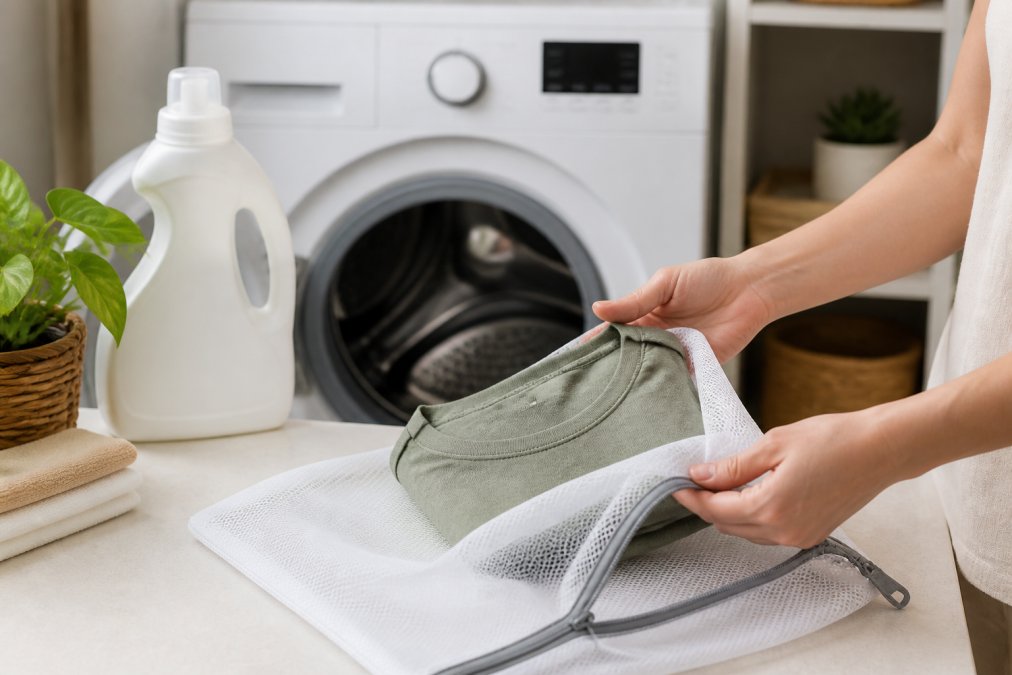
- Place it in a mesh laundry bag if it's a blend with spandex or elastane.
- Set the machine to cold water and the delicate cycle with gentle agitation.
- Add a mild detergent. Skip enzyme-based formulas, which can break down cellulose fibers over time.
- Use half the detergent you'd normally use. Residue builds up and stiffens the fabric.
- Skip fabric softener entirely. It coats the fibers and kills breathability.
- Remove the garment immediately when the cycle ends.
That last step matters: leaving wet bamboo-modal in the drum encourages mildew and set-in wrinkles.
Air Drying vs Machine Drying Bamboo Blends
Air drying is the safe default for every bamboo and modal blend. Machine drying is possible on low heat, but only for garments with a synthetic blend percentage that adds stability. When in doubt, hang it.
Air drying takes longer, but it's a gentle method for these fabrics. Lay knits flat so they don't stretch; hang wovens and tees on a padded hanger.
American Cleaning Institute fabric care resources has solid guidance on drying methods if you want a second opinion on heat settings.
When Tumble Dry Low Is Safe
Tumble dry low is safe only when the care label permits it and the fabric contains a meaningful percentage of spandex or another synthetic, which gives the blend structure pure cellulose lacks. Even then, pull the garment out slightly damp and let it finish air drying.
Never use a high-heat setting. Never dry a 100% bamboo or 100% modal piece in a machine. And never dry anything with a printed or embellished surface on heat.
How to Prevent Pilling on Modal Fabric
Pilling is a mechanical problem with two distinct causes in bamboo-modal blends. The first is fiber migration: short cellulose fibers work loose from the yarn surface and ball up. The second, which matters more in blends with spandex, is elastic fatigue, when spandex loses recovery, the surface loosens, fibers migrate more freely, and pills form faster. That's why a bamboo-modal-spandex tee with 40 wash cycles pills more than a fresh one, even washed identically.
Reducing fiber migration. Wash modal pieces inside out, in a mesh bag, with like fabrics, and avoid heavy denim, zippers, or rough textures. Front-loaders are gentler than top-loaders with agitators; with a top-loader, use the lowest agitation setting and a smaller load. Skip the dryer if you can, tumbling is the biggest friction source in a normal laundry routine.
NEW COLOR-BAMBOO/MODAL ROUND NECK →
Protecting spandex recovery. Heat and mechanical stress wear out spandex. Wash cold (below 80°F), never tumble dry on heat, and don't stretch the garment while wet, yanking it over your head or pulling the sleeves accelerates elastic fatigue at the neckline and cuffs. The shoulders and neckline of a well-worn tee loosen first, and pilling follows in those same zones.
Storage. Store bamboo and modal knits folded, not hung, hanging stretches the shoulders over time, especially on high-modal blends, which have less elastic recovery than wool or cotton. If you must hang, use a padded hanger and fold the garment over the bar.
Repairing Snagged or Pilled Blends
Snags and pills on a bamboo-modal-spandex blend are fixable. For a snag, use a fine needle or snag repair tool to pull the loose thread to the inside, don't cut it, or the short end will work its way back out. For pills, lay the garment flat and run a fabric shaver lightly in one direction, without pressing down, then finish with a sweater comb.
A common mistake is reaching for a fabric shaver the moment pills appear. That works only after you've fixed the friction problem, or the pills return within two washes. If pills keep returning under the arms or along the side seams, the cause is likely elastic fatigue, and no amount of shaving will fix it, the garment is done as a fitted piece, though it can still work as loungewear.
When to retire a piece. If the neckline or cuffs no longer recover after washing, the spandex has fatigued past repair. Fabric shavers treat the symptom, not the cause.
Bamboo vs Modal: Care Comparison and Sorting Guide
Bamboo and modal need almost identical care, but they differ in a few practical ways. Bamboo is more prone to shrinkage and slightly more prone to pilling. Modal holds its shape better and resists pilling longer. Both need cold water and low heat.
| Factor | Bamboo | Modal |
|---|---|---|
| Water temperature | Cold only | Cold to cool |
| Shrinkage risk | Higher | Lower |
| Pilling tendency | Moderate | Lower |
| Drying method | Lay flat | Hang or lay flat |
| Iron setting | Cool | Cool |
| Best for | Breathable summer wear | Everyday durability |
Sorting matters as much as settings. Keep cellulose blends away from heavy cotton, denim, and hardware, wash lights and darks separately, and never mix a new dark modal piece with light bamboo on the first wash.
Ironing, Steaming, and Travel Care for Bamboo-Modal-Spandex
Heat is the one variable that separates a blend that keeps its shape from one that develops a permanent shine, and the reason is the spandex (elastane).
Travel care. These blends are easier on the road than cotton because they dry fast and resist wrinkling. Roll rather than fold, hard fold lines can become permanent creases in modal. Pack in a packing cube; a dryer sheet reduces static cling, though skip it if you're fragrance-sensitive. A travel steamer handles arrival wrinkles in under a minute.
For sink washing in a hotel room:
- Fill the sink with cool water (roughly 60-80°F) and add a few drops of mild liquid detergent. Swirl to mix.
- Submerge the garment and gently knead it for 30-60 seconds. Do not wring or scrub.
- Drain and refill with cool water to rinse. Repeat until no suds remain, usually two rinses.
- Press the water out by rolling the garment in a clean towel. Do not twist.
- Hang to dry on a hanger or towel bar. Most bamboo-modal blends air-dry in 4-8 hours in a normal room.
Common Mistakes That Damage Bamboo and Modal Blends
Most damage to these fabrics comes from four easy-to-break habits: hot water, high-heat drying, fabric softener, and rough washing machine cycles.
Frequently Asked Questions
Does bamboo fabric shrink after washing?
Bamboo and modal blends can shrink if washed in hot water or dried on high heat. Use cold water wash on a delicate cycle and air dry or tumble dry low to prevent shrinkage. The cellulose fibers in viscose and modal relax when heated, so heat is the main cause of shrinkage. Always check the textile care label first, and when in doubt, air dry flat or hang drying to keep the fabric integrity intact.
Can bamboo clothing go in the washing machine?
Yes, most bamboo and modal blends are machine washable on a delicate cycle with cold water and mild detergent. Place items in a mesh laundry bag to reduce gentle agitation and prevent pilling. Avoid enzyme-based detergents and fabric softener, which can break down cellulose fibers and cause fabric softener buildup. Skip the dryer's high heat setting and choose air dry or tumble dry low instead to protect the soft, cool-to-the-touch feel.
What is the best way to dry bamboo and modal blends?
Air drying is the safest method for bamboo and modal blends. Lay items flat or hang them on a drying rack away from direct sunlight to preserve color and fiber strength. If you need to use a machine, tumble dry low with a low heat setting and remove items while slightly damp. High heat causes shrinkage, pilling, and fiber degradation over time. Air drying also saves energy and keeps these eco-friendly fabrics looking newer longer.
How do I prevent pilling on bamboo and modal clothing?
Turn garments inside out before washing, use a mesh laundry bag, and wash on a delicate cycle with cold water. Avoid washing blends with rough fabrics like denim or towels, which cause friction that leads to pilling. Skip fabric softener, which coats fibers and traps lint. For existing pills, use a fabric shaver or sweater stone gently. Static cling and friction are the main culprits, so reducing agitation and separating loads makes the biggest difference.