

How to Identify Truly Sustainable Clothing Brands in 2026
Table of Contents
- Step 1: Map the Supply Chain Before You Trust the Label
- Step 2: Check the Sustainable Fashion Certifications List
- Step 3: How to Spot Greenwashing in Fashion Marketing
- Step 4: Evaluate Materials, From Organic Cotton to Recycled Fabrics
- Step 5: Is Bamboo Fabric Good for Summer and Beyond?
- Step 6: Calculate Cost-per-Wear and Plan for Garment Longevity
- Step 7: Verify Corporate Accountability and Avoid Common Mistakes
- Conclusion: Building a Wardrobe You Can Verify
- Frequently Asked Questions
Last Updated: September 27, 2026
Step 1: Map the Supply Chain Before You Trust the Label
Learning how to identify truly sustainable clothing brands starts with one question most shoppers never ask: where was this actually made? A brand can print "eco-friendly" on a tag without proving anything about its supply chain.
A few practical checks:
- Does the brand name its factories or at least the countries it sources from?
- Can you find a supplier list or impact report on its site?
- Does it explain how materials move from raw fiber to finished garment?
Step 2: Check the Sustainable Fashion Certifications List
The fastest way to verify a claim is to check its sustainable fashion certifications list. Certifications are third-party checks, meaning an outside group confirms a brand's claims instead of the brand grading itself. But not all certifications cover the same thing, and a logo alone tells you nothing until you know what it actually verifies.
Certifications That Verify Environmental Claims
- GOTS (Global Organic Textile Standard), covers the entire textile supply chain for organic fiber products, from harvesting through processing, manufacturing, packaging, and labeling. It requires a minimum organic fiber content (typically 70% for the "made with organic" label and 95% for the "organic" label) and includes wastewater treatment and chemical restrictions. Issued by independent accredited certifiers, not by GOTS itself.
- OEKO-TEX Standard 100, tests finished articles and their components for harmful substances like formaldehyde, heavy metals, and certain azo dyes. It is a product-level safety check, not a supply-chain or labor check. A garment can be OEKO-TEX certified and still be made in a factory with poor labor practices.
- GRS (Global Recycled Standard), verifies recycled content in a product, plus social and environmental requirements at each production stage. It uses a chain-of-custody model, so a brand must track recycled material from the recycler to the finished garment.
- bluesign, focuses on chemical management and input streams at the mill and factory level. It screens chemicals, water, and energy use during production. It does not certify the fiber itself as organic or recycled.
- Cradle to Cradle Certified, a multi-attribute standard that scores products across material health, material reuse, renewable energy, water stewardship, and social fairness. It is broader than most single-issue certifications but is less common in mass-market apparel.
Certifications That Verify Labor and Fair Trade Practices
Environmental claims get the most attention, but labor rights matter just as much:
- Fair Trade Certified, confirms fair wages, safe conditions, and community development premiums. It is most common in cotton and artisan supply chains rather than in every cut-and-sew factory a brand uses.
- SA8000, a social accountability standard covering child labor, forced labor, health and safety, freedom of association, discrimination, discipline, working hours, and remuneration. It is audited by third-party certification bodies.
- B Corp Certification, reviews a company's overall social and environmental impact across governance, workers, community, environment, and customers. It certifies the company, not a specific product or factory.
- WRAP (Worldwide Responsible Accredited Production), a factory-level certification focused on lawful, humane, and ethical manufacturing. It is common in cut-and-sew operations.
How to Actually Verify a Certification
A real certification comes with a license number or certificate ID you can look up. Here is the verification path for the most common ones:
- GOTS: use the GOTS public database to search by license number or company name.
- OEKO-TEX: use the OEKO-TEX label ID check on its website.
- GRS: search the Textile Exchange or the certifying body's database.
- Fair Trade Certified: use the Fair Trade USA product search.
- B Corp: use the B Lab directory to confirm the company and its score.
The Gap Certifications Do Not Close
Most certifications verify a process, a material, or a facility, not a brand's total impact. A brand can hold several certifications and still produce far more clothing than the planet can absorb. Use certifications as one input, not as a finish line. Pair them with the supply-chain and materials checks in the other steps.
Step 3: How to Spot Greenwashing in Fashion Marketing
Watch for these tactics:
- Vague words like "natural," "green," or "eco-conscious" with no proof
- A single recycled item used to imply the whole brand is sustainable
- Nature imagery that says nothing about actual practices
- Claims with no certification, no factory name, and no data
The honest brands make specific claims. They name the standard, the factory, or the fiber. Vague language is the tell.
Step 4: Evaluate Materials, From Organic Cotton to Recycled Fabrics
Material choice tells you a lot about a brand's real priorities, but the fiber name alone is not the answer. Two garments can both say "organic cotton" and have very different footprints depending on where the cotton was grown, how it was spun, and how the finished fabric was dyed. Here is how to read the label like a buyer, not a shopper.
The Fibers Worth Knowing
- Organic cotton, grown without synthetic pesticides or fertilizers and without genetically modified seed. It typically uses less water than conventional cotton, though water use still varies widely by region. Look for GOTS or USDA Organic certification, not just the word "organic."
- Recycled cotton, made from pre-consumer scraps or post-consumer textiles. It reduces demand for new cotton but is often blended with virgin fiber because recycled cotton fibers are shorter and weaker. A "100% recycled cotton" claim is rare; "recycled cotton blend" is more common.
- Recycled polyester (rPET), made from plastic bottles or textile waste. It cuts demand for new petroleum-based polyester, but it still sheds microplastics during washing and is not biodegradable. It is a better choice than virgin polyester, not a perfect one.
- Tencel Lyocell and Modal, wood-based fibers from the company Lenzing, made in a closed-loop system that recaptures the solvent used to dissolve wood pulp. Look for the Tencel brand name specifically; generic "lyocell" may not use the same closed-loop process.
- Bamboo lyocell, bamboo processed in a closed-loop system. This is different from bamboo viscose, which often uses a more chemical-intensive process with weaker solvent recovery. If a brand says "bamboo" without specifying lyocell, ask which process was used.
- Linen and hemp, bast fibers from flax and hemp plants. They typically need less water and fewer pesticides than conventional cotton, and they get softer with wear. They wrinkle easily, which is a trade-off some shoppers accept and others do not.
- Deadstock fabric, leftover material from other production runs. It keeps usable cloth out of landfills, but supply is unpredictable and quality can vary. A brand that relies on deadstock cannot always restock the same piece.
The Questions That Separate Real From Greenwashed
Ask these about any material claim:
NEW COLOR-BAMBOO/MODAL ROUND NECK →
- Is the fiber certified? "Organic cotton" without GOTS or USDA Organic is a marketing phrase, not a verified claim.
- Is it biodegradable, and under what conditions? Cotton, linen, hemp, and Tencel break down in industrial composting. Recycled polyester does not. "Biodegradable" on a polyester blend is misleading.
- How was it dyed and finished? Dyeing and finishing are often the most water- and chemical-intensive stages. Look for OEKO-TEX, bluesign, or a brand that names its dyehouse.
- What is the fiber blend? A 95% organic cotton / 5% elastane blend is not fully biodegradable because of the elastane. Blends are harder to recycle than single-fiber garments.
- Where was the fiber grown or made? Traceability to a region or a named mill is a stronger signal than a country-level claim.
The Trade-Off Most Guides Skip
No fiber is perfect. Organic cotton still uses water. Recycled polyester still sheds microplastics. Tencel still requires wood pulp, and not all wood pulp is responsibly sourced. The goal is not to find a flawless material, it is to find a brand that can explain the trade-offs it chose and why. A brand that admits a limitation is more credible than one that claims its fabric has none.
Step 5: Is Bamboo Fabric Good for Summer and Beyond?
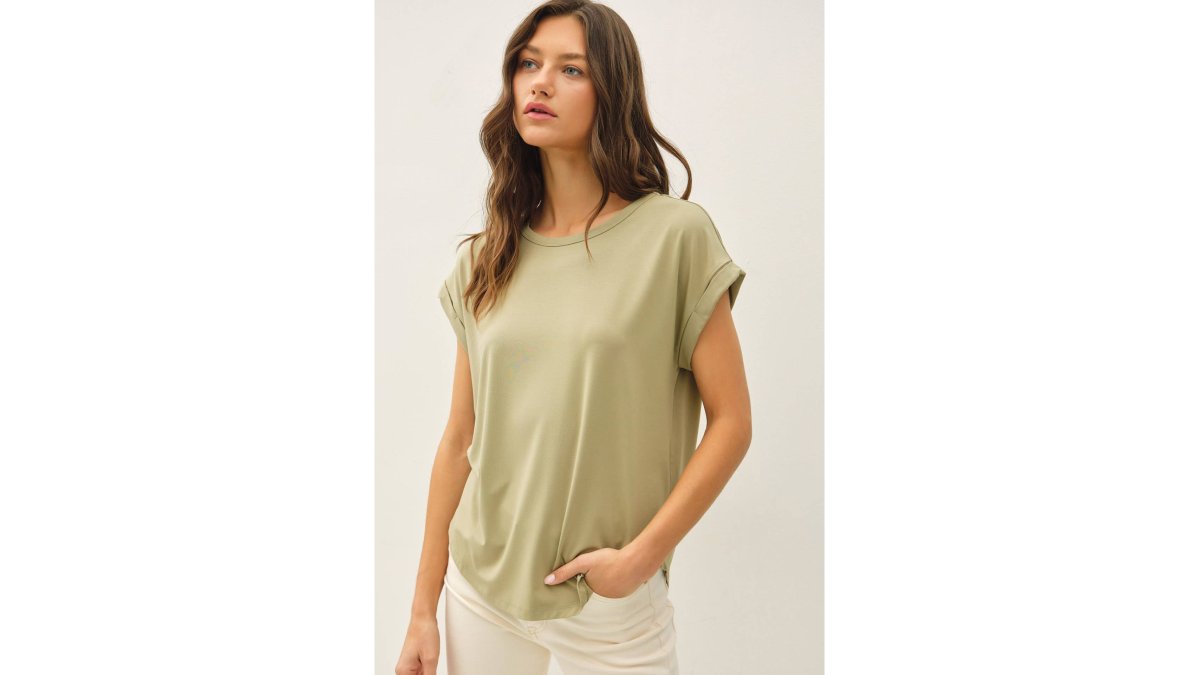
Yes, bamboo fabric is good for summer, and it works well beyond it too. Bamboo and modal blends feel cool to the touch, breathe well, and stay soft after repeated wear. That combination makes them a strong pick for warm weather and for layering the rest of the year.

Step 6: Calculate Cost-per-Wear and Plan for Garment Longevity
Post-purchase care and repair matter more than most shoppers think. Learning basic mending, storing knits folded instead of hung, and washing less often all stretch a wardrobe further.
Step 7: Verify Corporate Accountability and Avoid Common Mistakes
Corporate accountability means a brand answers for its claims publicly. Check for a published impact report, a named sustainability lead, and updates over time. Third-party verification and traceability separate real efforts from marketing.
Common mistakes to avoid:
- Trusting a logo without checking the license number
- Assuming a higher price means ethical production
- Ignoring labor rights because the fabric sounds green
- Buying more "sustainable" clothes than you need
Conclusion: Building a Wardrobe You Can Verify
Verifying a brand takes ten minutes, but it saves you from paying for marketing instead of quality. The real challenge is building a wardrobe where every piece earns its place, and that's where D'LA Boutique helps. Our bamboo and modal blends feel cool and soft, our plus-size collection makes sizing easier, and our online checkout supports multiple payment methods. Discover your next favorite outfit with our thoughtfully selected range of clothing and accessories.
Frequently Asked Questions
What are the key indicators of a truly sustainable clothing brand?
Look for third-party certifications like GOTS or Fair Trade Certified, published supply chain mapping, and specific environmental targets with deadlines. Truly sustainable clothing brands name their factories, disclose material sources, and submit to independent audits. Vague claims like 'eco-friendly' without proof are a red flag. Check for a public sustainability report updated within the last year.
How can I spot greenwashing when shopping for clothes?
Watch for buzzwords without evidence: 'green', 'natural', or 'conscious' with no certification or data behind them. Greenwashing often highlights one small eco-friendly collection while the bulk of production remains unchanged. Look for specific numbers, named certifications, and verifiable supply chain transparency. If a brand cannot tell you where its fabric comes from, treat the claim with skepticism.
Is bamboo fabric good for summer?
Bamboo-modal blends are cool to the touch, breathable, and moisture-wicking, making them a strong choice for summer. The fibers are soft and lightweight, so they feel comfortable in heat and humidity. Look for bamboo lyocell or modal processed in a closed-loop system to reduce chemical waste. A relaxed-fit bamboo-modal t-shirt works well for both office and weekend wear.
Does sustainable fashion have to be expensive?
Not necessarily, but prices often reflect better materials, fair wages, and smaller production runs. Cost-per-wear changes the math: a $29 bamboo-modal t-shirt worn 100 times costs $0.29 per wear, while a $10 fast-fashion top worn five times costs $2 per wear. Prioritize versatile pieces you will wear often, and check resale or secondhand options for lower prices.