

Does Bamboo Fabric Shrink Easily? Care Guide for 2026
Table of Contents
- Does Bamboo Fabric Shrink Easily? The Short Answer
- Why Bamboo and Modal Blends React to Heat
- How to Wash Bamboo Clothing Without Shrinking It
- Does Bamboo Shrink in the Dryer? What You Need to Know
- Is Bamboo Fabric Good for Summer? Comfort and Care
- 100% Bamboo vs. Bamboo Blends: Which Shrinks Less?
- How to Fix Shrunken Bamboo Clothing
- Conclusion
- Frequently Asked Questions
Last Updated: September 19, 2026
Does Bamboo Fabric Shrink Easily? The Short Answer
Yes, bamboo fabric can shrink easily if you wash it in hot water or toss it in a hot dryer. Bamboo rayon, the type used in most clothing, is a cellulose fiber that reacts to heat much like cotton does. But it is not fragile by default. With cold water and low heat, bamboo fabric holds its shape well.
Why Bamboo and Modal Blends React to Heat
Heat is the enemy, not water. When bamboo fibers meet high temperatures, the fiber structure contracts. The yarn tightens, and the garment loses length and width.
- Bamboo is a cellulose fiber, similar in makeup to cotton and viscose.
- Heat causes the fibers to contract and pull together.
- Mechanical agitation in a hot wash speeds up that contraction.
- A hot dryer locks the new, smaller shape in place.
How to Wash Bamboo Clothing Without Shrinking It
Wash bamboo clothing in cold water on a gentle cycle, then air dry or use low heat. That single habit prevents most shrinkage. Everything else is detail.
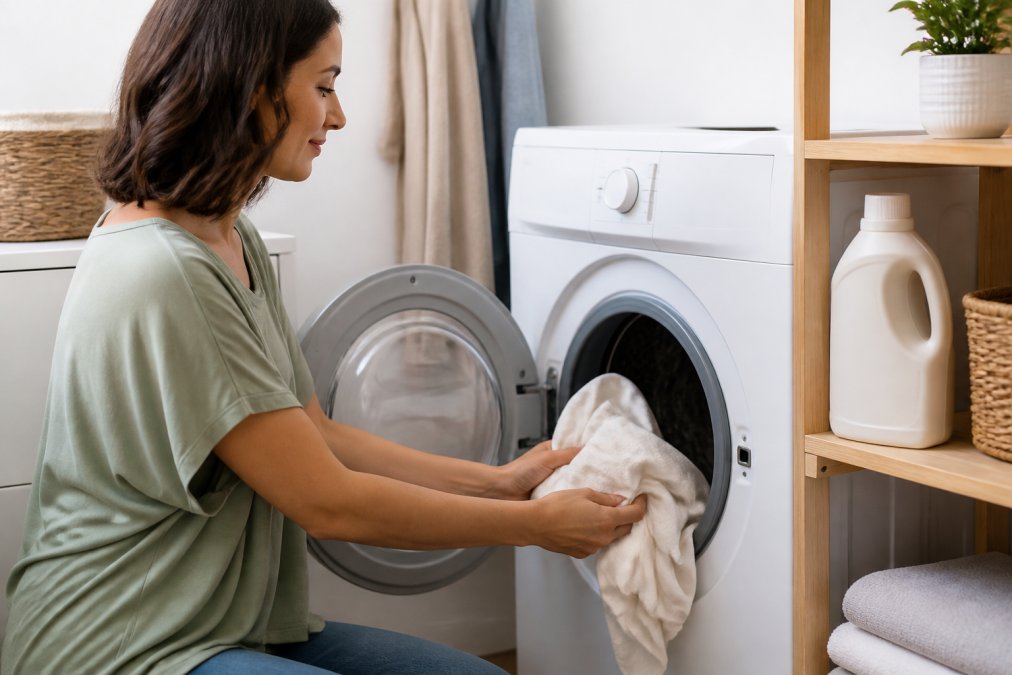
Follow these steps:
- Check the care label first. It overrides any general advice.
- Turn the garment inside out to protect the surface.
- Use cold water, ideally below 86°F.
- Select the gentle or delicate cycle.
- Use a mild detergent, not a harsh one.
- Skip the spin cycle or set it to low speed.
- Reshape the garment by hand while it is still damp.
- Lay it flat or hang it to air dry.
Washing Machine Settings That Protect Fiber Integrity
Your machine settings matter as much as the water temperature. Two settings do most of the damage: high heat and fast spin.
Use this quick reference:
| Setting | Safe Choice | Risky Choice |
|---|---|---|
| Water temp | Cold | Hot |
| Cycle | Gentle / delicate | Normal / heavy |
| Spin speed | Low or none | High |
| Detergent | Mild, liquid | Powder with bleach |
| Load size | Small | Overstuffed |
Does Bamboo Shrink in the Dryer? What You Need to Know
Yes, the dryer is the number one cause of bamboo fabric shrink. High heat exposure is what does it. A hot tumble dry can shrink a bamboo tee by a full size in one cycle.
If you must use a dryer, follow these rules:
- Set it to tumble dry low or the air-fluff setting.
- Pull the garment out while it is still slightly damp.
- Never leave it in for the full cycle.
- Avoid dryer sheets, which can coat the fibers.
Is Bamboo Fabric Good for Summer? Comfort and Care
Bamboo is one of the best summer fabrics you can wear. It is cool to the touch, soft, and highly breathable. Its moisture absorption pulls sweat away from your skin, so you stay comfortable in the heat.
- It feels cool against the skin.
- It breathes better than many synthetic fabrics.
- It handles moisture well.
- It stays soft after repeated wear.
100% Bamboo vs. Bamboo Blends: Which Shrinks Less?
Here is how the common blends actually behave:
- 100% bamboo viscose: Softest hand, highest shrink risk. With no stabilizing fiber, every thread reacts to heat the same way. Expect noticeable length loss after a single hot wash and hot dry cycle.
- Bamboo-cotton (typically 50/50 to 70/30): Cotton is also a cellulose fiber, so it shrinks too, but at a slower rate and to a lesser degree than bamboo viscose. The blend lands in the middle: moderate shrink risk, more durability, less drape than pure bamboo.
- Bamboo-modal: Modal is regenerated cellulose like bamboo, so it shares the heat sensitivity, but its longer, smoother fibers pack more uniformly. That uniformity means less random contraction. A bamboo-modal blend usually holds size better than either fiber alone.
- Bamboo-spandex (usually 95/5 or 92/8): The elastane content is the stabilizer. Spandex is a polyurethane fiber that stretches and recovers rather than contracting under heat. Even 5% spandex meaningfully reduces shrinkage because the elastic network pulls the fabric back to its original dimensions as it cools.
- Bamboo-polyester: The most shrink-resistant option. Polyester is a synthetic thermoplastic, it does not absorb water and does not contract the way cellulose fibers do. The trade-off is breathability: you lose some of the moisture-wicking feel that makes bamboo appealing in the first place.
One caveat worth knowing: a blend does not make a garment shrink-proof. It raises the threshold. A bamboo-spandex top washed in hot water and dried on high will still lose shape, it just takes more abuse to get there. The care rules in the washing and drying sections above still apply.
NEW COLOR-BAMBOO/MODAL ROUND NECK →
How to Fix Shrunken Bamboo Clothing
Most guides stop at prevention. This section is the troubleshooting protocol, what to actually do when a bamboo piece comes out of the wash smaller than it went in. The honest framing first: mild shrinkage is often recoverable, severe shrinkage usually is not. The difference comes down to how much heat the fibers absorbed and for how long.
Step 1: Diagnose the shrinkage
Before you soak anything, figure out what kind of shrinkage you are dealing with.
- Length shrinkage (garment got shorter): Most common. Caused by heat relaxing the fiber crimp. Usually the most recoverable.
- Width shrinkage (garment got narrower): Caused by both heat and mechanical agitation pulling fibers tight. Harder to reverse because the fibers have interlocked.
- Full-size loss (went down a full size or more): Typically means a hot dryer cycle fully set the new shape. Recovery odds are low.
- Distortion (hem twisted, seams puckered): This is not true shrinkage, it is fiber damage. Stretching will not fix it and may make it worse.
Step 2: The cool-water soak method
This is the standard recovery approach and it works best on mild length shrinkage.
- Fill a sink or tub with cool water, around 60-70°F. Warm water will shrink it further.
- Add a capful of mild hair conditioner or a dedicated fabric relaxer. The conditioner lubricates the fibers so they can slide past each other instead of snapping.
- Submerge the garment and let it soak for 30 minutes. Do not agitate it.
- Lift the garment out and gently press the water out with your palms. Never wring or twist.
- Lay it flat on a clean towel and gently stretch it back toward its original dimensions. Work in small increments, pull a little, reposition, pull a little more.
- Pin or weight the edges if you need the shape to hold while it dries.
- Air dry completely away from direct sun and heat. Do not use a dryer to speed this up.
Step 3: The iron-and-stretch assist
For stubborn length shrinkage on sturdy blends, a low-heat iron can help, but only if you follow the rules.
- Set the iron to its lowest heat setting, no steam.
- Place a clean cotton cloth between the iron and the bamboo garment. Never iron bamboo directly.
- While the fabric is warm and slightly damp, gently stretch it lengthwise.
- Let it cool in the stretched position before wearing or folding.
What actually works, and what does not
- Works well: Cool-water soak with conditioner on mild length shrinkage; low-heat iron assist on blends with spandex or modal.
- Works sometimes: Repeated soak-and-stretch cycles on moderate shrinkage. Each cycle may recover a fraction of an inch.
- Does not work: Boiling water, vinegar soaks, hot ironing, or stretching dry fabric. These either shrink the garment further or damage the fibers permanently.
When to accept the loss
If a bamboo tee went from a medium to a small in a hot dryer, no soak will bring it fully back. Once the fibers have been heat-set, the change is permanent. At that point your options are to repurpose the garment, gift it to someone it fits, or treat it as a lesson in reading care labels. Prevention is far easier than repair, which is why the washing and drying sections above matter more than this one.
Conclusion
Bamboo fabric does not have to shrink. The whole game comes down to heat: keep it out of hot water and hot dryers, and your bamboo and modal pieces will keep their size and softness for years.
Frequently Asked Questions
What are the downsides of bamboo fabric?
Bamboo fabric is soft, breathable, and moisture-absorbing, but it has real drawbacks. It wrinkles more than cotton, can shrink when exposed to high heat, and loses tensile strength if you use harsh detergent or hot water. Some bamboo viscose also pills after repeated washing. Treat bamboo like a delicate garment: cold water, gentle cycle, mild detergent, and air dry. Follow that routine and the downsides stay manageable.
Can I put bamboo clothing in the dryer?
You can, but only on tumble dry low, and only if the care label allows it. High heat exposure causes fiber contraction in bamboo viscose, which is why so many people ask does bamboo shrink in the dryer. If you want zero risk, air dry or line dry instead. If you must use a dryer, remove the item while it is still slightly damp to limit thermal damage.
How do you wash bamboo clothes so they don't shrink?
Use cold water wash on a gentle cycle with mild detergent. Skip the hot rinse and keep spin speed low to reduce mechanical agitation. Avoid fabric softener, which coats cellulose fibers and reduces moisture absorption. When in doubt, hand wash and lay flat to dry. This routine preserves dimensional stability and keeps bamboo and modal blends fitting the way they did on day one.
Does bamboo fabric stretch out over time?
Bamboo viscose can stretch with wear, especially at the shoulders and neckline, because the fibers are flexible and moisture-absorbing. The good news is that most bamboo and modal blends snap back after a cold wash and air dry. To prevent sagging, avoid hanging heavy wet garments on hangers. Lay them flat to dry instead, and the fabric will hold its shape longer.
Which fabric is better, cotton or bamboo?
It depends on what you value. Bamboo is softer, more breathable, and absorbs moisture faster, which makes it a strong pick for summer. Cotton is more durable and easier to launder with less risk of shrinking. Bamboo blends combine the best of both: the softness and cooling feel of bamboo with the strength and washability of cotton or modal. Check the label before you buy.