

Best Fabrics for Comfortable Stylish Clothing
Table of Contents
- What Makes a Fabric Comfortable and Stylish?
- Fabric Comparison: Cotton, Bamboo, and Modal Blends
- Is Bamboo Fabric Good for Summer?
- The Benefits of Modal Fabric for Daily Wear
- How to Care for Bamboo Clothing So It Lasts
- Smart-Casual Fabric Choices That Transition All Day
- Our Picks for Comfortable Stylish Clothing
- Frequently Asked Questions
Last Updated: September 6, 2026
Choosing what fabrics are best for comfortable stylish clothing comes down to one thing: how the textile behaves on your body, not just how it looks on a hanger. Breathability, moisture-wicking, and stretch recovery determine whether a piece feels as good at hour eight as it did at minute one. At D'LA Boutique, our collection features bamboo and modal blends because they offer comfort and a polished look for work and weekends. Below, we'll break down the fiber science that matters, compare the top contenders, and show you exactly which fabrics earn their place in a versatile wardrobe.
The honest truth is that some "comfortable" clothing fails because brands prioritize drape or hand-feel over durability. You get a shirt that feels incredible in the store but pills after three washes. The fabrics that genuinely deliver combine softness with tensile strength, which is why fiber content matters more than brand labels.
What Makes a Fabric Comfortable and Stylish?
Comfortable stylish clothing starts with a fabric's sensory profile, or what textile experts call the tactile map of the fiber. This includes hand-feel (how soft it is against skin), drape (how it falls and moves), and thermal regulation (how it responds to your body heat). A fabric that excels in all three feels like a second skin while still holding a clean, structured silhouette.
Moisture-wicking is the hidden driver of all-day comfort. Natural fibers like cotton absorb sweat but hold it against your skin, which leads to that clammy feeling. Bamboo rayon and modal, by contrast, pull moisture away from the body and release it through the weave, keeping you dry even during a commute or a long meeting. This is why textile composition matters more than cut or color when you are shopping for pieces you will wear for ten hours straight.
A common mistake is assuming that softness equals quality. Some of the softest fabrics on the market are made with low-grade fibers that break down quickly. What separates a durable comfortable fabric is the length and twist of the fiber itself, which determines pilling resistance and shape retention over time.
Fabric Comparison: Cotton, Bamboo, and Modal Blends
| Fabric | Hand-Feel | Breathability | Stretch Recovery | Durability | Best For |
|---|---|---|---|---|---|
| Cotton | Soft, familiar | Good, but holds moisture | Low | High, but wrinkles | Casual basics, denim |
| Bamboo Rayon | Silky, cool to the touch | Excellent, moisture-wicking | Moderate | Medium, needs care | Tops, warm-weather wear |
| Modal | Ultra-soft, smooth | Very good | Good | High, resists pilling | Daily essentials, layering |
| Cotton-Poly-Spandex Blend | Soft with stretch | Moderate | Excellent | Very high | Jeans, structured pieces |
Cotton remains the baseline for a reason: it is breathable, hypoallergenic, and widely available. But pure cotton has a ceiling. It wrinkles easily, lacks stretch recovery, and absorbs moisture rather than wicking it away. For denim, however, cotton's tensile strength is exactly what you want, which is why a quality pair of jeans still leads with cotton content.

Bamboo rayon and modal both outperform cotton on the comfort index, but they do it differently. Bamboo is cooler to the touch and excels at thermal regulation, making it ideal for warmer months. Modal offers superior wrinkle resistance and maintains its softness wash after wash, which makes it a stronger daily driver. Many of the best garments blend the two, combining bamboo's cooling effect with modal's durability.
Is Bamboo Fabric Good for Summer?
Bamboo fabric is excellent for summer because it regulates temperature better than most alternatives. The fiber structure creates micro-gaps that allow heat to escape while the fabric itself stays cool against the skin. Unlike synthetic blends that trap heat, bamboo rayon breathes, which is why it has become a staple for warm-weather wardrobes.
The moisture-wicking properties deserve special attention in summer. When you sweat, bamboo pulls the moisture away from your body and spreads it across the fabric surface, where it evaporates quickly. This keeps you dry instead of sticky, a difference you notice immediately on a humid day. For anyone who has spent a summer afternoon in a polyester blouse, switching to bamboo feels like a revelation.
One caveat: bamboo fabric requires gentler care than cotton. Hot water and high-heat drying can break down the fibers over time, reducing that silky hand-feel. If you follow the care instructions, a bamboo top can last for years, but treating it like a cotton tee will shorten its lifespan considerably.
The Benefits of Modal Fabric for Daily Wear
Modal fabric delivers the best balance of softness, durability, and wrinkle resistance for everyday clothing. It is made from beech tree pulp, processed into a fiber that is stronger than rayon but softer than cotton. The result is a textile that drapes beautifully, resists pilling, and feels smooth against sensitive skin.
For daily wear, modal's wrinkle resistance is the feature you will appreciate most. Cotton shirts need ironing after a single wear; modal tops can go from suitcase to meeting without a second thought. This low-maintenance quality makes modal a favorite for busy professionals who want to look put together without spending time on fabric care.
Modal also handles repeated washing better than bamboo or cotton. The fibers maintain their integrity through dozens of cycles, which means your favorite top keeps its color and shape longer. According to textile care guidance from the American Cleaning Institute, proper washing techniques including cold water and gentle cycles extend the life of delicate fabrics like modal significantly.
The benefits of modal fabric extend to layering as well. Its smooth surface means it slides easily under blazers and cardigans without adding bulk, and its breathability prevents overheating when you add layers. This makes modal the smart choice for transitional seasons when you need one piece to work from morning chill to afternoon warmth.
How to Care for Bamboo Clothing So It Lasts
Caring for bamboo clothing starts with cold water and a gentle cycle. Hot water weakens the fiber structure and can cause shrinkage, while aggressive washing machines create friction that leads to pilling. Turn garments inside out before washing to protect the outer surface from abrasion.
Skip the dryer entirely if you want your bamboo pieces to hold their shape. High heat is the fastest way to degrade bamboo rayon, causing it to lose that cool, silky feel. Instead, lay the garment flat on a drying rack or hang it on a padded hanger. This adds a few hours to the drying process but extends the life of the piece by years.
The right detergent matters more than most people realize. Standard detergents contain enzymes that break down natural fibers over time. A gentle, pH-neutral detergent preserves the fiber integrity and keeps colors from fading. For the same reason, avoid fabric softeners; they coat the fibers with a waxy residue that reduces breathability and moisture-wicking performance.
Smart-Casual Fabric Choices That Transition All Day
Smart-casual dressing demands fabrics that bridge the gap between boardroom polish and weekend ease. The best options combine structure with stretch, so you look professional sitting at a desk and feel comfortable running errands afterward. Cotton-polyester-spandex blends in denim and trousers deliver this balance through stretch recovery and wrinkle resistance.
The key is choosing pieces with enough tensile strength to hold a sharp line while incorporating elastane or spandex for movement. A stretch straight-leg jean in a dark wash reads as polished enough for most offices, yet the flexible fit keeps you comfortable through a long day. The 2% spandex content makes the difference between denim that restricts and denim that moves with you.
Versatility also depends on fabric weight and GSM (grams per square meter). Mid-weight fabrics between 200 and 300 GSM drape well without being too heavy or too flimsy. They hold their shape through the day, resist wrinkles, and transition cleanly from a morning meeting to an evening dinner. Lightweight fabrics below 180 GSM often look too casual for professional settings, while anything above 350 GSM feels heavy for indoor wear.
Our Picks for Comfortable Stylish Clothing
Our top pick for comfortable stylish clothing is the NEW COLOR-BAMBOO/MODAL ROUND NECK DOLMAN CAP SLEEVE T-SHIRT at $29.00. This piece combines bamboo and modal fibers for a cool-to-the-touch feel with a relaxed fit that flatters without clinging. The dolman cap sleeve and high-low hem give it a contemporary edge, while the fabric blend keeps you comfortable from morning to night. It is the rare top that works equally well under a blazer or paired with jeans for the weekend.
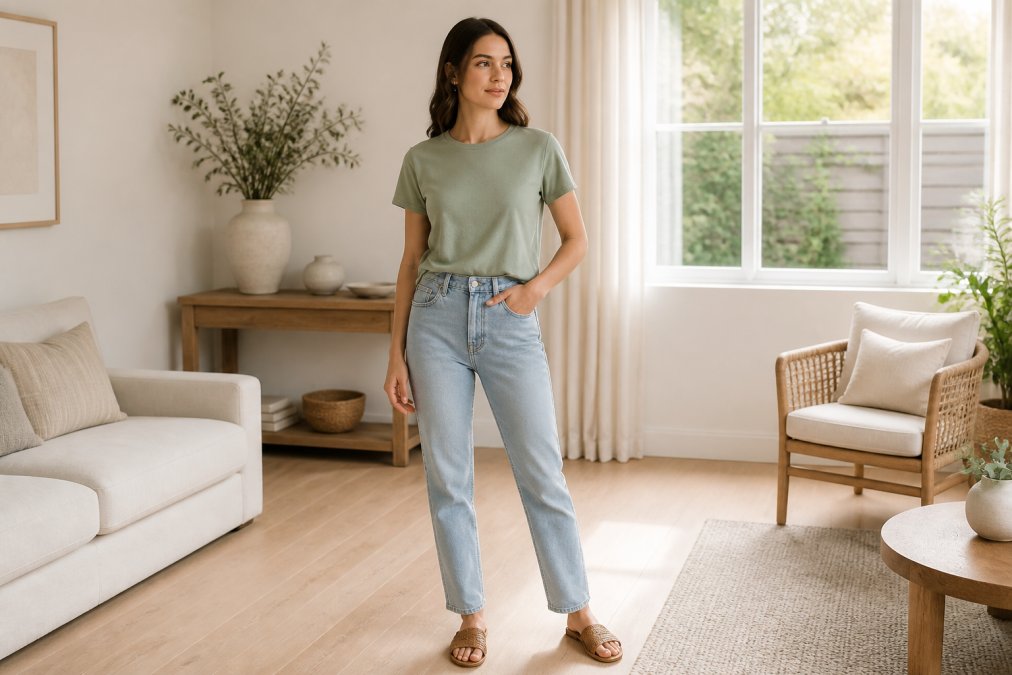
For denim, the Mid Rise Stretchy Straight Leg Jean - LIGHT DENIM at $80.00 delivers the classic silhouette with all-day flexibility. The mid-rise waist and straight-leg cut flatter a range of body types, while the stretch fabric moves with you rather than against you. With a 9.5-inch rise and 29-inch inseam, these jeans hit the sweet spot between trendy and timeless.
Plus-size shoppers have equally strong options. The Plus Comfort Medium High Rise Pull-On Wide Leg at $50.00 uses a 57% cotton, 26% polyester, 15% rayon, and 2% spandex blend for a soft, flexible fit. The pull-on design eliminates the discomfort of restrictive waistbands while the wide-leg silhouette offers a modern, polished look. For a bolder statement, the PLUS SIZE HIGH RISE OPTIC WHITE CROP WIDE LEG JEAN at $89.90 brings comfort stretch denim in a crisp optic white that brightens any outfit.


The Dark Wash Cuffed Stretch 31" Inseam Straight Jeans at $95.00 rounds out the collection with a 93% cotton, 5% polyester, and 2% spandex composition. The dark wash reads as dressier than light denim, making it suitable for workplaces with a more formal dress code, while the 31-inch inseam accommodates taller frames without alteration.
The question of what fabrics are best for comfortable stylish clothing ultimately comes down to blend quality and construction. A well-made garment in bamboo, modal, or a cotton-spandex blend outperforms a designer label in cheap synthetic fabric every time. Sustainable textiles like bamboo and modal also offer the benefit of being more environmentally responsible choices, as documented by the Sustainable Apparel Coalition's materials index.
For those with sensitive skin or chemical sensitivities, natural and semi-synthetic fibers like organic cotton, merino wool, and bamboo rayon are the safest bets. These materials are naturally hypoallergenic and free from the harsh finishes often applied to synthetic blends. The American Academy of Dermatology's guidance on clothing and skin recommends breathable, soft fabrics to minimize irritation, which aligns with the bamboo and modal focus of quality boutiques.
Building a wardrobe of comfortable stylish clothing requires looking past trends and understanding what your clothes are actually made of. The challenge is finding pieces that combine technical performance with aesthetic appeal, which is why fabric sourcing matters as much as design. D'LA Boutique curates its collection around bamboo and modal blends because they offer comfort, durability, and style for modern women. With stretch denim options starting at $50.00 and bamboo modal tops at $29.00, you can upgrade your everyday essentials without overhauling your entire closet. Subscribe to our emails to catch new arrivals and restocks before they sell out.
Frequently Asked Questions
What is the most comfortable fabric for clothing?
For a balance of comfort and style, bamboo and modal blends are top choices. They offer a soft hand-feel, excellent breathability, and natural stretch recovery. Cotton is also comfortable but can wrinkle and lacks the moisture-wicking properties of bamboo. Look for fabrics with a bit of elastane or spandex for movement and shape retention.
Is bamboo fabric good for summer?
Yes, bamboo fabric is excellent for summer. It is highly breathable and has natural moisture-wicking properties that pull sweat away from your skin. Bamboo also offers thermal regulation, keeping you cool when temperatures rise. Its lightweight feel makes it a smart choice for hot-weather outfits that still look polished.
What are the benefits of modal fabric for daily wear?
Modal fabric is prized for its exceptional softness and durability. It resists pilling and shrinkage better than many other fabrics, maintaining its shape and drape after multiple washes. Modal is also breathable and drapes well, making it ideal for tops and dresses that need to move from work to evening without looking wrinkled.
How do you care for sustainable fabrics like bamboo and modal?
To keep bamboo and modal clothing looking new, wash in cold water on a gentle cycle and avoid fabric softeners, which can coat the fibers. Hang items to dry or use a low heat setting in the dryer. Remove promptly to minimize wrinkles. This care routine helps preserve the fabric's softness and color.
How do I dress comfortable but stylish?
Start with high-quality basics in natural or blended fabrics. A bamboo modal t-shirt paired with stretchy straight-leg jeans creates a foundation that is both relaxed and put-together. Focus on fit and fabric drape rather than tight silhouettes. Add simple accessories to elevate the look without sacrificing comfort.