

How Long Does Eco-Friendly Clothing Last
Table of Contents
- How Long Does Eco-Friendly Clothing Actually Last
- Understanding Material Quality and Garment Construction
- How to Care for Bamboo Clothing to Extend Its Life
- Fast Fashion vs. Sustainable Fashion Longevity
- Eco-Friendly Laundry Practices That Preserve Garment Life
- Cost-Per-Wear Analysis: Why Durable Clothing Saves Money
- Repairs, Upcycling, and Extending Active Use
- Frequently Asked Questions
Last Updated: September 23, 2026
How Long Does Eco-Friendly Clothing Actually Last
Eco-friendly clothing lasts significantly longer than fast fashion when made from quality materials and cared for properly.
Longevity depends on three factors: material quality, construction, and care. Most sustainable garments last 2-5 years of regular active use, while premium pieces hold up for a decade or more. You're paying more upfront because you're buying fewer replacements down the line.
The apparel industry generates massive textile waste annually. Sustainable fashion addresses this by creating pieces built to last, when clothing survives longer, you buy less and consume fewer resources.
Understanding Material Quality and Garment Construction
Durability depends on fiber choice and stitching quality. Understanding the expected lifespan of specific materials helps you make informed purchasing decisions.
Fabric-Specific Durability Benchmarks
Different eco-friendly fibers have measurably different lifespans when constructed and cared for identically. Here's what you can realistically expect:
Organic Cotton typically lasts 200-300 wears with proper care and improves with washing. It can shrink 3-5% in the first wash if not preshrunk, so look for "preshrunk" labels or long-staple varieties like Pima, which resist pilling better.
Hemp lasts 300+ wears and becomes softer with washing while resisting pilling and fading. Pure hemp feels stiff initially, so most durable pieces blend hemp with organic cotton (55/45) to balance durability with comfort.
Bamboo and Modal (made from wood pulp) typically last 150-250 wears but are prone to pilling if washed in hot water or dried on high heat. Bamboo loses strength when wet, so hand wash or use gentle cycles. Modal-blend pieces resist pilling better and offer softness without sacrificing longevity.
Linen lasts 300+ wears and strengthens with washing. It resists pilling and fading but wrinkles easily. A quality linen piece is a multi-decade investment.
Wool (ethically sourced merino or lambswool) lasts 250-400 wears and improves with age. Its antimicrobial properties mean you can wear it 5-10 times before washing, extending lifespan. Use cool water and wool-specific detergent to prevent felting. Wool pills initially but stops after 10-20 wears.
Blended Fabrics and Strategic Fiber Combinations
The most durable pieces blend natural and synthetic fibers strategically. A 70% organic cotton, 30% recycled polyester blend lasts 250-350 wears because polyester reinforces stress points and resists pilling.
Not all blends are equal, a 50% bamboo, 50% low-quality acrylic blend underperforms because acrylic pills easily. Check fiber composition and research each component before buying.
Stitching, Seams, and Overall Build Quality
Examine seams closely for tight, even stitching. Flat seams (French seams) hold up better than overlocked seams because they distribute stress evenly and prevent fraying.
Look for double-stitched seams at armholes, waistbands, and pocket openings, areas that experience the most wear. Quality brands reinforce these stress points; fast fashion skips this, causing seams to fail after 20-30 wears.
Heavier fabrics distribute wear more evenly. A 200 gsm organic cotton t-shirt outlasts a 120 gsm version, but weight must balance with breathability, too heavy reduces wearing frequency and total lifespan.
Check thread count in woven fabrics: 200+ indicates a denser weave that resists pilling and tearing.
How to Care for Bamboo Clothing to Extend Its Life
Proper care extends garment longevity. Many people buy quality pieces then destroy them through careless washing.
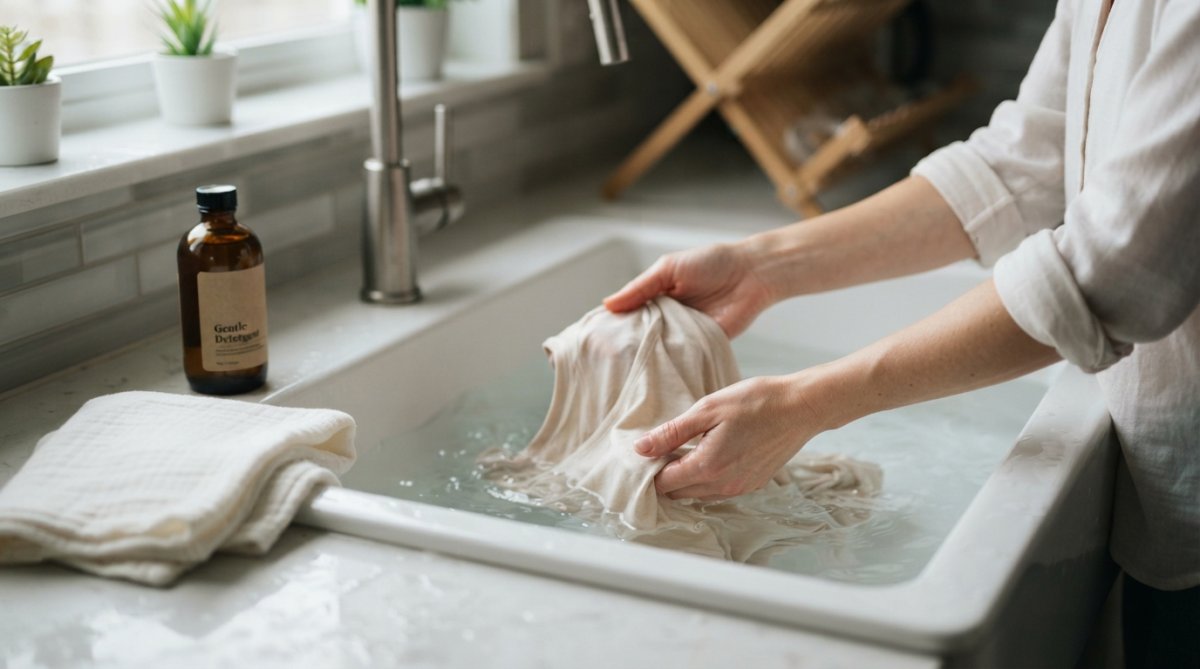
Washing and Drying Best Practices
Wash bamboo garments in cool water with mild detergent, heat breaks down fibers and fades colors.
Turn garments inside out before washing to protect the outer surface. Use the gentle cycle or hand wash delicate pieces.
Air dry garments to preserve fabric integrity. If you must use a dryer, use the lowest heat setting for the shortest time.
Avoid fabric softeners and dryer sheets, they leave residue that breaks down fibers and reduce breathability.
Storage and Seasonal Rotation
Fold bamboo and modal blends rather than hanging them, hanging stretches necklines and shoulder seams. Store in a cool, dry place away from direct sunlight.
Use cedar blocks or lavender sachets for moth prevention instead of mothballs, which contain fabric-damaging chemicals.
Fast Fashion vs. Sustainable Fashion Longevity
A typical fast-fashion piece lasts 30-40 wears before visible degradation. Quality sustainable clothing often survives 200+ wears.
Eco-Friendly Laundry Practices That Preserve Garment Life
Wash less frequently, spot clean stains and air out pieces between wears. A piece worn five times and washed once lasts longer than one washed after each wear.
Cost-Per-Wear Analysis: Why Durable Clothing Saves Money
The real financial argument for sustainable fashion is cost-per-wear: a piece that costs more upfront but lasts longer actually costs less per wearing.
How to Calculate Cost-Per-Wear
Cost-per-wear is simple: divide the garment's price by the number of times you'll wear it before it becomes unwearable.
Formula: Price ÷ Expected Wears = Cost Per Wear
For example:
- Fast-fashion dress: $25 ÷ 40 wears = $0.63 per wear
- Sustainable dress: $65 ÷ 250 wears = $0.26 per wear
Real-World Price Ranges and Lifespan Expectations
Here's what you can realistically expect to pay for different garment categories and the lifespan you should demand:
Basic T-Shirts
- Fast fashion: $10-15, lasts 30-50 wears
- Sustainable (organic cotton): $25-40, lasts 200-300 wears
- Cost-per-wear: Fast fashion $0.25-0.50; Sustainable $0.08-0.20
Jeans
- Fast fashion: $30-50, lasts 50-80 wears
- Sustainable (organic cotton or hemp blend): $80-150, lasts 300-500 wears
- Cost-per-wear: Fast fashion $0.38-1.00; Sustainable $0.16-0.50
Dresses (Casual or Work)
- Fast fashion: $20-40, lasts 40-60 wears
- Sustainable (bamboo blend or organic cotton): $60-120, lasts 200-300 wears
- Cost-per-wear: Fast fashion $0.33-1.00; Sustainable $0.20-0.60
Outerwear (Jackets, Blazers)
- Fast fashion: $50-100, lasts 60-100 wears
- Sustainable (organic cotton, hemp, or recycled polyester): $150-300, lasts 400-600 wears
- Cost-per-wear: Fast fashion $0.50-1.67; Sustainable $0.25-0.75
The Hidden Costs of Fast Fashion
Replacement Frequency: Buying multiple replacements means multiple shipping fees, packaging waste, and time spent shopping. Over five years, the cumulative cost of shopping trips, shipping, and returns for fast fashion often exceeds the sticker price savings.
Building a Cost-Effective Sustainable Wardrobe
To maximize cost-per-wear, focus on garments you'll actually wear frequently:
-
Prioritize basics over trends. Invest in neutral t-shirts, jeans, and simple dresses in colors you wear constantly. These pieces accumulate high wear counts because you reach for them repeatedly.
-
Buy fewer, higher-quality pieces. A wardrobe of 20 sustainable pieces you wear regularly beats a wardrobe of 100 fast-fashion pieces you wear sporadically. Fewer pieces means higher wear frequency per item, which lowers cost-per-wear.
-
Choose versatile styles. A simple crew-neck t-shirt works with more outfits than a graphic tee. A neutral blazer pairs with more pieces than a patterned one. Versatility increases wearing frequency, which decreases cost-per-wear.
-
Calculate before you buy. Before purchasing, estimate how many times per year you'll wear the piece and how long you expect it to last. If you can't justify 100+ wears over the garment's expected lifespan, it's probably not a good investment, sustainable or not.
The Five-Year Financial Comparison
Here's a concrete example comparing a fast-fashion wardrobe to a sustainable one over five years:
Fast Fashion Approach:
- Budget: $50/month = $3,000 over 5 years
- Typical purchases: 40-60 pieces per year
- Average lifespan: 50 wears per piece
- Total wears across wardrobe: ~12,500 wears
- Cost-per-wear: $0.24
- Closet at end of 5 years: 20-30 wearable pieces (rest discarded)
Sustainable Approach:
- Budget: $50/month = $3,000 over 5 years
- Typical purchases: 8-12 pieces per year
- Average lifespan: 250 wears per piece
- Total wears across wardrobe: ~12,000 wears
- Cost-per-wear: $0.25
- Closet at end of 5 years: 40-60 wearable pieces (most still in rotation)
Repairs, Upcycling, and Extending Active Use
Sustainable fashion doesn't end when minor damage occurs. Repairs and upcycling extend garment life significantly.
| Care Practice | Impact on Longevity | Difficulty Level |
|---|---|---|
| Wash in cool water | Prevents fiber breakdown | Easy |
| Turn garments inside out | Protects surface | Easy |
| Air dry instead of machine dry | Extends lifespan by 50%+ | Easy |
| Hand wash delicate pieces | Prevents damage | Medium |
| Repair small damage quickly | Prevents larger damage | Medium |
| Rotate pieces seasonally | Distributes wear | Easy |
| Spot clean instead of full wash | Reduces stress on fibers | Easy |
Frequently Asked Questions
Does bamboo fabric last as long as cotton?
Bamboo fabric can last 3-5 years with proper care, comparable to quality cotton when both are constructed well. The difference lies in care: bamboo requires gentler washing in cold water and lower heat drying to prevent pilling and fiber breakdown. Cotton tolerates higher temperatures but can shrink. Both outperform fast-fashion synthetic blends, which typically fail within 1-2 years. Garment construction and fiber quality matter more than fiber type alone.
How do you properly care for modal and bamboo clothing?
Wash modal and bamboo in cold water on a gentle cycle, using mild detergent without bleach. Air-dry flat or hang to prevent stretching and pilling. Avoid fabric softeners, which break down fibers over time. Store folded rather than hung to reduce stress on seams. These practices prevent the fiber degradation that causes premature wear. Proper care can extend garment life from 2-3 years to 5-7 years, making sustainable fabrics a genuine investment.
Is sustainable clothing actually more durable than fast fashion?
Yes, when comparing equivalent garment types. Sustainable brands typically use higher-quality materials, stronger stitching, and better construction techniques. A bamboo blend dress from a quality boutique lasts 4-7 years; a synthetic fast-fashion equivalent lasts 1-2 years. The difference compounds: one well-made piece worn 200+ times costs less per wear than buying five cheap replacements. Environmental impact is also lower because fewer garments end up in landfills, reducing textile waste and greenhouse gas emissions from manufacturing.
What is the cost-per-wear advantage of buying quality over fast fashion?
A $68 coat worn 150 times over 5 years costs $0.45 per wear. A $25 fast-fashion coat worn 30 times before deteriorating costs $0.83 per wear. Quality pieces worn longer provide better value and reduce consumption. This analysis applies across categories: a $50 bamboo blend top worn 100+ times beats a $15 synthetic top worn 20 times. Beyond economics, lower consumption reduces carbon footprint and textile disposal rates, making quality purchases better for both your budget and environmental impact.
Eco-friendly clothing lasts significantly longer than fast fashion when you choose quality materials and care for them properly. The investment pays for itself through durability and cost-per-wear savings. At D'LA Boutique, we design our curated collection with longevity in mind, featuring bamboo and modal blends built to last years, not seasons. Start with pieces designed to endure, then protect that investment through proper care. Your wardrobe and the environment will thank you.